How to Start an Ecommerce Business Without Money in 2027
Start an ecommerce business without money by choosing a low-cost business model, testing a useful offer, selecting an eligible free storefront, and finding your first customers organically.

Start an ecommerce business without money by choosing a low-cost business model, testing a useful offer, selecting an eligible free storefront, and finding your first customers organically.
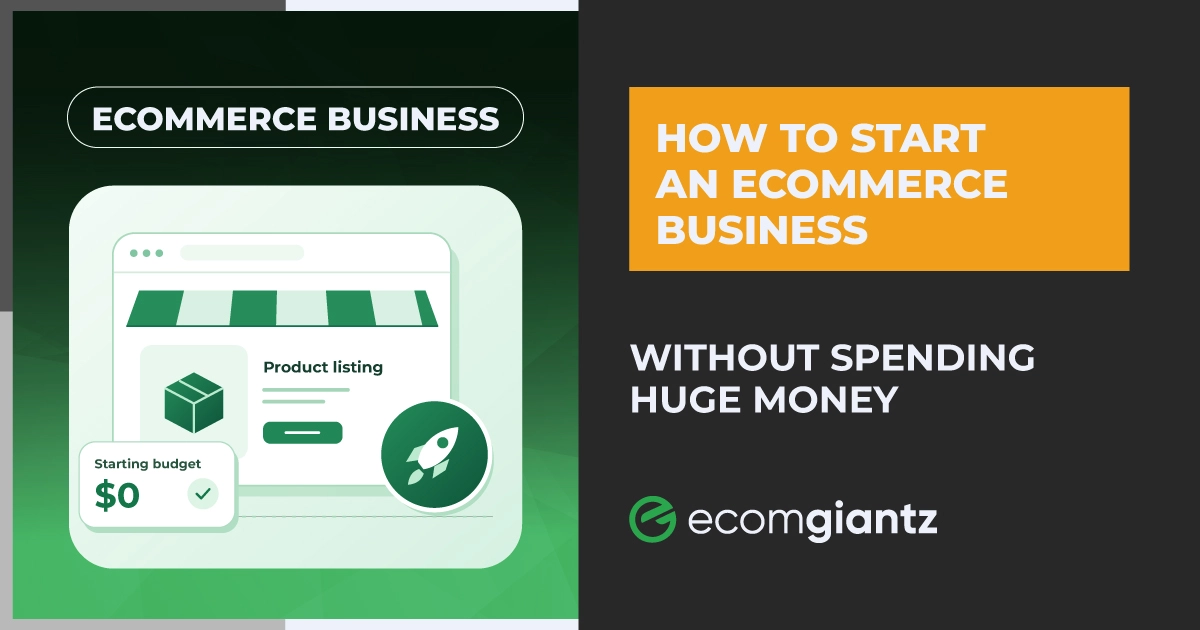


You can start an ecommerce business without upfront spending by selling an original digital product, offering a service you can deliver yourself, or using an eligible print-on-demand storefront that deducts fulfillment costs from customer payments. You will still invest time, and selling fees or legal requirements may apply.
If your budget is genuinely zero, the advice to “just open a store and run ads” is frustrating. You need a route you can finish with the resources you have, including a way to deliver your first order without borrowing money.
I would start with one question: what can you sell and deliver before you need to spend? That question makes learning how to start an ecommerce business without money much more practical. Let’s choose an offer, check the payment arrangements, and build a small store around it.
The most useful starting point for an ecommerce business with no investment is something you can already make, do, or access. Compare the choices below against your actual resources. A model that works for a designer with an audience may be wrong for someone starting from scratch.
| Starting Point | Offer to Test | What Could Still Cost Money |
|---|---|---|
| You understand a specific task | Original spreadsheet, checklist, or downloadable template | Transaction fees, support, and any tools you do not own |
| You have a useful skill | A clearly scoped editing, design, or setup service | Payment fees and your delivery time |
| You have original designs | POD through a storefront that deducts fulfillment costs | Samples, taxes, and issues outside supplier coverage |
| You own suitable unused goods | Local resale through an eligible channel | Selling fees, packaging, travel, or delivery |
| You want standard dropshipping | Supplier-fulfilled products through your own store | Supplier payments before payouts, subscriptions, and samples |
For a beginner with a useful skill, I would favor a small digital product or fixed-scope service. You can inspect the deliverable yourself, correct problems, and avoid shipping. A productized service simply means selling a clearly defined result with a price, deadline, and revision limit.
For example, you could offer to organize a home baker’s existing order spreadsheet, then use what you learn to develop an original reusable template. Get permission before reusing any client-specific material, and keep customer data out of the product. The service helps fund the product and reveals what buyers need.
Selling possessions can raise startup money, although it is not automatically a repeatable business. Affiliate marketing is another income route, but the merchant handles the sale. Understanding how dropshipping fits within ecommerce also helps you separate the selling model from the fulfillment method.
If you are deciding how to start an online store with no money, choose the payment arrangement before the prettiest template. These options offer specific ways to avoid monthly platform costs. Availability, verification, transaction charges, and your own business obligations still matter.
| Platform | Suitable Starting Offer | What You Pay | Important Limitation |
|---|---|---|---|
| Payhip Free | Original digital downloads | 5% platform fee plus payment-processor fees | A supported payment gateway is required; you must bring initial traffic |
| Printify Pop-Up Store | Original POD designs | Production, shipping, and applicable deductions come from the sale | Supported seller countries only; USD checkout; seller tax responsibilities |
| Printful Quick Stores | POD for eligible US sellers | Product and fulfillment costs deducted from customer payments | US residence and tax residence required; US delivery only |
Payhip’s free plan has no monthly subscription and includes unlimited products. On a $12 sale, its 5% platform fee is $0.60 before payment processing. That lets you pay platform fees from sales rather than commit to a subscription before testing demand.
Check payment gateways available in your country before preparing a large catalog. Connecting a gateway does not guarantee immediate bank access to every payment. Verification, processor rules, and payout schedules can still affect when your earnings become available to spend.
Here is a detail worth knowing early: Payhip’s marketplace requires at least $10 in total sales, an account review, and product approval. Self-purchases do not count. A free storefront therefore gives you a place to sell, but its marketplace is not your first-customer plan.
Printify Pop-Up Store collects the customer’s payment and covers production and shipping before paying your earnings. This differs from connecting Printify to a separate store. Its published payout schedule is monthly, on the 15th, and customer checkout currently uses USD.
The eligible merchant list includes the US, UK, Canada, and Australia. However, you remain the merchant of record, responsible for applicable taxes and legal compliance. Customer support and fulfillment being handled for you do not transfer every business obligation to the platform.
Printful Quick Stores has no setup or monthly fee and does not require a billing method to begin. Its eligibility rules require US residence and valid US tax residence, and customers must have US shipping addresses. This is a specific option, not a worldwide recommendation.
Quick Stores payouts are monthly, cover delivered orders, and are subject to a $25 threshold. Smaller balances roll forward. You may be able to fulfill orders without advancing production money, but you should not count those earnings as immediate spending money.
A trial can help you explore a platform, but it is not a permanent plan to start an ecommerce business for free. Shopify requires selecting a subscription plan to launch, with subscription charges beginning after the trial. Wix requires a payment-capable paid plan to accept payments.
Marketplaces also differ. Etsy charges $0.20 per listing, whether it sells or not, and a setup fee may apply. That may be affordable later, but it does not meet a strict zero-upfront-spending requirement.
You do not need a large catalog to begin. Learning how to start an ecommerce business with no money becomes much easier when you work through one offer from the buyer’s first question to successful delivery. Here is the sequence I would follow.
Write down useful tasks you already know how to complete, tools you can access without paying, and people whose problems you understand. Look for overlap. Being able to organize spreadsheets is useful; knowing how local bakers track deposits and collection times makes the offer more specific.
For this walkthrough, imagine creating an original order tracker for home bakers. It could include order dates, pickup times, amounts paid, and balances due. This is a hypothetical product example, not a tested business or a promise that bakers will buy it.
If you cannot yet produce something reliable, start by learning a narrow skill and making a sample. You can still research buyers and build a waitlist. Taking payment for work you cannot deliver will make your cash situation harder, not easier.
Visit places where your intended buyers already ask questions, such as relevant communities, product reviews, or professional groups. Record the task they struggle with, their current workaround, and the consequences. Avoid collecting private information or treating every complaint as purchase intent.
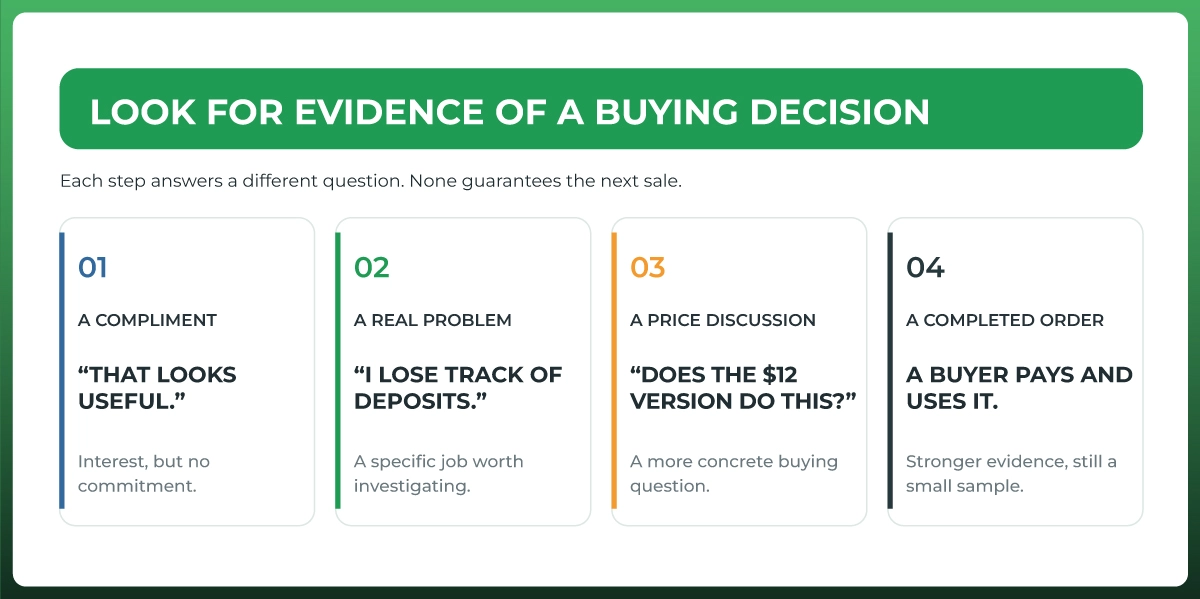
For the baker example, ask: “How do you track deposits now?” “What becomes difficult on busy weekends?” “Have you paid for anything to help?” Those answers tell you more than asking whether someone likes your idea. People can be encouraging without needing the product.
I would begin with five relevant conversations as a manageable research exercise, not a statistical sample. Look for a repeated problem and willingness to examine a specific solution. If everyone already has a satisfactory free workaround, narrow or change the offer before building it.
Create a sample that demonstrates the main job. For an order tracker, enter fictional orders and show how someone finds an unpaid balance. Then let a potential buyer try the sample without coaching. Notice where they hesitate, ask questions, or need a missing feature.
Show the proposed price as well. “Would this solve your deposit-tracking problem at $12?” is more useful than collecting praise for an unspecified free tool. A paid order is stronger evidence than a compliment, although one order still does not establish a sustainable market.
Check whether you can register honestly in your location, verify your identity, connect an eligible bank account or gateway, and receive payouts. Then map what happens if the buyer needs a refund. A sales dashboard is not enough; you need a functioning route from payment to delivery.
If you plan to start an ecommerce business with $0, keep physical preorders conditional on a reliable fulfillment plan. Under the US FTC merchandise rule, shipping promises need a reasonable basis; missed deadlines require appropriate consent to delay or refunds. A waitlist is better when production remains uncertain.
Check local registration, tax, product-safety, and consumer requirements before selling. For example, UK guidance on digital downloads requires consent and acknowledgment before immediate delivery removes the usual cancellation right. A supplier’s return policy cannot replace obligations that apply to your own sale.
Start with what the buyer receives, then calculate what remains from each order. Include platform and processing fees, production, shipping, and any tax you must absorb. Keep collected taxes separate from revenue, and remember that your time still matters even when no cash changes hands.
Here is an illustrative $12 digital-product calculation. Payhip’s published platform fee is 5%; assume processing of 3% plus $0.30 solely for this example. Your actual processor may charge differently. With no production or shipping expense, $10.74 remains before refunds, tax obligations, labor, and overhead.
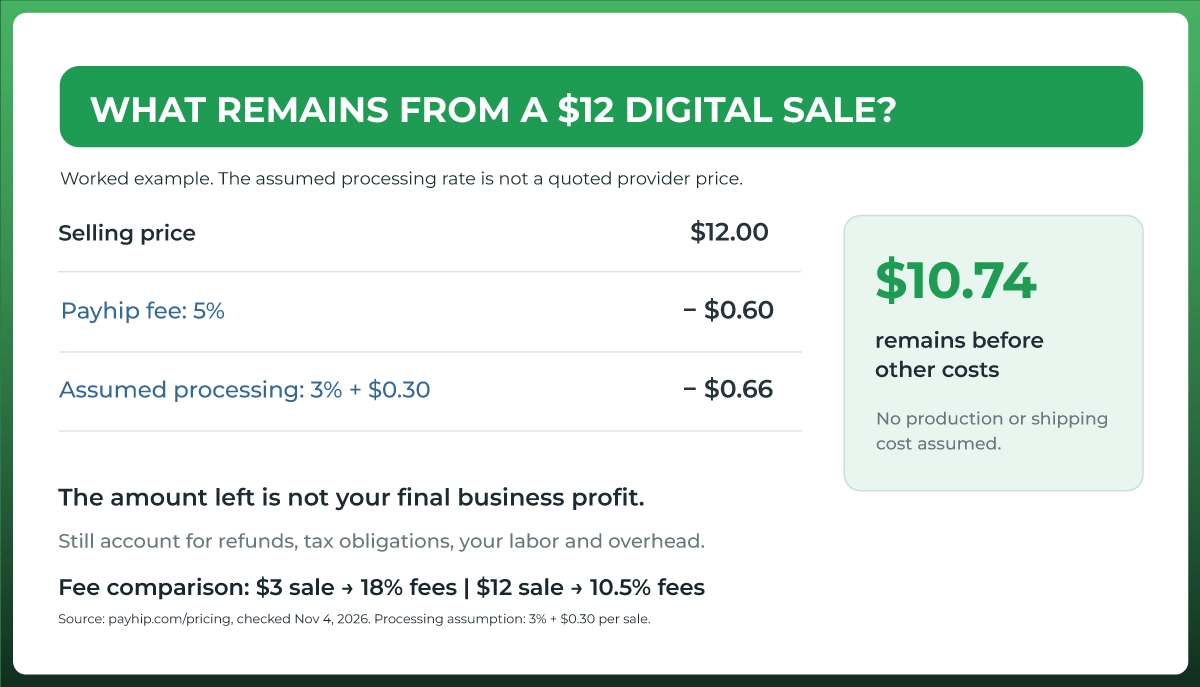
A small order value makes fixed fees more noticeable. Using those same assumptions, a $3 product would incur $0.54 in combined fees, or 18% of the price. The $12 example incurs 10.5%. Bundle related resources only when the bundle gives buyers meaningful extra value.
To see how to start an ecommerce business without money online, follow Payhip’s product setup instructions: open Products, choose Add new product, select Digital Product, and upload your file. Add a descriptive title, price, cover image, preview, and explanation of what the buyer receives.
For our example, “Home Bakery Order Tracker for Google Sheets” explains more than “Ultimate Business Planner.” Show the actual spreadsheet, list its fields, explain how to make a personal copy, and state what it does not do. Do not imply that it replaces accounting software.
Then use Payhip’s 100% discount test to check the confirmation email, download, and file access without spending money. Remove or restrict the coupon afterward. This checks the buyer’s delivery experience; it does not verify a real card charge or bank payout.
For the POD route, create a Printify Pop-Up Store under My Stores, select a theme, complete verification, and publish a product using an original or properly licensed design. Check its production cost, destination shipping, measurements, and mockup accuracy before sharing the store.
If you cannot afford a sample, acknowledge that you have not personally checked print quality. Avoid durability or fit claims you cannot support. Start cautiously, direct early available earnings toward a sample, and review what supplier refund coverage actually includes before promising your customers a remedy.
If you are working out how to start an online business with no money, your first marketing task is finding people with the problem you solve. Choose one place you can contribute usefully. For a bakery tracker, that might be a business community that permits relevant resource sharing.
Ask permission where needed, answer an existing question, and demonstrate the exact task your product helps with. A short screen recording showing how to find an unpaid order gives someone a reason to visit. A generic “new store launch” post asks them to care before they understand the value.
Use the questions buyers ask to improve product titles, descriptions, and later tutorials. That is a practical foundation for organic ecommerce traffic, although search visibility takes time. Early conversations can help you improve an offer while longer-term content develops.
Track relevant visits, inquiries, purchases, and the time spent earning them. Do not confuse free distribution with effortless distribution. If a channel produces hours of activity but no qualified interest, change the demonstration, audience, or offer before adding more platforms to your schedule.
After a sale, confirm the buyer received what they expected and can use it. Record the selling price, deductions, payout status, delivery issues, and support time. Ask what nearly stopped them from buying; their answer may reveal a missing explanation worth adding to the page.
If you have no sales, identify where the process stopped. No relevant visits calls for a different distribution approach. Interested visitors who repeatedly ask the same question need clearer information. Failed payments require checkout troubleshooting. These situations should not all trigger a price cut.
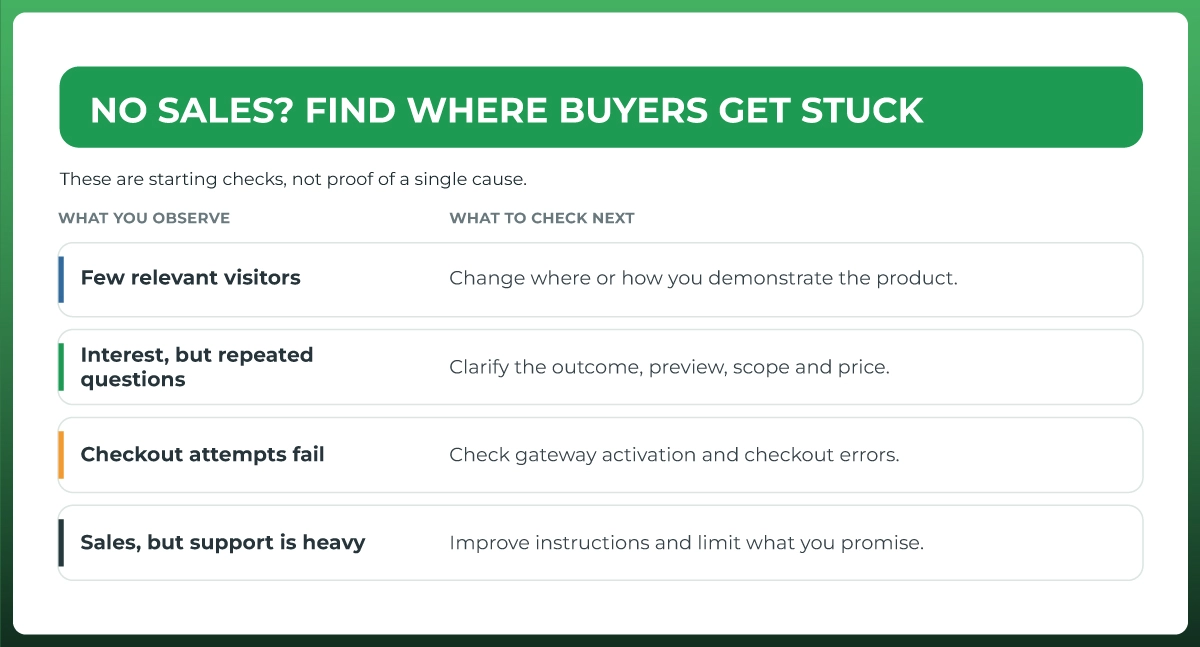
Treat early numbers as clues, not reliable benchmarks. Two purchases from 40 relevant visits equal a 5% observed conversion rate, but that small sample cannot predict your next 400 visitors. Keep testing with the same audience definition so your comparisons mean something.
When you are learning how to start an online store without money, good explanations are among your most accessible trust tools. Show the actual deliverable, who it suits, what it includes, and how to get help. A buyer should not need to guess what happens after checkout.
For digital products, offer a limited sample and demonstrate a complete task. For services, show original sample work and define revisions. For POD, use accurate previews and clear measurements. Be candid about mockups and any aspects you have not personally tested.
You do not need invented testimonials to look established. Ask real buyers for honest feedback after delivery, obtain permission before publishing their words, and answer reasonable questions promptly. A small store with specific, truthful information gives buyers something useful to evaluate.
The first available earnings should strengthen your ability to keep promises. Allow for required taxes, refunds, and upcoming fulfillment, then address the clearest weakness. That might mean a product sample, better instructions, or a tool that removes a recurring delivery problem.
Use a spending test: what will this purchase improve, and how many additional orders would cover it? If a tool costs $20 monthly and each extra order contributes $10 after variable costs, two extra orders cover the subscription alone. This is illustrative break-even math, not a sales forecast.
Keep your current setup while it serves customers well. When proven demand justifies more control over navigation, product pages, and checkout, Shopify website design and development can become a sensible next investment. You should be able to name the problem that the upgrade will solve.
Use this schedule to turn the idea into a manageable experiment. The goal is to test a deliverable offer and understand the response, not guarantee income within two weeks. If verification or product quality needs longer, take that time before accepting orders.
| Days | What to Do | What to Record |
|---|---|---|
| 1–3 | Choose one buyer and investigate one recurring problem | Current workaround, repeated questions, payment eligibility |
| 4–6 | Build and test a small sample; show the proposed price | Where users struggle and whether the offer interests them |
| 7–10 | Publish one clear product page and share a useful demonstration | Relevant visits, questions, checkout or access problems |
| 11–14 | Review feedback, fulfill any orders, and revise one weakness | Costs, available payouts, support time, next experiment |
Knowing how to start an ecommerce business without money is useful only when it leads to something you can deliver. Choose the smallest offer you can stand behind, put it in front of suitable buyers, and let their response guide the next decision. Your store can grow from there.