
What Is an AI Shopping Assistant?
An AI shopping assistant is software that guides customers through product discovery and buying decisions. As part of conversational commerce, it understands everyday questions, checks available product information, and suggests options that match a shopper’s needs.
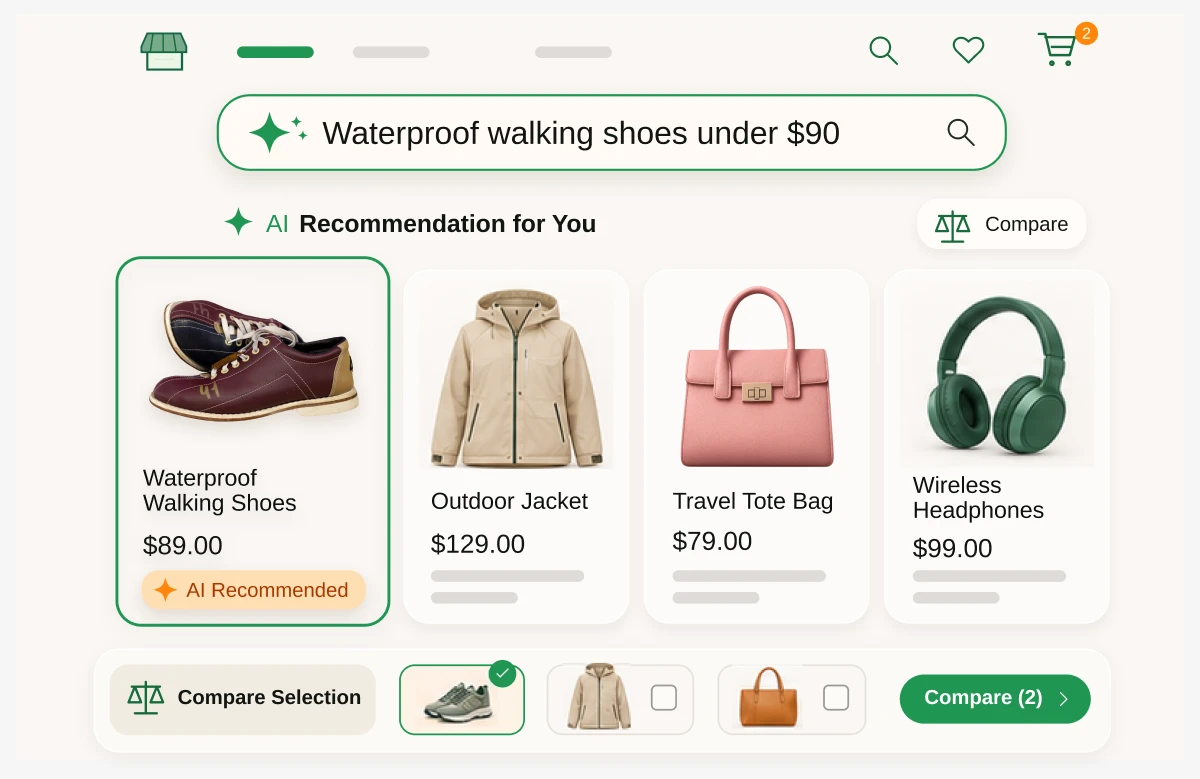
Some assistants work inside a retailer’s website and recommend items from that store. Others operate across shopping platforms and may compare products from different sellers. For example, a customer might ask for waterproof walking shoes under $90 and receive a short, explained selection.
How Does an AI Shopping Assistant Work?
AI shopping assistants combine natural language processing (NLP) with product information and, when available, live store systems. A typical interaction follows three steps:
- Understand the request: Identify preferences such as price, size, purpose, and features.
- Find suitable products: Match those needs with catalog details, stock, and other permitted data with AI product recommendations.
- Guide the decision: Explain options, answer follow-up questions, and support the next shopping step.
The quality of the answers depends on the information the assistant can access.
Common Uses of AI Shopping Assistants in Ecommerce
An AI-powered shopping assistant can support shoppers in several practical ways:
- Product discovery: Find products from detailed or imprecise requests.
- Personalized recommendations: Suggest relevant items or complementary products.
- Product comparisons: Explain differences in price, specifications, or suitability.
- Buying assistance: Check availability or help with cart and checkout steps when integrated.
For example, a laptop buyer can compare battery life, weight, and charging options without opening multiple product pages.
AI Shopping Assistant vs. Traditional Chatbot
Both tools can appear in a chat window, but their usual roles differ. This comparison refers to traditional rules-based chatbots, not every modern AI chatbot.
| Feature | Traditional chatbot | AI shopping assistant |
|---|---|---|
| Primary purpose | Answer predefined questions | Guide product selection |
| Typical question | “Where is my order?” | “Which jacket suits winter travel?” |
| Product knowledge | Often limited to FAQs | Uses product attributes and catalog data |
| Next step | Show a help answer or link | Compare items; may help add to cart |
Why Do AI Shopping Assistants Matter for Online Stores?
For shoppers, guided recommendations can reduce time spent searching and make product differences easier to understand.
For stores, the potential benefits include better product discovery, fewer repetitive pre-purchase questions, and a smoother path to checkout.
Results depend on the product range, assistant accuracy, placement, and customer needs. Store owners should judge performance through relevant product clicks, add-to-cart activity, conversion rate, and customer feedback.
What Should Store Owners Check Before Using One?
Before adding a virtual shopping assistant, confirm that it can access reliable information and fits the customer journey. A short pilot with real customer questions can reveal problems before a wider launch.
- Keep catalog data accurate. Use clear product titles and descriptions, correct prices, and updated inventory.
- Check integrations. Connect only the store systems needed for recommendations or approved shopping actions.
- Protect shopper trust. Explain data use, limit unnecessary personal information, and provide a human support option.
- Test real questions. Check whether recommendations remain relevant, available, and factually correct.
For external search visibility, product structured data helps search systems interpret product details, although it does not guarantee recommendations.
Frequently Asked Questions
Is an AI shopping assistant the same as a chatbot?
Not necessarily. A traditional chatbot usually answers set questions. A shopping assistant focuses on understanding buying needs and recommending products.
Can small ecommerce stores use an AI shopping assistant?
Yes. A smaller store may benefit when shoppers need help choosing sizes, compatible items, or products with similar features.
Does an AI shopping assistant replace site search?
No. It adds guided, question-based discovery, while ordinary site search remains useful for shoppers who already know what they want.
Can an AI shopping assistant make mistakes?
Yes. Outdated listings or incorrect AI responses can cause unsuitable suggestions. Accurate data, testing, and clear customer controls remain important.