
What Is an AI Chatbot?
An AI chatbot is a conversational software tool that interprets messages and provides relevant replies through a website, app, or messaging platform. Unlike a traditional chatbot that follows fixed scripts, it can recognize different ways people ask the same question and respond using available context.
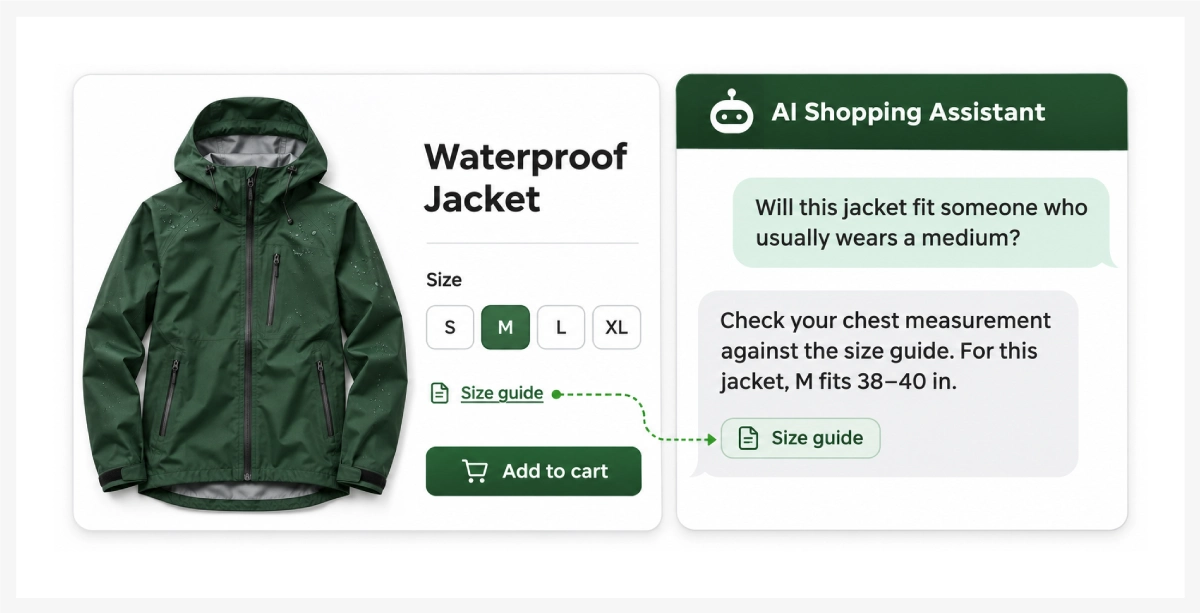
For example, a shopper may ask, “Will this jacket fit someone who usually wears a medium?” A connected chatbot can consult the store’s size guide and product details before answering. It should avoid guessing when information is missing.
Types of AI Chatbots
- Intent-based AI chatbots: Recognize what a customer wants, such as tracking an order, and select an appropriate response or workflow.
- Generative AI chatbots: Use language models to produce flexible answers, summarize product details, and handle follow-up questions.
- Hybrid AI chatbots: Combine AI conversations with fixed steps for tasks such as returns, refunds, and human support requests.
A rule-based chatbot without AI is different. It depends on predetermined menus or keywords and has less flexibility with unexpected questions.
How Does an AI Chatbot Work?
An AI chatbot typically follows four steps during a customer conversation:
- Receives a question: A shopper types a message in the store’s chat window.
- Identifies the intent: Natural language processing (NLP) helps interpret the request and its context.
- Checks useful information: The chatbot may retrieve approved product, policy, inventory, or order data when connected and authorized.
- Responds or escalates: It provides an answer or transfers the conversation to a support employee when necessary.
The quality of its response depends on reliable information, access permissions, and how well the chatbot has been configured.
Why Are AI Chatbots Important for Ecommerce?
AI chatbots can assist buyers across multiple stages of the shopping journey. Their most useful benefits include:
- Faster support: Provide immediate answers to common questions, including outside normal business hours.
- Better product discovery: Help customers compare options, find sizes, and understand key features.
- Lower repetitive workload: Handle routine inquiries so service teams can focus on complex or sensitive cases.
- More consistent assistance: Use approved store information to support shoppers across channels.
Where Ecommerce Stores Use AI Chatbots
A chatbot on a product page can answer sizing or compatibility questions before purchase. After checkout, it can explain delivery estimates or return steps when connected to current order information. During ecommerce store building, such as Shopify store development, teams can plan where chat assistance appears and what information it may access.
Chatbot conversations can reveal common customer support issues and can guide managing an e-commerce shop. Customer interests may support better segmentation for email marketing with appropriate consent.
What Should Store Owners Check Before Using One?
Store owners should validate some key points before using AI chatbots.
- Check accurate product descriptions, current policies, and a clear handoff to human support.
- Limit access to personal and payment data, explain when customers are speaking with AI, and test difficult questions before launch.
- Monitor incorrect answers, successful resolutions, escalation rates, and customer feedback to identify improvements.
Frequently Asked Questions
Is an AI chatbot the same as live chat?
No. Live chat usually connects shoppers to a person, while an AI chatbot produces automated responses. Some stores combine both.
Can an AI chatbot track orders?
Yes, if it is securely connected to an order system and has permission to retrieve the relevant details.
Will an AI chatbot replace customer support staff?
Not entirely. It can handle routine requests, but complex problems, complaints, and sensitive cases still benefit from human support.
Can small ecommerce stores use AI chatbots?
Yes. Small stores can start with a narrow set of frequent questions and expand after testing answer quality and costs.