Dropshipping vs Ecommerce: A Complete Guide to Both
Compare dropshipping vs ecommerce to discover key differences in startup costs, profit margins, inventory management, shipping, and brand control. Learn which business model best suits your budget and goals.
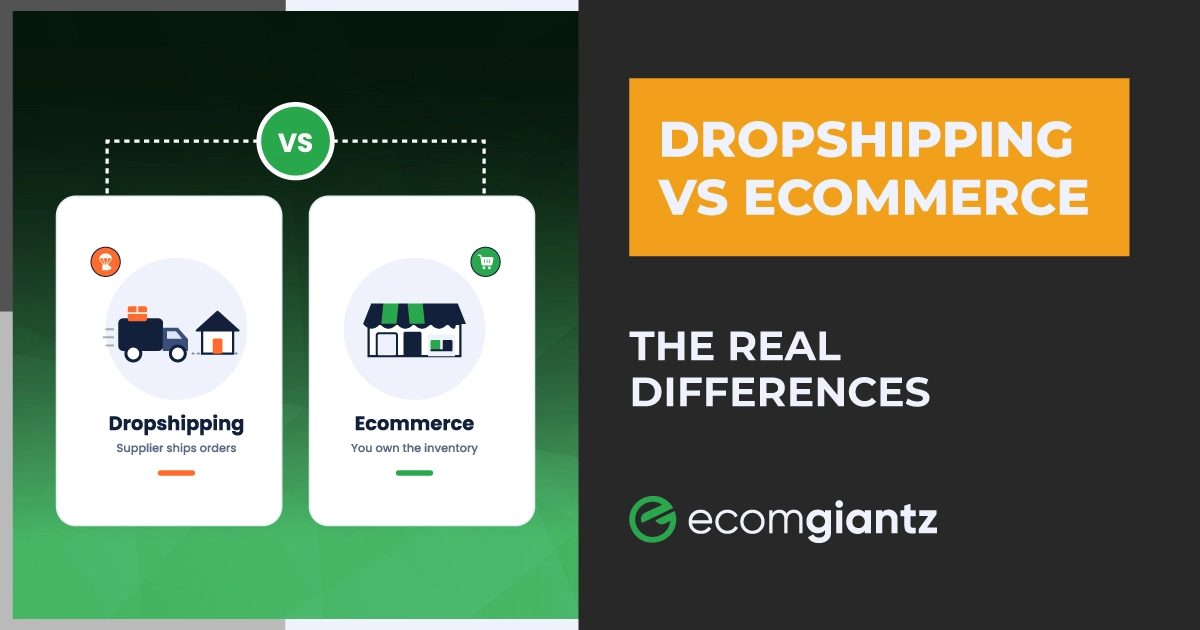
Dropshipping is not a separate business type. It is a fulfillment method within ecommerce where a third-party supplier stores, packs, and ships products directly to your customers. Inventory-based ecommerce, on the other hand, means you buy products upfront, store them yourself (or through a fulfillment center), and handle shipping on your own terms.
The core difference between dropshipping and ecommerce comes down to inventory ownership. With dropshipping, you never touch the product. With traditional ecommerce, you control the entire supply chain from purchase to delivery. Each model has different startup costs, profit margins, and levels of brand control.
This guide breaks down every major difference, from real cost comparisons to profit examples, so you can decide which approach matches your budget, goals, and long-term vision.
What Is Ecommerce?
Ecommerce (electronic commerce) is the buying and selling of products or services through a digital storefront. That includes everything from standalone online stores and mobile apps to marketplace platforms like Amazon and eBay.
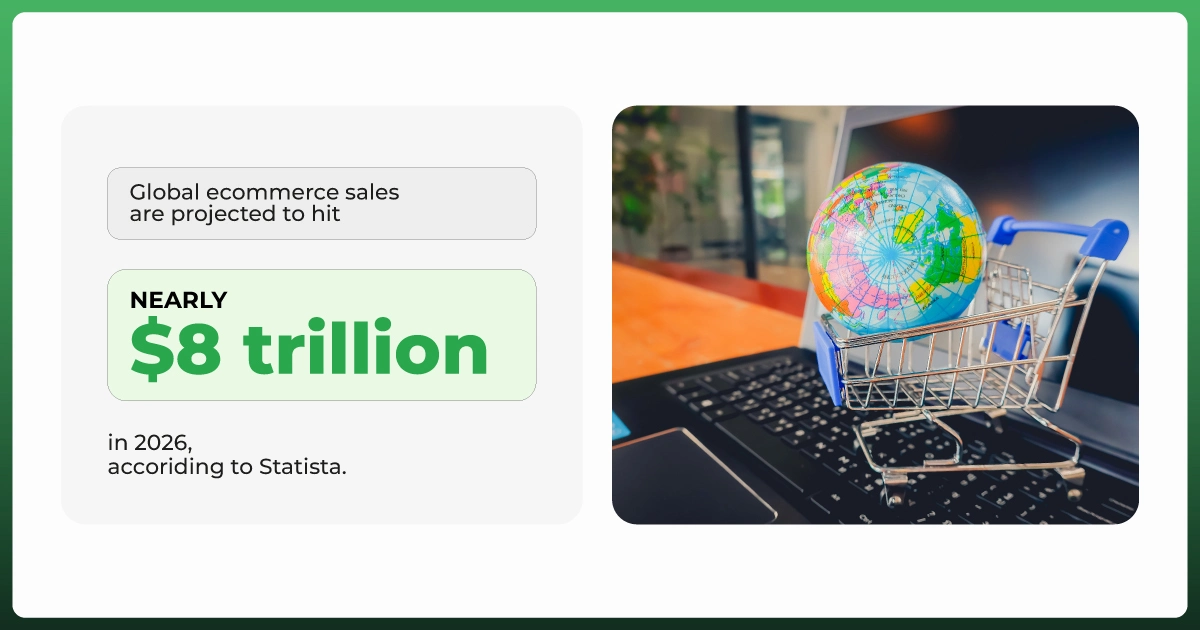
It is a broad category, not a single business model. Under the ecommerce umbrella, you will find brands that manufacture their own products, retailers that buy wholesale and resell, subscription box services, and sellers of digital products. Global ecommerce sales are projected to hit nearly $8 trillion in 2026, according to Statista. That gives you a sense of how massive this market has become.
Traditional ecommerce typically follows this fulfillment process: you source products from a manufacturer or wholesaler, store them in your own warehouse or a third-party fulfillment center, and ship orders to customers yourself. You own every step of the journey, from product sourcing and inventory planning to order processing and delivery.
What Is Dropshipping?
Dropshipping is a specific fulfillment method within ecommerce where you sell products without ever holding inventory. When a customer places an order on your online store, you forward that order to a third-party supplier. The supplier then ships the product directly to the customer's shipping address.
You act as the marketing and customer service layer. The supplier handles warehousing, packing, and shipping logistics. This means you can launch a product catalog with dozens or even hundreds of items without buying a single unit upfront.
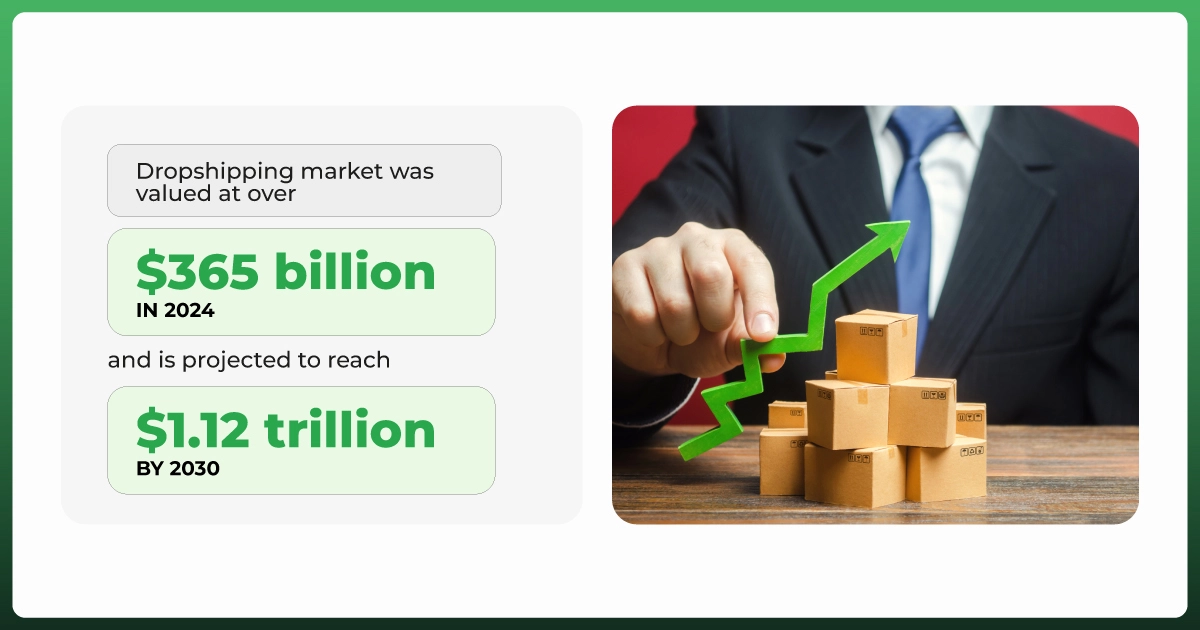
According to Mordor Intelligence, the dropshipping market was valued at over $365 billion in 2024 and is projected to reach $1.12 trillion by 2030, growing at roughly 22% annually. Other research firms put the figures even higher, but the direction is clear: this market is expanding fast. That said, only about 10 to 20% of dropshipping businesses achieve lasting profitability. The model is accessible, but success still depends on execution.
How Each Model Works: Order Flow Comparison
Step
Dropshipping
Traditional Ecommerce
1. Product listing
List supplier's products on your store
List your own inventory on your store
2. Customer orders
Customer places an order on your site
Customer places an order on your site
3. Order forwarded
You send the order to your supplier
You pick the item from your warehouse
4. Packing
Supplier packs the product
You (or your 3PL) pack the product
5. Shipping
Supplier ships to customer directly
You ship to customer via your carrier
6. Customer receives
Product arrives (often in generic packaging)
Product arrives (in your branded packaging)
The key takeaway: in dropshipping, you never physically handle the product. In traditional ecommerce, you control the entire purchase-to-delivery experience.
Dropshipping vs Ecommerce: Key Differences
Both models let you sell products online, but what happens behind the scenes is very different. From order fulfillment to financial risk, the dropshipping vs ecommerce decision shapes your daily operations, profitability, and growth potential. Let us walk through each major factor.
Inventory Management
With traditional ecommerce, you buy products in bulk and manage your own stock. This requires upfront capital for inventory and a system for tracking what you have, what is selling, and when to reorder. The upside is complete control. You decide what to stock, how much to hold, and how quickly to replenish.
Dropshipping removes the inventory management burden entirely. Your supplier maintains the stock, and automated inventory updates sync product availability with your store. But this convenience comes with a trade-off: you have no visibility into actual stock levels, and supplier stockouts can leave your customers with cancelled orders and no explanation.
Startup and Ongoing Costs
This is where the two models diverge the most for new sellers. Here is a realistic breakdown for 2026:
Startup Cost Comparison
Expense
Dropshipping
Traditional Ecommerce
Inventory purchase
$0 (pay per order)
$2,000 to $20,000+
Platform (Shopify, etc.)
$29 to $79/month
$29 to $79/month
Domain name
$10 to $15/year
$10 to $15/year
Website design and setup
$0 to $500
$0 to $2,000
Initial ad spend
$300 to $1,000
$300 to $1,000
Monthly Operating Cost Comparison
Expense
Dropshipping
Traditional Ecommerce
Platform subscription
$29 to $79
$29 to $79
Apps and tools
$30 to $100
$50 to $200
Inventory restocking
$0
$500 to $5,000+
Warehouse or storage
$0
$200 to $2,000+
Packaging materials
$0
$50 to $300
Shipping costs
Included in supplier price
$200 to $1,500+
Returns handling
Supplier managed (varies)
$50 to $500
Marketing and ad spend
$500 to $3,000+
$500 to $3,000+
Payment processing fees
2.9% + $0.30 per transaction
2.9% + $0.30 per transaction
The financial picture is clear: dropshipping has a significantly lower barrier to entry. You can test a product idea and start generating revenue before investing thousands in stock. Traditional ecommerce demands more capital, but the reward is better unit economics over time.
One often-overlooked cost difference: taxes and accounting. Inventory-based businesses deal with inventory accounting, storage-related deductions, and cost of goods sold tracking. Dropshippers face sales tax nexus complexity, since selling across multiple states or countries without a physical presence creates varying tax obligations. Consult a tax professional familiar with ecommerce before choosing your structure.
Profit Margins
Traditional ecommerce typically delivers higher profit margins because you buy products at wholesale prices. Purchasing 500 units of a product will always cost less per unit than buying one at a time through a dropshipping supplier. You also have more flexibility to set your retail price without being undercut by dozens of other sellers listing the same item.
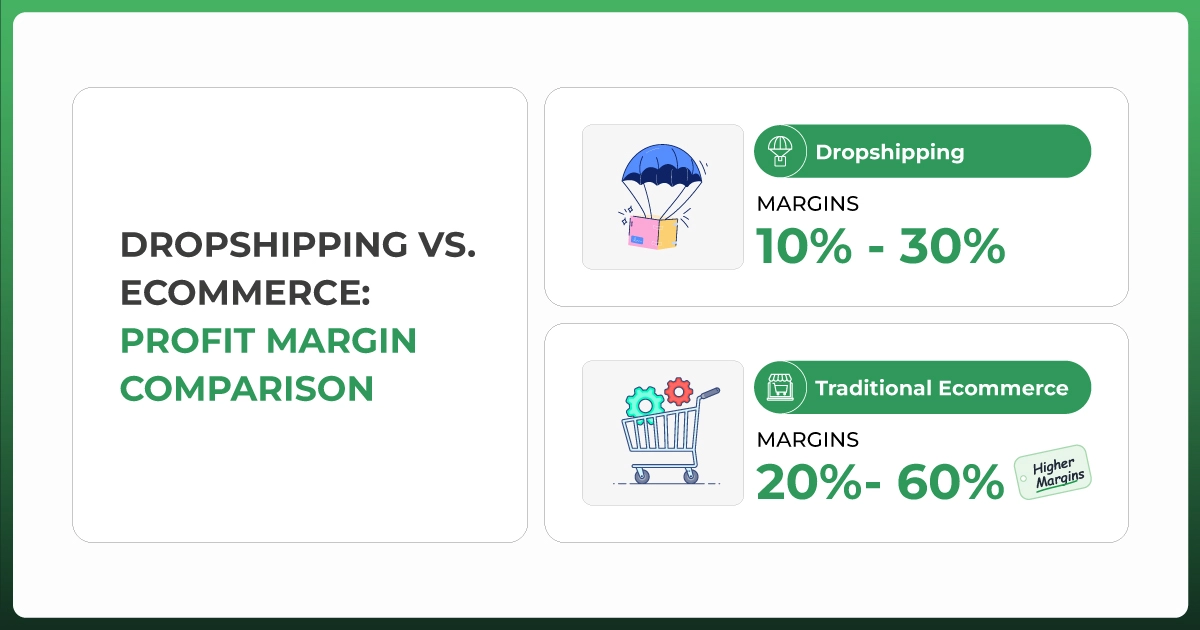
Dropshipping margins are thinner. The supplier takes a larger cut because they handle storage, packing, and shipping. Typical dropshipping margins fall between 10 and 30%, while traditional ecommerce margins can range from 20 to 60% depending on the niche. Electronics margins sit closer to 12 to 15%, while supplements or luxury apparel can push past 60%. The product category matters as much as the business model.
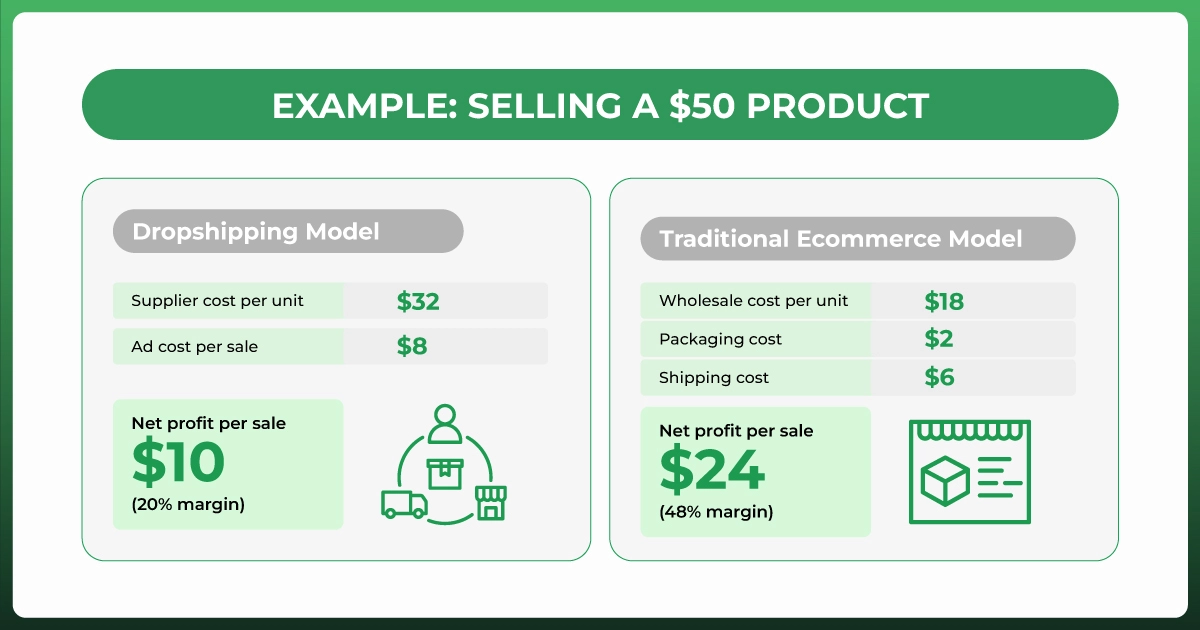
Here is a concrete example to make this tangible:
That $14 difference per order adds up fast. At 100 orders per month, you are looking at $1,000 in dropshipping profit versus $2,400 in traditional ecommerce profit. The catch is that the ecommerce seller had to invest in inventory upfront to get those margins.
Product Quality and Brand Control
When you own your inventory, you can inspect every product before it ships. You control product quality, packaging design, branded inserts, and the entire unboxing experience. This level of brand control is what builds customer loyalty and a recognizable brand identity over time.
With dropshipping, you are trusting a supplier you may have never met to maintain quality standards. Products often arrive in generic packaging with no brand presence. Some suppliers offer product customization or white-label packaging, but that is the exception rather than the rule. If a customer receives a damaged or incorrect item, they blame your store, not the supplier.
Shipping Speed and Customer Experience
In traditional ecommerce, you control shipping speed. If your inventory is stored in a domestic warehouse or fulfillment center, you can offer 2-3 days' delivery. Fast shipping directly improves customer satisfaction, conversion rates, and repeat purchases.
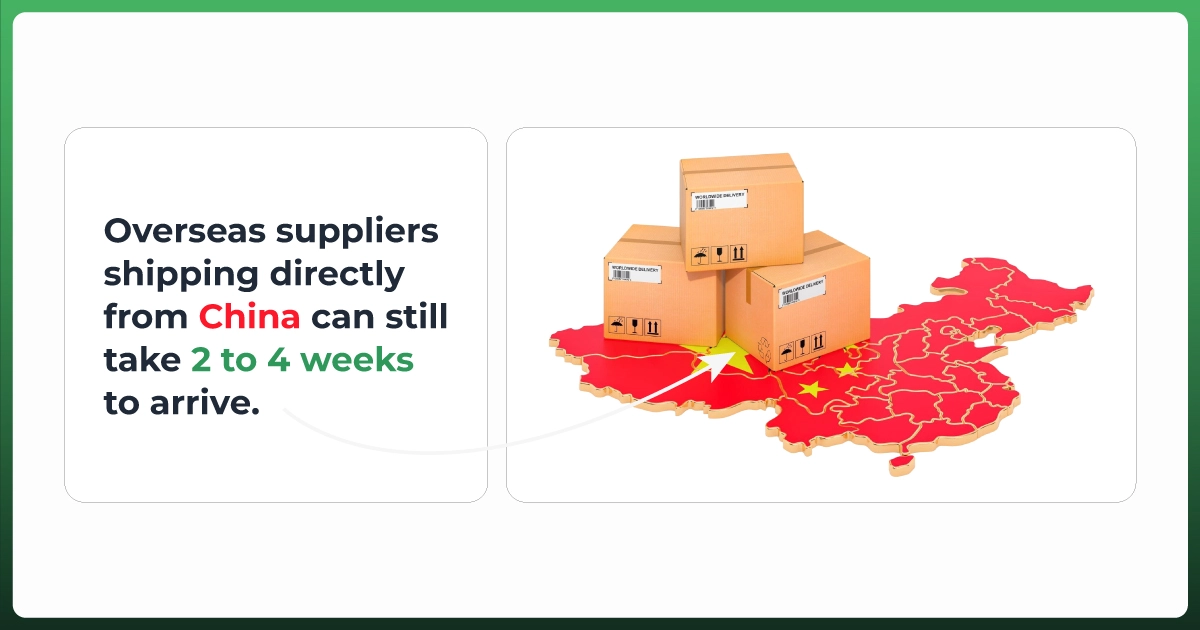
Dropshipping shipping times vary by supplier. Domestic and regional suppliers (through platforms like CJDropshipping, Zendrop, or Spocket) now offer 3-7 days' delivery from US, UK, or EU warehouses. Overseas suppliers shipping directly from China can still take 2 to 4 weeks to arrive. In 2026, customers expect fast delivery. Choosing suppliers with local warehouse stock is no longer optional if you want to stay competitive.
The customer experience gap extends beyond delivery speed. With traditional ecommerce, every customer interaction is under your control, from order confirmation emails to returns processing. In dropshipping, coordinating returns and exchanges with a third-party supplier can create friction and delays that hurt customer support quality.
Scalability
Dropshipping scales faster in the early stages. Adding new products costs nothing because you do not buy inventory upfront. If a product trend emerges, you can list it in your store within hours. You can expand your product offering without worrying about dead stock or warehouse space.
Traditional ecommerce scaling requires more planning. Growth means buying more inventory, securing larger storage, and possibly hiring staff or partnering with fulfillment centers. But this deliberate scaling often leads to stronger unit economics. The more you buy, the better your wholesale pricing, and the more efficient your shipping logistics become.
Competition and Market Saturation
Dropshipping has a low barrier to entry, which means market saturation is a constant challenge. Many sellers source from the same suppliers and list identical products with similar descriptions. When everyone sells the same phone case or kitchen gadget, the only differentiator becomes price, and that drives a race to the bottom.
Traditional ecommerce gives you stronger tools to compete. You can develop private-label products, negotiate exclusive supplier agreements, or create entirely unique items. This kind of differentiation builds a moat around your business that dropshipping competitors cannot easily replicate.
Side-by-Side Comparison Summary
Factor
Dropshipping
Traditional Ecommerce
Startup cost
Low ($350 to $1,600)
Higher ($2,650 to $23,000+)
Profit margins
Thinner (10 to 30%)
Higher (20 to 60%)
Inventory risk
Very low (supplier risks exist)
Significant (unsold stock)
Product quality control
Limited
Full control
Shipping speed
3 to 7 days (domestic) / 2 to 4 weeks (overseas)
Fast (2 to 5 days)
Brand control
Limited (branded options available)
Complete
Scalability (early stage)
Very easy
Requires investment
Competition level
High (same products)
Lower (unique products)
Customer data ownership
Full
Full
Business resale value
Lower
Higher
Launch Timeline: How Fast Can You Start?
Milestone
Dropshipping
Traditional Ecommerce
Find products
1 to 3 days
1 to 4 weeks
Set up online store
1 to 3 days
1 to 2 weeks
Purchase and receive inventory
Not required
1 to 8 weeks (domestic to overseas)
Product research and testing
Ongoing (low risk)
Before launch (high stakes)
First sale possible
Within 1 week
4 to 8 weeks
Returns infrastructure
Supplier handles
You build the process
Pros and Cons of Dropshipping
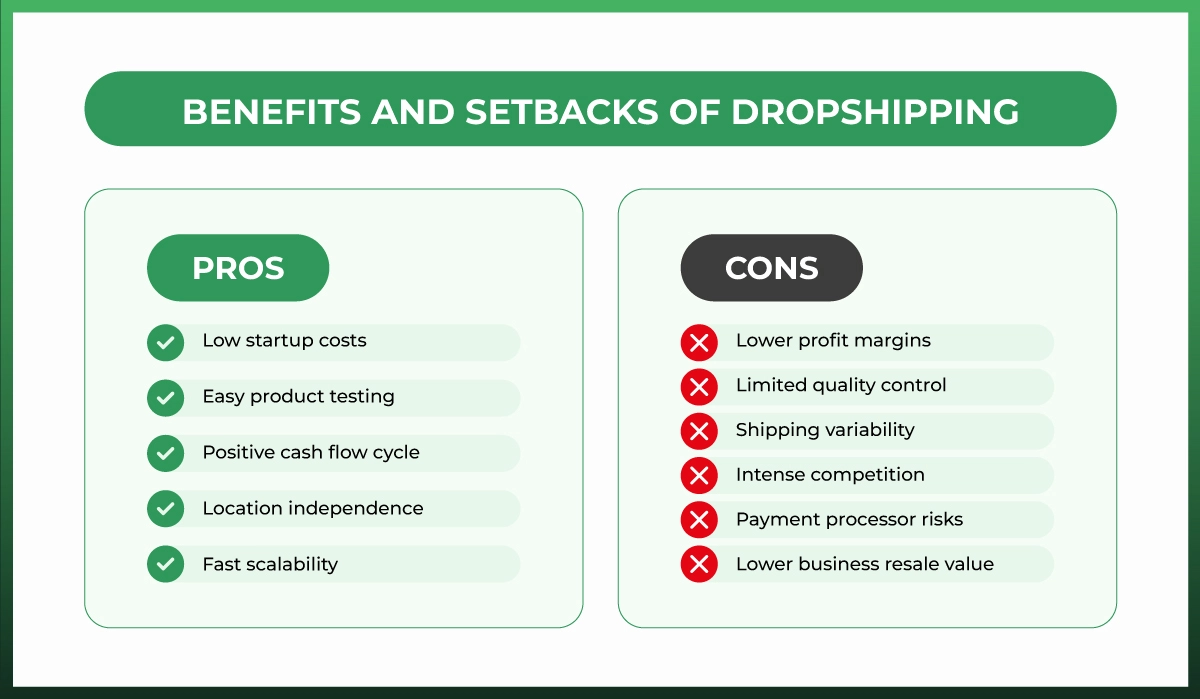
Pros:
Low startup costs
You can launch an online business for under $1,000. No inventory investment, no warehouse lease, no packaging materials. You pay for products only after a customer buys.
Easy product testing
Add or remove products from your store in minutes. If a product does not sell, delete it. If a trend takes off, list it the same day. This flexibility is impossible when you have money locked in physical product sales.
Positive cash flow cycle
Customers pay you before you pay the supplier. This means you can fund operations from revenue rather than savings, which is a significant advantage for bootstrapped entrepreneurs.
Location independence
You can run the business from anywhere with a laptop and internet. There is no warehouse to manage, no staff to supervise on-site.
Fast scalability
Adding new products and entering new markets requires almost no incremental cost. Your supplier's infrastructure handles the heavy lifting as order volume grows.
Cons:
Lower profit margins
You buy one unit at a time at retail-adjacent prices. After ad spend and supplier costs, net margins typically range from 10 to 30% depending on the niche. High volume is required to generate meaningful income.
Limited quality control
You rarely see the product before the customer does. Defective items, wrong sizes, or damaged goods create refund requests that hurt your store's reputation.
Shipping variability
Domestic suppliers can deliver in 3 to 7 days, but overseas suppliers still take 2 to 4 weeks. If you rely on cheaper overseas fulfillment, slow shipping kills repeat business and drives up chargebacks.
Intense competition
Low barriers to entry mean hundreds of stores sell identical products. Differentiation depends almost entirely on marketing and your sales funnel, not the product itself.
Payment processor risks
Platforms like Stripe and PayPal flag new stores with rapid sales spikes, high chargeback rates, excessive refunds, or slow shipping. Your payment processor or payment gateways can freeze your funds with little warning. High chargeback rates are the single biggest trigger for account freezes in dropshipping.
Lower business resale value
Investors and buyers value brands with owned inventory, exclusive supplier contracts, and customer loyalty. Dropshipping stores are seen as income streams, not long-term assets.
Pros and Cons of Traditional Ecommerce
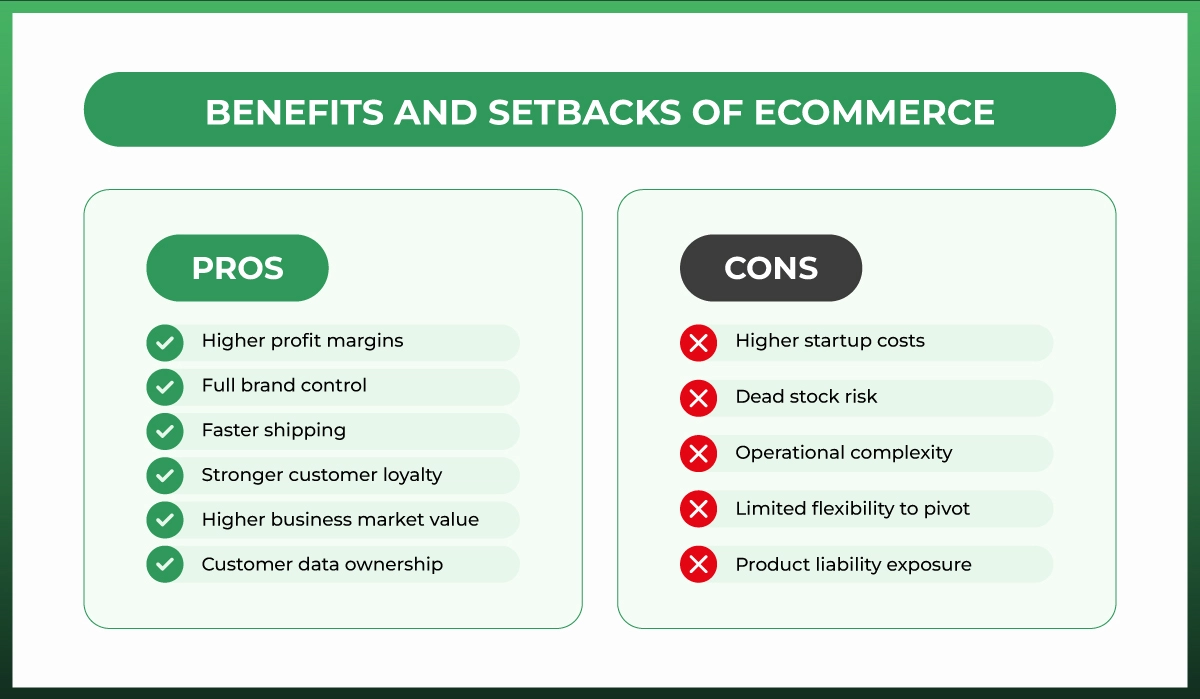
Pros:
Higher profit margins
Buying in bulk at wholesale prices reduces your cost per unit significantly. Traditional ecommerce margins typically range from 20 to 60% depending on the product category and niche.
Full brand control
Custom packaging, branded inserts, thank-you cards, QR codes for repeat purchase discounts. Every touchpoint reinforces your brand identity and builds trust.
Faster shipping
With inventory in a domestic warehouse or 3PL partner, you can offer 2 to 3 day delivery. Faster shipping improves conversion rates, customer satisfaction, and repeat purchase frequency.
Stronger customer loyalty
When you control the experience from product quality to packaging to post-purchase follow-up, customers come back. Higher customer retention rates translate to lower acquisition costs over time.
Higher business market value
If your exit strategy includes selling the business, traditional ecommerce commands higher multiples. Investors pay premiums for brands with proprietary products, owned inventory, and loyal customer bases.
Customer data ownership
You own the full customer relationship, including email lists, purchase history, and behavior data. This data fuels better marketing, better product research, and smarter inventory decisions.
Cons:
Higher startup costs
Buying inventory in bulk, leasing warehouse space, purchasing packaging materials, and setting up shipping logistics requires significant capital before you make your first sale.
Dead stock risk
If market trends shift or your market research misjudges demand, you are stuck with unsold inventory. That capital is locked up until you can discount and clear the stock.
Operational complexity
Inventory management, order processing, returns handling, staffing, and warehouse operations all require systems, time, and attention. The operational load grows with every new product line.
Limited flexibility to pivot
If you have invested $15,000 in hiking gear inventory and the market shifts, you cannot simply switch to selling pet products. Your capital and brand are tied to your current niche.
Product liability exposure
When you own and ship the product, you bear more direct responsibility for defects, safety issues, and compliance with consumer protection regulations. Understanding product liability and your legal Terms and Conditions is essential.
The Hybrid Model: How Smart Sellers Combine Both
The most effective fulfillment strategies in 2026 do not force you to choose one model forever. Many successful online store owners use a hybrid approach that combines the speed of dropshipping with the margins of traditional ecommerce.
Here is the practical workflow:
Step 1: Test with dropshipping
Find a product that looks promising based on market trends and product research. List it in your store using a dropshipping supplier. Run ads. Measure demand.
Step 2: Validate with consistent sales
If the product sells 50 to 100 units per week reliably, you have a winner. Track return rates, customer feedback, and repeat order patterns.
Step 3: Transition to inventory
Order that product in bulk at wholesale pricing. Store it in your own space or partner with a 3PL (third-party logistics) fulfillment center to handle warehousing and shipping. Now you have better margins and faster delivery on your best-selling item.
Step 4: Keep testing
Continue dropshipping new products on the side. When a new winner emerges, repeat the process. Your best sellers are stocked, your experiments are dropshipped.
This model lets you start lean, validate with real market demand data, and invest only in products that are already proven sellers. It is the lowest-risk path to building a sustainable ecommerce brand.
To illustrate: imagine a seller launches a pet accessories store with 150 dropshipped products and spends $800 on ads over four weeks. Three products generate consistent daily sales. The seller then orders those three items in bulk, negotiates wholesale pricing, and stores them with a domestic 3PL. Within two months, margins on those products jump from 18% to 45%, while new dropshipped products continue rotating through the store for testing
Can You Switch from Dropshipping to Traditional Ecommerce?
Yes, and most successful sellers do exactly this. Dropshipping works as a testing ground. Once you identify products with strong demand and acceptable return rates, transitioning to bulk purchasing is a natural next step.
The transition path is straightforward: negotiate directly with your supplier for wholesale pricing, find domestic warehousing or a 3PL partner, and invest in branded packaging. Many sellers find that the margin improvement alone (from 10 to 20% up to 40% or higher) justifies the switch within a few months of consistent sales.
Dropshipping on Amazon vs Shopify: Which Platform Should You Choose?
This is one of the most common follow-up questions once someone decides to try dropshipping. Both platforms serve different purposes, and the right choice depends on whether you prioritize traffic or control.
Amazon Dropshipping
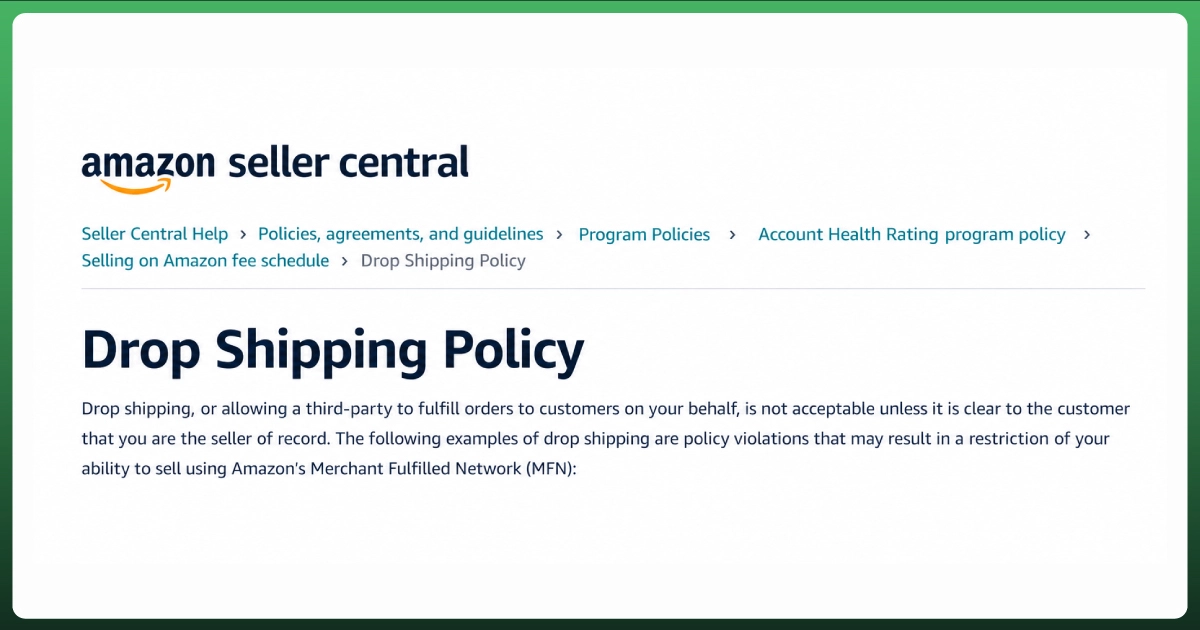
Amazon gives you access to over 300 million active buyers. You do not need to drive your own traffic because customers are already on the platform searching for products. However, Amazon has strict dropshipping policies. You must be the seller of record, and no third-party branding can appear on the package. Violating these rules leads to immediate account suspension.
Amazon also charges referral fees of 15% or more per sale, which eats into already-thin dropshipping margins. You do not own the customer relationship or customer data, and Amazon controls the rules. If you are considering selling on Amazon, setting up your Amazon seller account correctly is essential to avoid compliance issues.
Shopify Dropshipping
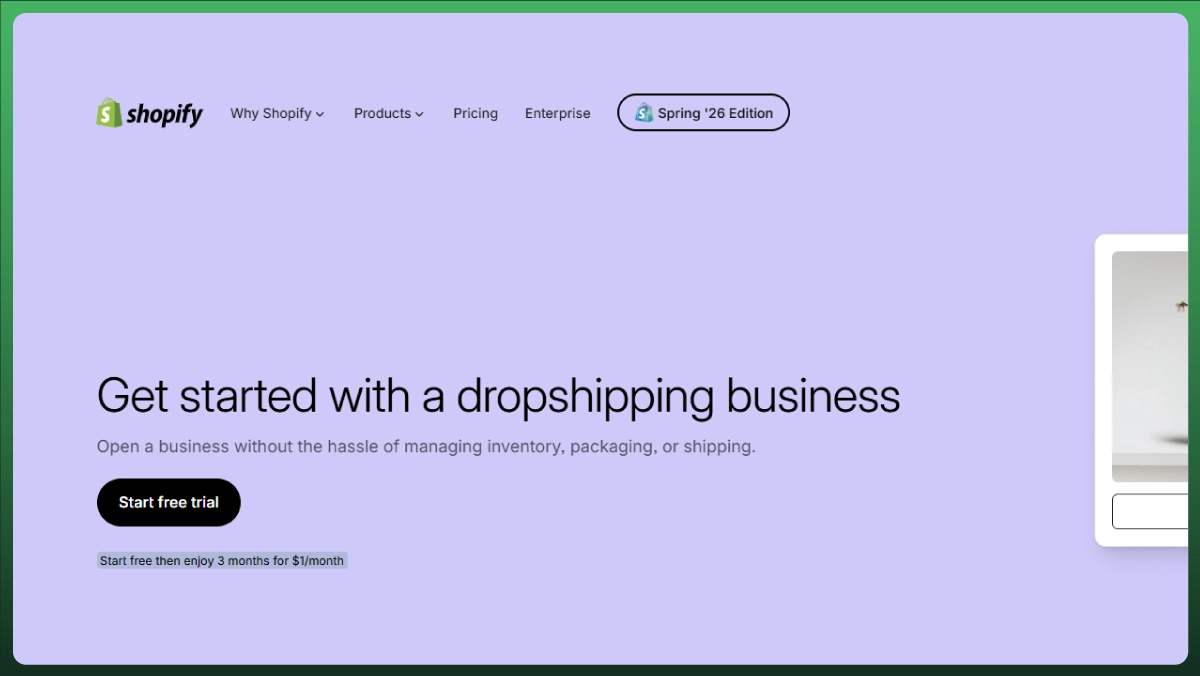
Shopify lets you build a fully customizable online store that you own. You control the website design, branding, pricing, mobile responsiveness, and customer experience. There are no restrictions on dropshipping, and you can connect to hundreds of supplier apps.
The trade-off: Shopify has zero built-in traffic. You must drive every visitor through paid ads, SEO optimization, social commerce, or content marketing. That requires either budget or time. But you get full control over your secure checkout flows, load speed, and storefront experience, which matters more than ever when evaluating dropshipping vs. ecommerce long-term.
Factor
Amazon
Shopify
Built-in traffic
300M+ active buyers
You drive your own traffic
Brand control
Very limited
Complete
Referral fees
15%+ per sale
0% (only payment processing fees)
Customer data ownership
Limited (Amazon restricts marketing use)
You own it fully
Dropshipping restrictions
Strict (seller of record required)
None
Store customization
Minimal
Fully customizable
Best for
Quick sales, market testing
Brand building, long-term growth
Many sellers use both. They test products on Amazon for fast validation, then build a branded Shopify store for long-term growth.
If you want to run a store across multiple channels, our professional ecommerce store management helps you keep operations running smoothly without losing control.
Dropshipping vs Ecommerce: The Final Take
Instead of the generic "it depends" answer, here is a structured decision framework based on your actual situation:
Choose Dropshipping If
Your startup budget is under $2,000, and you cannot afford inventory risk.
You are still in the product research phase and want to test multiple niches before committing.
You are a marketing-first founder who is strong with paid ads, social media, or influencer brands but does not want to handle warehouse operations.
You want to validate market demand for a product idea before investing in bulk inventory.
Cash flow is tight, and you need the positive cash flow cycle where customers pay before you pay suppliers.
Choose Traditional Ecommerce If
You have $5,000 or more to invest and want higher profit margins from day one.
You are building a brand with a strong identity, not just reselling generic products.
Fast shipping speed is critical for your target customers.
You want full product quality control and the ability to customize packaging.
Your niche has high return rates, making it risky to rely on a third-party supplier for customer interactions and returns processing.
Your long-term goal includes selling the business, where owned inventory and customer loyalty create a higher market value.
Choose the Hybrid Model If
You want to start lean but plan to transition winning products to inventory over time.
You already have a proven product and want to improve margins while continuing to test new items through dropshipping.
You want to balance the low-risk entry of dropshipping with the brand control and profitability of traditional ecommerce.
Regardless of which model you choose, the quality of your digital marketing strategy determines whether your store gets found. Driving traffic through SEO, paid ads, and social commerce is non-negotiable for any online business.
What Is the Main Difference Between Dropshipping and Ecommerce?
Ecommerce is the broad category of selling products online. Dropshipping is a specific ecommerce fulfillment model where the seller does not hold inventory. The supplier ships products directly to customers. The main difference comes down to who owns and manages the inventory.
Is Dropshipping Still Worth It in 2026?
Yes, but with realistic expectations. The dropshipping market continues to grow at 22%+ annually. However, success requires strong marketing skills, reliable suppliers, and a focus on customer experience. It is not the easy-money opportunity that social media often portrays.
Can You Do Dropshipping and Ecommerce at the Same Time?
Absolutely. This is the hybrid approach that many successful brands use. Stock your best sellers for higher margins and faster shipping. Dropship new or seasonal products to test demand without financial risk.
Is Dropshipping Legal?
Yes, dropshipping is legal in most countries. You must comply with consumer protection laws, collect and remit applicable taxes, and avoid selling counterfeit or restricted products. Platforms like Amazon have additional dropshipping-specific policies you must follow to keep your account in good standing.
Which Is More Profitable: Dropshipping or Ecommerce?
Traditional ecommerce is typically more profitable per sale due to higher margins from wholesale pricing. Dropshipping generates lower per-unit profit but requires far less capital to start. Total profitability depends on your sales volume, marketing efficiency, and product selection.
Is Shopify Only for Dropshipping?
No. Shopify is a full ecommerce platform that supports every fulfillment model. You can use it for dropshipping, traditional ecommerce with your own inventory, print-on-demand, digital products, or a hybrid of all of these. Shopify also offers features like Shopify Shipping and connects sellers with third-party fulfillment partners for warehousing and order fulfillment.
Ready To Start Your Online Business?
Get Expert Ecommerce Store Setup & Dropshipping Solutions From Ecomgiantz.
Ecomgiantz Team consists of our in-house experts who share their hands-on experience in ecommerce businesses, websites, marketplaces, etc. We also share the latest updates, insights, and market trends that can be helpful for your online business.