
What Is AI Search?
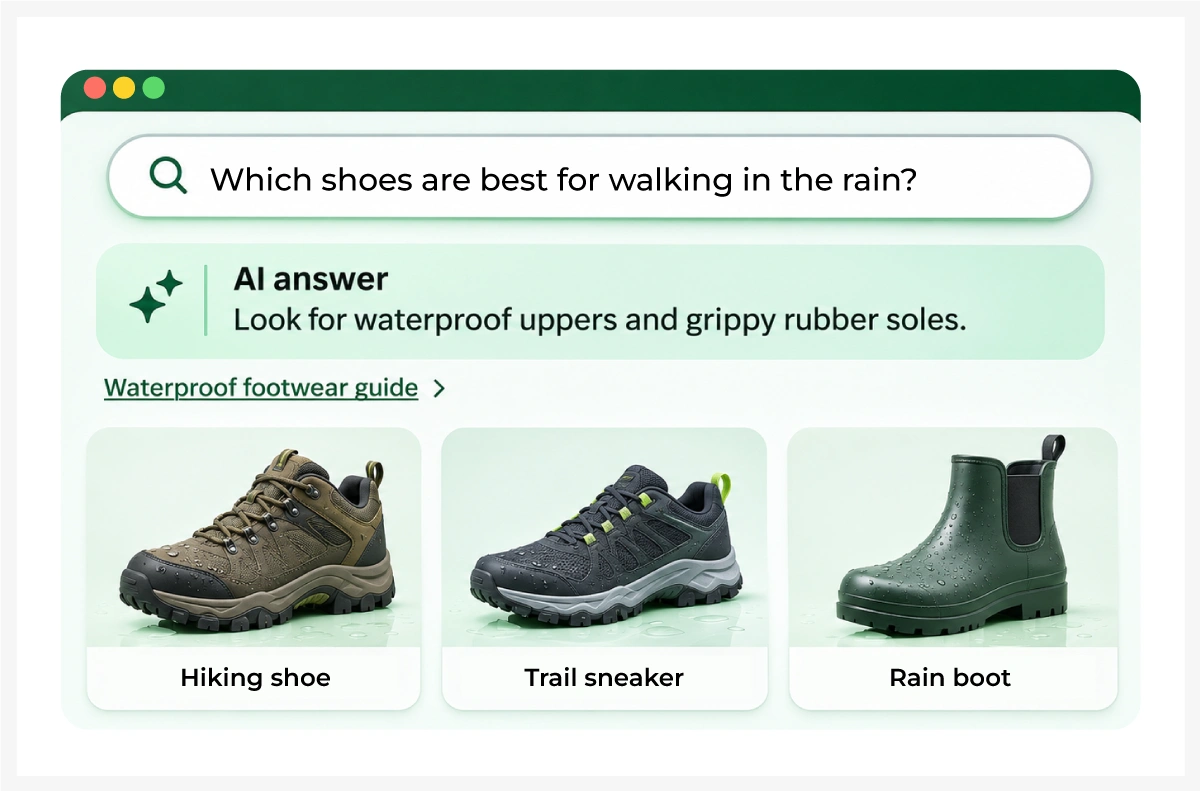
AI search is a way of finding information with artificial intelligence. Instead of relying only on a list of web pages, it can interpret a question, retrieve relevant information, and present a direct answer with supporting links. It may also suggest products, comparisons, or follow-up questions.
AI search systems use technologies such as natural language processing, machine learning, and large language models. The term can describe AI features in web search, AI assistants with search access, or intelligent search within an online store.
How Does AI Search Work?
Most AI search experiences follow a simple process. The exact approach depends on the platform and the information available.
- Understand the query. The system identifies what the person wants, including meaning and context rather than words alone.
- Find relevant information. It retrieves useful web pages, documents, or product records from a search index or connected source.
- Present the result. It ranks products or generates an explanation, often with links for checking the original information.
AI Search vs. Traditional Search
Both search approaches can use AI to understand queries and rank results. Conventional search emphasizes ranked links, while generative or conversational search may also provide direct answers. AI-powered search can also rank products without generating text.
| Factor | Traditional Search | AI Search |
| Search results | Ranked website links | AI-generated answers and summaries |
| Query understanding | Keywords, relevance, and search intent | NLP, semantic search, and conversational context |
| User experience | Users explore and compare multiple pages | Users get direct insights and ask follow-up questions |
| Product discovery | Displays product listings and reviews | Summarizes product options and comparisons |
For example, a search for “best office chair for a small apartment” might show product pages and reviews. An AI response may summarize space-saving options and explain trade-offs before the shopper visits a store.
Why Does AI Search Matter for Ecommerce?
AI search can influence how shoppers discover, compare, and evaluate products before visiting a website. It creates another opportunity for online brands to be considered, but inclusion in an AI answer is never guaranteed.
- Product discovery: Detailed product information can help AI systems identify items that match specific buyer needs.
- Purchase research: Clear specifications, comparisons, policies, and reviews can support more informed product choices.
- Store experience: AI-powered on-site search can help visitors find relevant items even when they use conversational phrases.
According to Google Search Central guidance, the same core SEO practices apply to its AI search features. There is no separate requirement or guaranteed placement. Track search visibility and referral traffic where data is available.
How Can Ecommerce Stores Improve AI Search Visibility?
- Start with accurate product titles, specifications, prices, availability, and descriptive category pages.
- Answer common questions clearly and maintain useful comparison and buying-guide content.
- Structured product data can also help eligible search systems interpret product information.
For practical implementation, Shopify keyword optimization can improve page clarity, while building an ecommerce website with logical navigation makes product information easier to discover.
Frequently Asked Questions
Is AI search the same as Google AI Overviews?
No. AI search is the broader approach. AI Overviews is one Google feature that summarizes information within search results.
What are examples of AI search?
Google AI Mode, AI Overviews, search-enabled assistants, and AI-powered ecommerce site search are examples of different AI search experiences.
Can AI search help small ecommerce businesses?
Potentially. Clear product details and helpful content can make smaller stores easier to understand, although visibility is not guaranteed.
Does AI search replace traditional SEO?
No. Crawlable pages, reliable information, useful content, and technical SEO remain important for many AI search experiences.
Can AI search provide incorrect information?
Yes. AI-generated answers can misread or overlook information, so shoppers and merchants should verify important claims against sources.