
What Is an AI Agent?
An AI agent is a digital system that receives an objective, checks relevant information, and decides what actions to take. Unlike a basic chatbot that mainly provides answers, an agent can handle multiple steps, use external tools, and respond to the results of its actions.
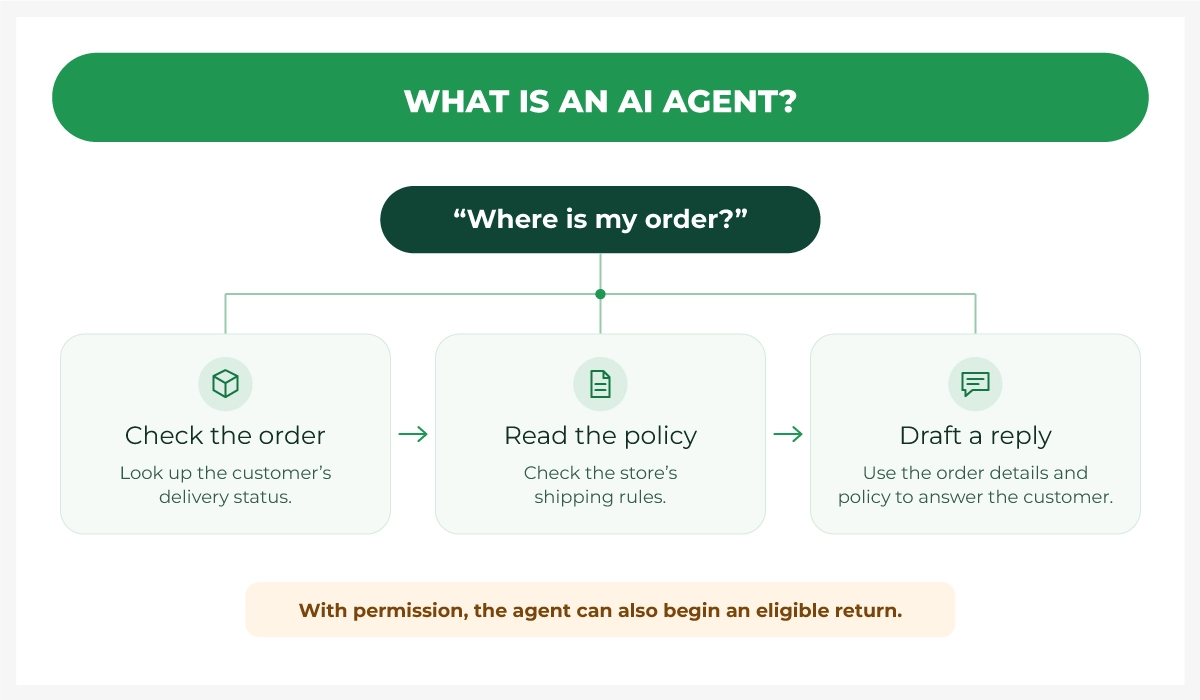
For example, an ecommerce support agent may check an order’s delivery status, read the shipping policy, and prepare a customer-specific response. With permission, it might also begin an eligible return. What it can do depends on its data access, connected systems, and business rules.
Agents are not automatically independent or error-free. Some can complete routine tasks on their own; others must request approval before changing orders, issuing refunds, or spending money.
What Are the Types of AI Agents?
AI agents can be classified by how they make decisions, such as reactive, goal-based, and learning agents. For store owners, it is often easier to understand them by what they do:
- Customer service agents: Check orders, answer delivery questions, organize tickets, and pass complex issues to a person.
- Shopping agents: Compare products, understand buyer preferences, and help customers find suitable items.
- Operations agents: Monitor inventory, identify fulfillment problems, and prepare restocking actions.
- Marketing agents: Analyze campaign information, organize audience insights, and assist with approved marketing workflows.
How Does an AI Agent Work?
Most AI agents use a repeating process to move from a goal to an outcome:
- Understand the goal: Interpret an instruction, customer question, or business trigger.
- Gather information: Retrieve relevant details from product catalogs, customer records, policies, or other approved sources.
- Plan the next step: Select useful tools or actions based on the available information.
- Act within limits: Update a ticket, draft a message, or submit an authorized request.
- Check the result: Evaluate the outcome, continue if necessary, or ask a person to review.
Consider a store with a popular item running low. An inventory agent could check recent sales and supplier lead times, then draft a replenishment request. A manager would approve any purchase before the order is placed.
Why Do AI Agents Matter in Ecommerce?
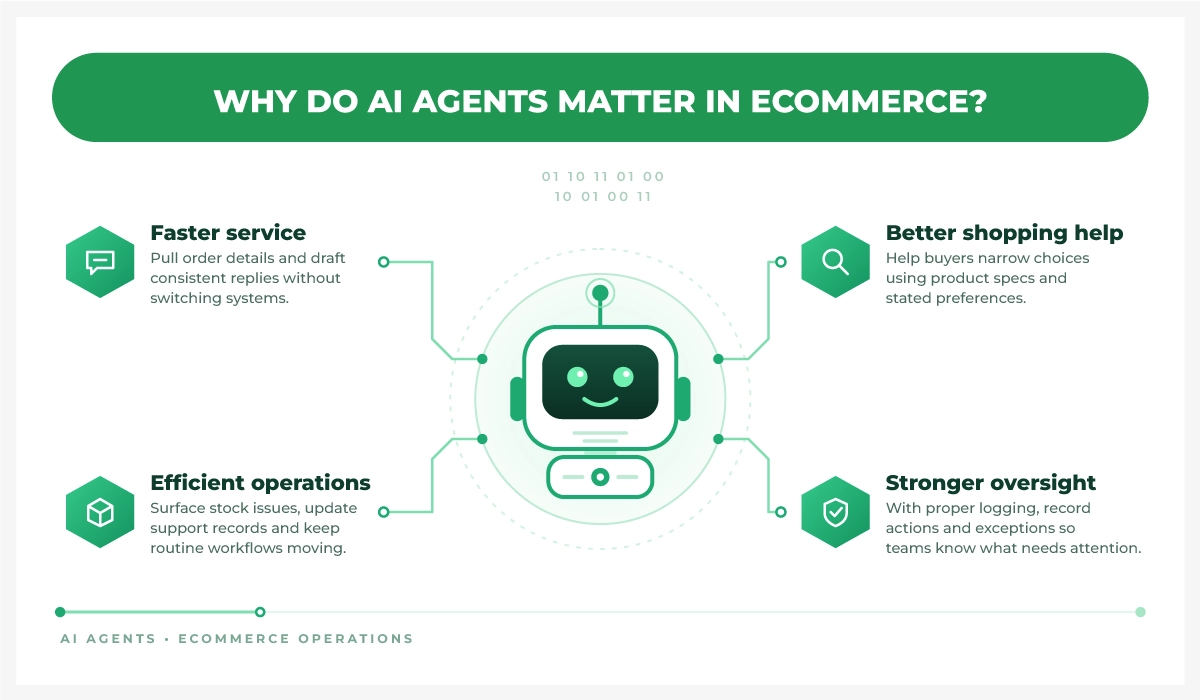
AI agents can reduce the time spent on repetitive work while making online operations more responsive. Their potential benefits include:
- Faster service: Retrieve order details and prepare consistent responses without repeatedly switching systems.
- More efficient operations: Surface stock issues, update support records, and keep routine workflows moving.
- Better shopping assistance: Help buyers narrow choices using product specifications and stated preferences.
- Stronger oversight: With proper logging, record actions and exceptions. So teams can evaluate what needs attention.
Frequently Asked Questions
Is an AI agent the same as a chatbot?
Not necessarily. A chatbot is a conversational interface, while an AI agent can plan and take authorized actions. A system can be both, unlike basic chatbots that only answer questions.
Can AI agents manage ecommerce orders?
They can assist with order-related workflows when connected to approved systems. Payments, refunds, and account changes should use strict permissions and review.
Do small online stores need AI agents?
Not always. A smaller store can test one repetitive task first and expand only if the benefits justify the setup and operating costs.
Are AI agents fully autonomous?
Not necessarily. Autonomy varies by design, and businesses can require human approval for sensitive or irreversible actions.