What Is Store Management?
Learn what store management is and how it streamlines inventory, orders, product listings, customer support, and daily operations to help ecommerce businesses save time, improve efficiency, and grow faster.

Learn what store management is and how it streamlines inventory, orders, product listings, customer support, and daily operations to help ecommerce businesses save time, improve efficiency, and grow faster.


Store management is a process that helps e-commerce or local sellers serve customers without any hurdles. Today, store management systems handle inventory, orders, product pages, site maintenance, and customer support. They do this from a single dashboard. Doesn’t matter if you sell on Shopify, WooCommerce, or any other platform; the store management software will help you convert your store visitors into customers efficiently.
Catchy product images, detailed product descriptions, and unique interfaces aren’t the only elements for a complete shop. Proper inventory and store management behind the curtain are the key to converting and retaining clients.
As a store manager or owner, you do not need a huge team to do this well. You need a system. By the end of this guide, you will know exactly what a store management system is, why it shifts from one platform to the next, and when handing it off finally makes sense.
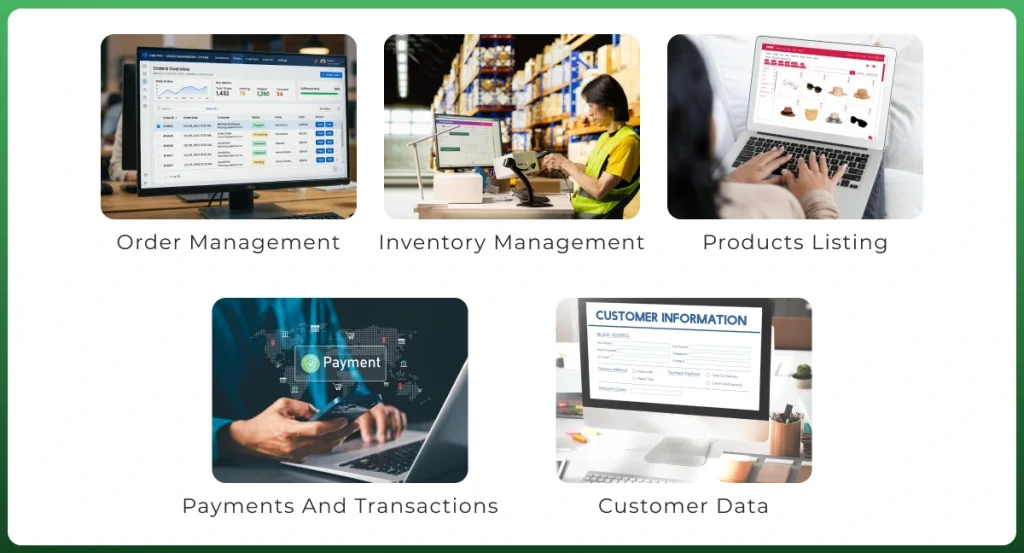
An online store management system is e-commerce software that comes with these features:
Online store management is the ongoing work of keeping an online or physical shop functional. It is the daily upkeep that sits atop your platform, whether that's Shopify, WooCommerce, or Magento. You're keeping stock accurate, orders moving, product pages clean, and the whole site healthy so it actually sells.
Precisely speaking, the core tasks are handling inventory and SKUs, order processing and fulfillment, sales tracking, catalog (PIM) upkeep, and site maintenance like CMS updates, payment integrity, security, and page speed. It also covers your Google Merchant Center feed, customer support, and the numbers that matter, like conversion rate and cart abandonment.
Store management software can consist of multiple functions that work together for efficiency. Each function handles a different job that involves managing both online and physical stores.
For example, Shopify or BigCommerce are platform-native systems. Here, admins can handle both the basic and core structure of the online shop.
Whereas an inventory management system, or IMS, can only track stock. And the order management system only routes and confirms sales. It is also the foundational part of supply chain management.
But a product information management tool can only keep catalog data clean across channels to sort and list a bulk amount of products.
ERP software is an enterprise-level solution. It ties finance, stock, and operations together under one roof.
Nowadays, multichannel or marketplace software is the most demanding tool. The system can sync data from all channels and help you run your stores on different platforms.
Some business owners combine multiple solutions to scale their store operations efficiently. Whereas, people even go after personalized all-in-one solutions for better pricing.
Now, let’s list the tasks a store management system will handle for you. A complete solution will take care of these daily responsibilities and let you focus on your business growth.
Logistics and orders sit at the center of it all. You track what you have, reorder before you run dry, and push each sale through to fulfillment without errors. A multichannel software dashboard lets you handle inventory and orders across every channel from one screen, which saves real hours. Your sales data always remains up-to-date.
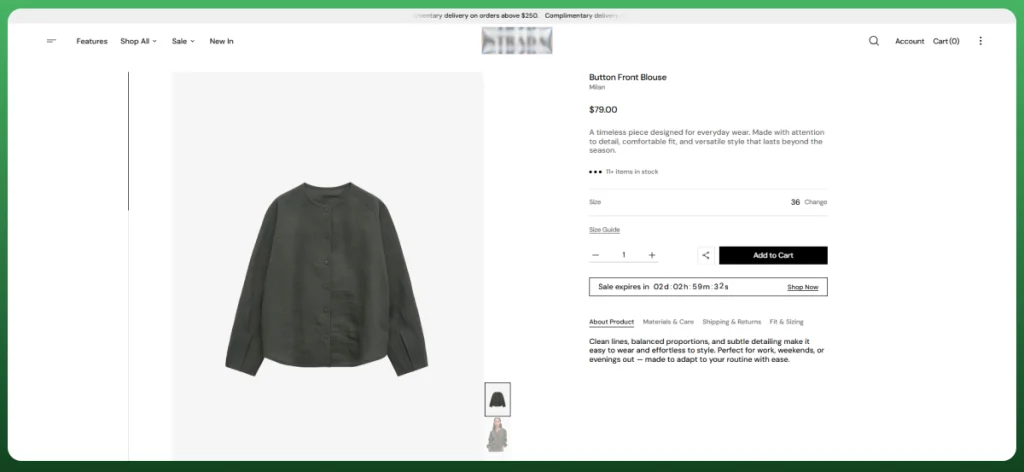
In product pages, every title, image, price, and description either earns trust or kills it. Automated tools will keep listings accurate, add new arrivals quickly, and prune dead products. Clean catalog data also feeds search visibility. It helps both shoppers and Google understand what you sell.
Broken links, expired discounts, plugin updates, payment glitches, and slow pages all need watching. The system will treat maintenance like brushing teeth: boring, quick, and impossible to skip. A weekly backend review catches most issues before customers ever notice them.

Selling once is easy. Earning a repeat buyer takes care. Online retail store management software will organize the customer support portal. From there, you can answer questions fast, handle returns without drama, and follow up after delivery. Shoppers remember how you treated them far longer than they remember your price. Strong support turns a one-time order into a loyal, reviewing, referring customer.
Running your business in several locations needs proper synchronization. Store management software can help you a lot here. You get to control everything from just one device.
The system will sync and update stock for every shop in real time. You can see the whole purchase details instantly. You can easily refill the inventory before anything runs out. The reporting of all your stores also becomes centralized.
If your shop is live on Shopify, Amazon, eBay, and other platforms, this won’t be an issue as well. All data will be unified with the system. Orders, listings, and stock levels stay in sync across channels, so a sale in one place updates the rest automatically.
Less manual work, fewer overselling mistakes, and a clear view of your business; you get a seamless solution.
Depending on where you’ve launched your online store, the functions of store management can vary. Here’s a short breakdown.
Shopify keeps things tidy and beginner-friendly. Most operations happen inside a clean admin panel, and automation tools like Flow handle repetitive jobs. The trade-off shows up in app costs and transaction fees.
Our Shopify store management approach leans hard on built-in automation, so owners spend less time clicking around. You can easily focus on launching quality products rather than handling technical issues with us.
WooCommerce runs on WordPress, which means freedom and responsibility in equal measure. You control everything, but you also patch updates, manage hosting, and keep plugins from clashing.
WooCommerce is highly regarded for flexibility. Many prefer it for the upkeep it demands, especially around security and speed as a catalog grows.
Wix suits smaller catalogs and owners who want simplicity. The editor feels friendly, and hosting comes baked in. Operations stay light, though advanced features get limited once you scale.
Our Wix store management work usually focuses on clean product setup, payments, and squeezing performance out of a tidy build.
These two serve bigger operations. Magento offers deep customization for large catalogs, but it asks for real developer muscle to run safely.
BigCommerce sits between Shopify's ease and Magento's power, with strong built-in features.
Both reward sellers who have outgrown starter platforms and need room to expand without constant workarounds.
This one is not a storefront, yet it matters enormously. Google Merchant Center feeds your products into Google Shopping, so accurate data here drives free and paid visibility. Disapproved items and bad feeds quietly cost sales. A solid Google Merchant Center setup keeps product data clean, so listings stay live and competitive.
People mix these two up constantly, so let me draw a clean line. Design and development is the build phase. It covers your theme, layout, page structure, and the web design and development work that brings a storefront to life before a single product sells.
E-commerce operations pick up where the build ends. Once your site goes live, someone has to stock it, run it, update it, and serve buyers every day. Design is the house. The day-to-day is everything you do to actually live in it. One is a project; the other never stops.
You need both, but at different moments. A beautiful site with neglected operations leaks money silently. A well-run shop on a basic theme still pays the bills. I would take the second one any day if someone forced me to choose between them.
At some point, you will ask whether to run all this yourself or hand it over. We’ve sat on both sides of this decision with clients. Neither answer is wrong. The right call depends on your time, your budget, and how fast you want to grow.
Doing it yourself gives you full control and zero outside cost. You know your products best, and quick changes need no approval. The catch is time. Operations swallow hours that you could spend on strategy, sourcing, or simply resting. For many solo owners, that hidden cost grows heavier every month.
Outsourcing trades a fee for freedom. A dedicated team handles the daily grind while you focus on the big picture. You gain experience, tools, and coverage you could never justify hiring for alone. A good marketplace and store partner also spots problems early, before they reach your customers or your reviews.
Ask yourself one honest question. Is operations work stopping you from growing the business? If you ship orders at midnight instead of planning next quarter, that is your answer. Start small if you feel unsure. Hand off the most repetitive tasks first, then expand once you trust the results.
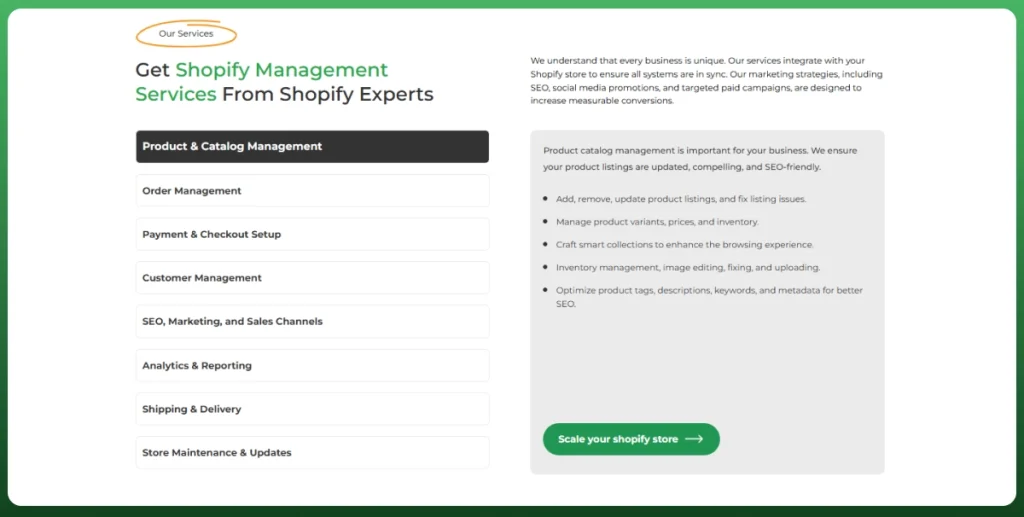
This is the work my team does every day. At Ecomgiantz, we run ecommerce store management across Shopify, WooCommerce, Wix, Magento, BigCommerce, and Google Merchant Center. As a certified Shopify Partner and Amazon SPN provider, we have kept more than 700 shops stocked, accurate, and selling.
We don't offer guesswork. We treat your shop like our own, streamlining inventory, fixing operations, and improving the buyer experience until it runs without drama. Our Shopify development and store management case study shows the kind of results that follow when the daily details finally get the attention they deserve.
Store management is the background work that will determine how far your business will go. Your clients might not directly require these supports. But these tasks will eventually improve your service and reputation.
With a complete ecommerce store optimization and management solution, your stock stays accurate, orders ship on time, pages load fast, and buyers feel cared for.
However, managing a multichannel online store isn’t a one-man job. If you’d like to let the experts handle the daily grind, Ecomgiantz can be your right partner. From real-time inventory management to quick customer support, we do everything for you.