
What Is an Ambassador Program?
An ambassador program is a structured way for a business to work with people who recommend its products to others. Participants may be loyal customers, niche creators, or community members. They share genuine product experiences through social posts, videos, referrals, events, or word of mouth.
Unlike a one-time paid promotion, an ambassador program usually continues for months. The brand provides clear expectations and rewards. Ambassadors use their own voice to introduce products to relevant audiences.
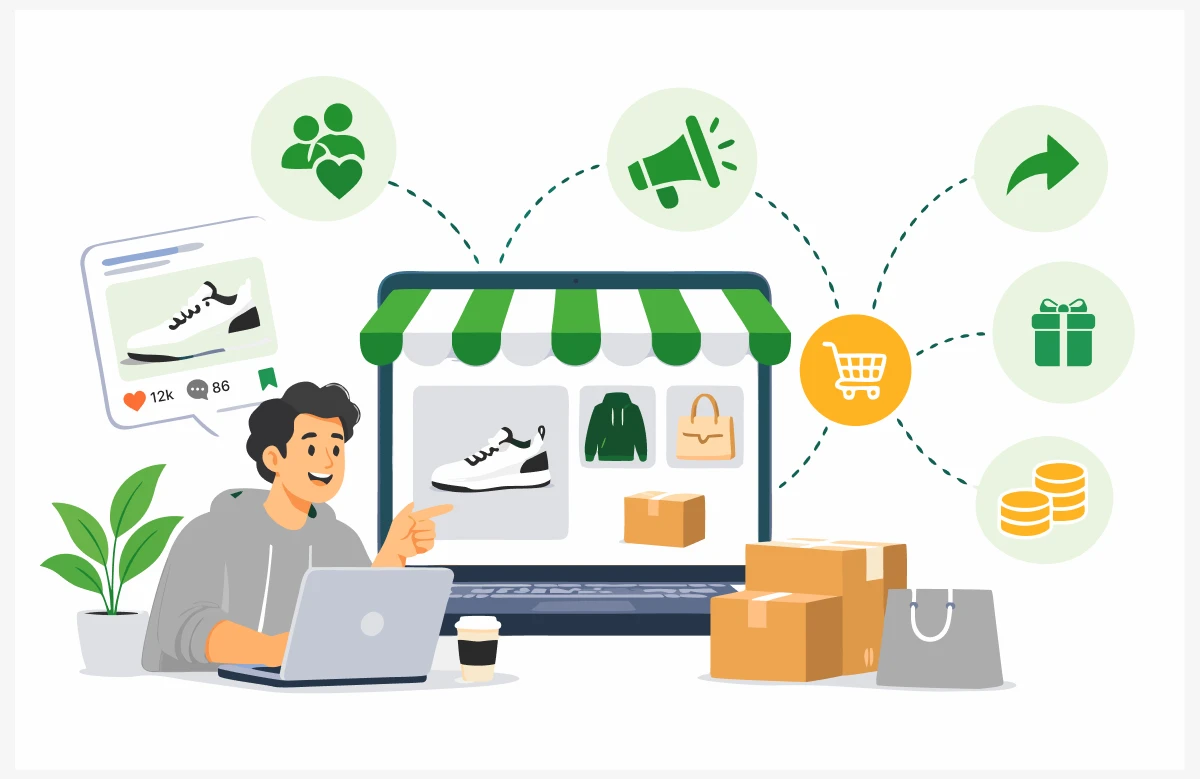
For example, a skincare store might invite repeat buyers to try a moisturizer and share honest routines. Each participant receives a referral code. The store can track resulting orders and continue working with ambassadors whose recommendations resonate with shoppers.
Why Do Ecommerce Brands Use Ambassador Programs?
- Ambassador programs can increase product discovery through familiar voices, create useful demonstrations, encourage repeat exposure, and generate referral sales.
- This gives brands feedback from people who regularly use their products.
- The program can complement social media marketing by turning customer experiences into content that audiences can evaluate and share.
Results depend on audience fit, genuine recommendations, sensible rewards, and consistent support.
Ambassador Program vs. Affiliate vs. Influencer Marketing
These approaches overlap. An ambassador may also use affiliate links, and an influencer may become a long-term ambassador. But the usual relationship and reward model differ:
| Model | Typical relationship | Typical incentive |
|---|---|---|
| Ambassador program | Ongoing brand advocacy | Products, perks, fees, or commission |
| Affiliate program | Promotion linked to tracked actions | Usually performance-based commission |
| Influencer campaign | Often a defined content campaign | Usually a fee or contracted benefits |
How to Start an Ambassador Program
Choose one main goal, such as awareness, demonstrations, first-time sales, or retention. Start with customers or creators who already appreciate the product. Explain rewards, content guidelines, usage rights, and tracking before asking them to post.
An established ambassador group can support Black Friday and Cyber Monday marketing strategies through product demonstrations and timely buying advice.
When marketing to US consumers, disclose material connections, including free products and payment. The FTC’s Disclosures 101 guidance explains how to make these relationships clear.
How Is Ambassador Program Success Measured?
Track relevant content engagement, referral visits, code-driven sales, repeat purchases, and acquisition costs. Also review the accuracy of product claims and the quality of ambassador feedback. A tracked sale does not always represent an additional sale. So compare performance with normal buying patterns where possible.
Frequently Asked Questions
Who can become a brand ambassador?
Customers, creators, employees, and community advocates can become brand ambassadors when their interests, experience, and audience fit the brand.
Do brand ambassadors always get paid?
No. Rewards may include free products, early access, discounts, fixed fees, or commissions, depending on the agreement.
Can a small online store run an ambassador program?
Yes. A small group of engaged customers can provide useful product content and referrals without requiring a large influencer budget.
Is an ambassador program the same as an affiliate program?
No. Affiliate programs usually emphasize tracked sales. Ambassador programs emphasize an ongoing brand relationship. Some programs combine both.