Discover the benefits of ecommerce SEO, from increasing organic traffic and reducing customer acquisition costs to improving conversions, strengthening brand trust, and achieving sustainable long-term online business growth.
What if your online store could keep attracting customers even without spending on ads?
For many e-commerce businesses, paid campaigns can deliver quick results. They often stop generating traffic the moment your budget runs out. E-commerce SEO works differently. Instead of renting visibility, it helps you build a long-term asset that continuously brings qualified shoppers to your store through organic search.
The real benefits of ecommerce SEO go far beyond higher rankings. A well-optimized store can reduce Customer Acquisition Cost (CAC), improve search visibility across thousands of products, strengthen customer trust, and generate compounding organic ROI over time.
Here, you’ll know how ecommerce SEO supports sustainable business growth. Why it's one of the smartest long-term investments for scaling an online store.
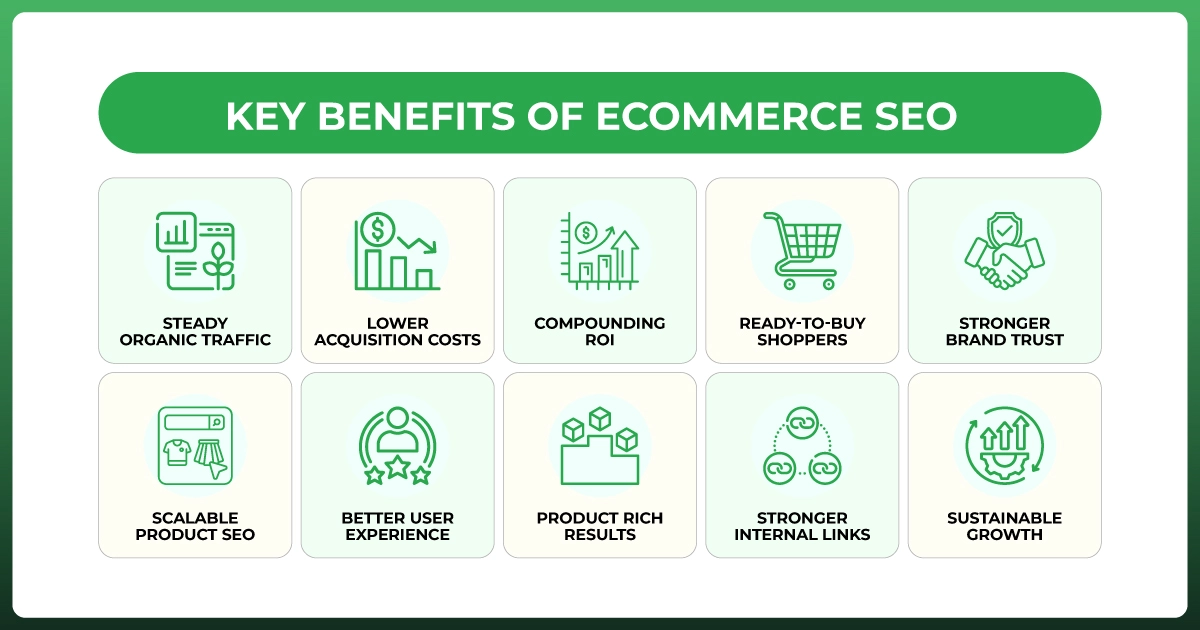
Key Benefits of Ecommerce SEO at a Glance
Here's a quick overview of the biggest ecommerce SEO benefits:
Generate consistent organic traffic without paying for every click
Reduce Customer Acquisition Cost (CAC) over time
Create compounding ROI through long-term search visibility
Attract high-intent customers who are ready to purchase
Improve brand credibility through higher search rankings
Optimize thousands of products through scalable site architecture
Increase conversions with better user experience and faster websites
Improve discoverability through Product Schema Markup
Strengthen internal link equity across product and collection pages
Unlike paid campaigns, these benefits don't disappear when marketing budgets fluctuate. Instead, they continue building momentum as your website earns more authority and trust in search engines.
What Is Ecommerce SEO?
Ecommerce SEO is the process of optimizing an online store so that its products, categories, and supporting content appear prominently in search engine results. It combines technical optimization, content strategy, keyword targeting, and website architecture to improve visibility for shoppers actively searching for products.
An effective ecommerce SEO strategy typically focuses on:
Keyword optimization for commercial search intent
Product Detail Pages (PDPs)
Collection Pages
Technical SEO
Product Schema Markup
Internal linking
Site architecture
Core Web Vitals
Mobile usability
Conversion-focused content
When all these elements work together, your store becomes easier for search engines to crawl, understand, and recommend to potential customers.
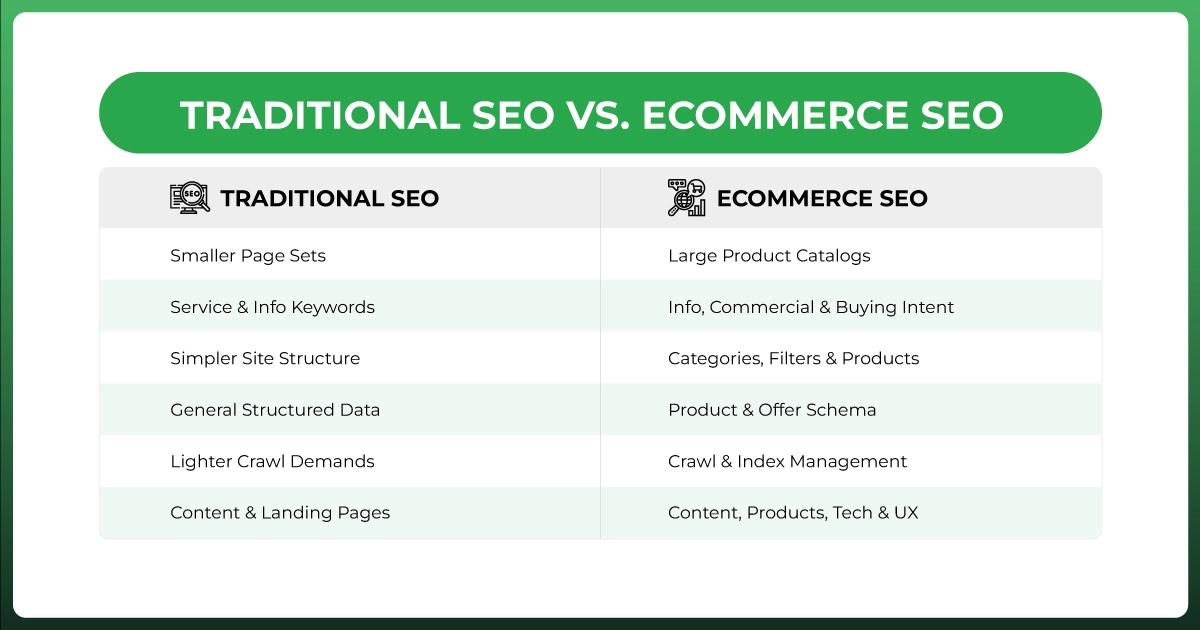
Why Ecommerce SEO Is Different from Traditional SEO
Although the fundamental principles of SEO remain the same, ecommerce websites face a unique set of challenges.
A service-based website might have only 20 to 50 pages. An e-commerce business can easily exceed 5,000 or even 100,000 URLs once products, collections, filters, variants, and pagination are considered. This scale changes everything.
Instead of optimizing individual landing pages, ecommerce SEO focuses on managing an entire digital catalog while maintaining structural search visibility. Every decision about navigation, category hierarchy, internal linking, and product organization directly affects search performance.
Quick Fact: Google recommends organizing ecommerce websites through clear navigation structures that connect category pages, subcategories, and product pages, helping Google discover and understand your entire product catalog more efficiently.
Some of the biggest differences include:
Large Product Inventories
Every product needs optimized titles, descriptions, metadata, images, structured data, and internal links.
Complex Site Architecture
Categories, subcategories, collections, filters, and navigation all influence how search engines understand your website.
Constant Catalog Changes
Products go out of stock, new collections launch, seasonal inventory rotates, and discontinued pages require proper redirects.
Commercial Search Intent
Unlike informational blogs, ecommerce SEO targets users who are closer to making purchasing decisions.
Technical Scalability
Managing crawl budget efficiency, canonical tags, XML sitemaps, faceted navigation, and structured data becomes increasingly important as stores grow.
Top Benefits of Ecommerce SEO
The primary goal of ecommerce SEO isn't just improving rankings. It's building an online store that consistently attracts qualified customers while reducing reliance on expensive advertising channels.
1. Lower Customer Acquisition Cost (CAC)
Paid advertising platforms continue to become more competitive every year. As more businesses bid on the same keywords, cost per click increases. This makes customer acquisition increasingly expensive. Organic search helps offset these rising costs.
Once your pages begin ranking, you can continue attracting visitors without paying for every individual click. Although SEO requires ongoing investment, its long-term cost per acquisition is genuinely significantly lower than continuously funding paid campaigns.
Lower CAC allows businesses to invest more in product development, customer experience, and retention instead of relying entirely on advertising spend.
2. Sustainable Customer Acquisition
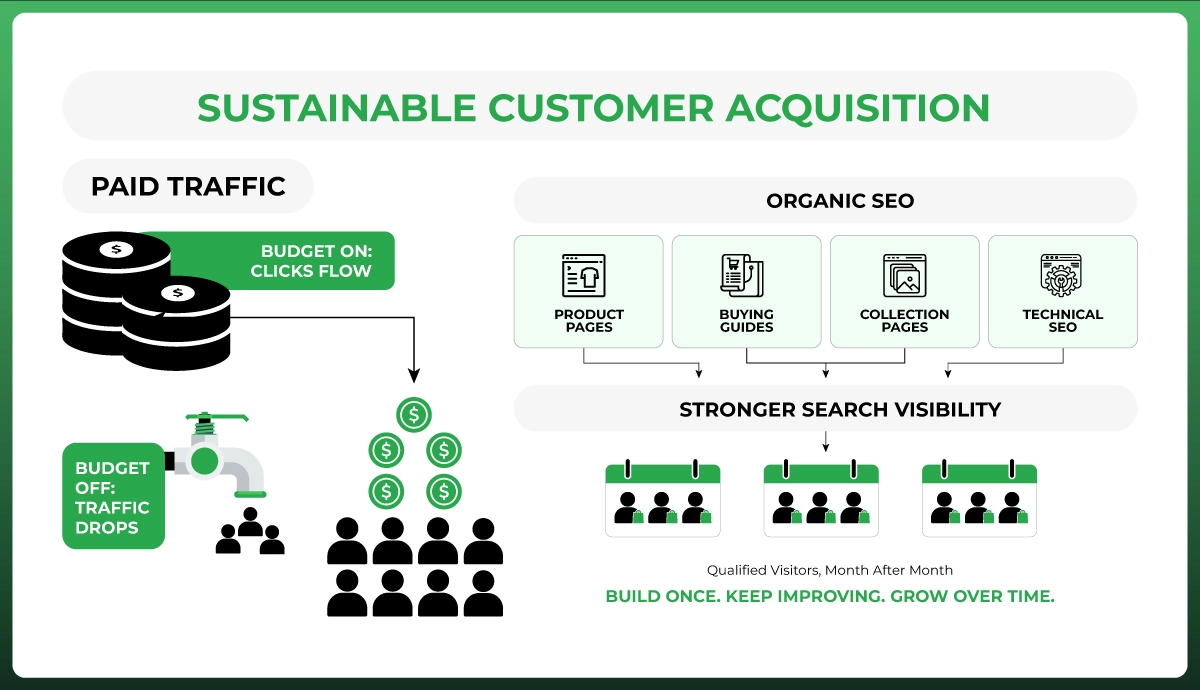
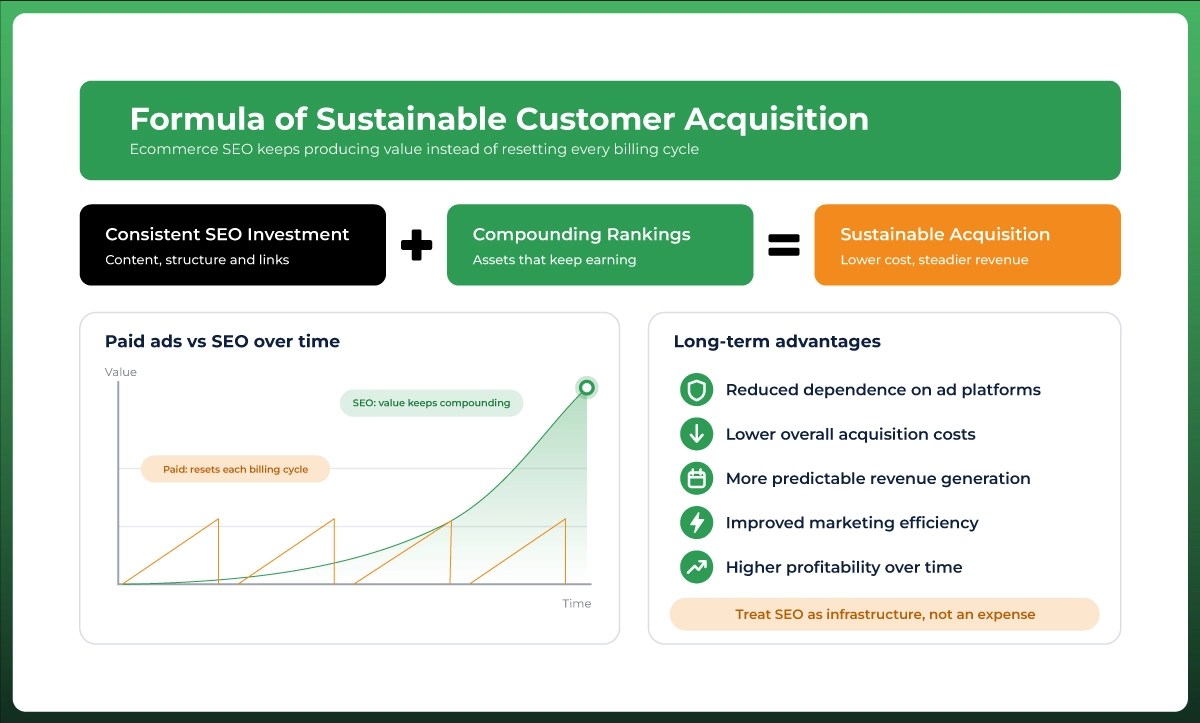
One of the greatest benefits of SEO for ecommerce is sustainability. Paid traffic behaves like a faucet. Turn off the budget, and traffic immediately declines. Organic traffic works differently.
Every optimized product page, buying guide, collection page, and technical improvement contributes to long-term visibility. Over time, your website builds authority, making it easier for new pages to rank as well.
This creates a sustainable customer acquisition engine that continues generating qualified visitors month after month.
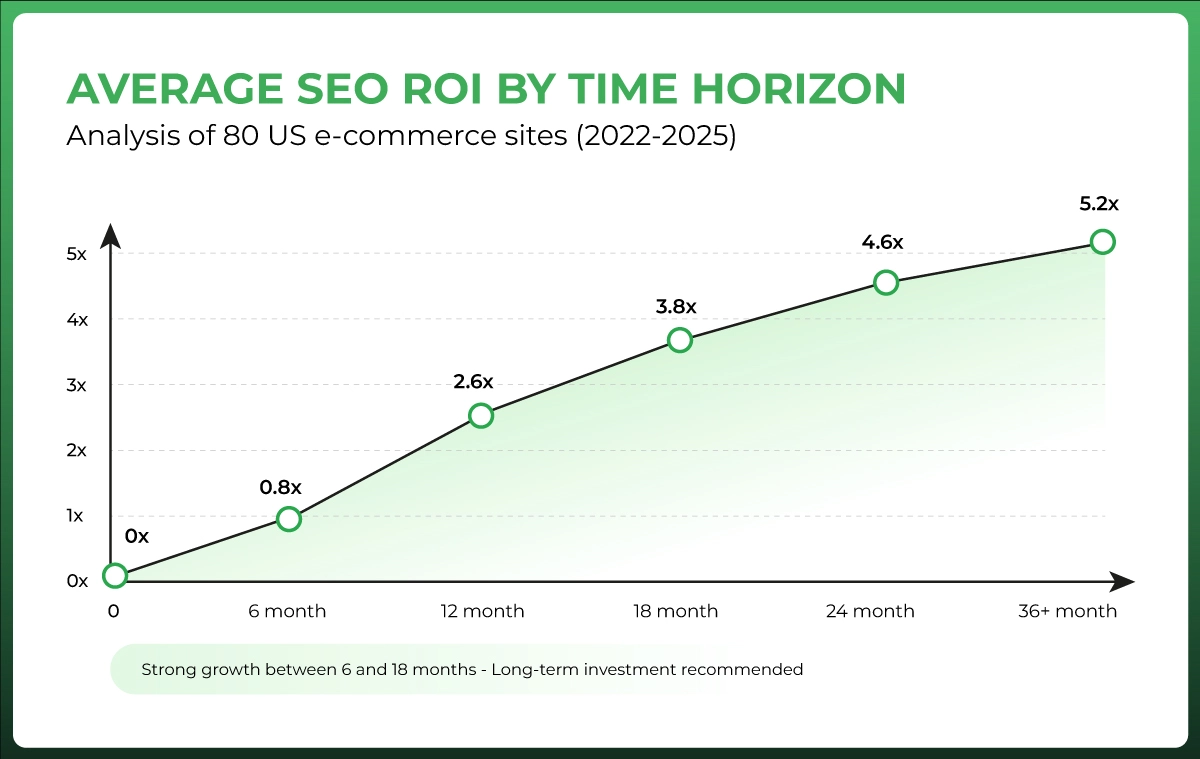
3. Compounding Organic ROI
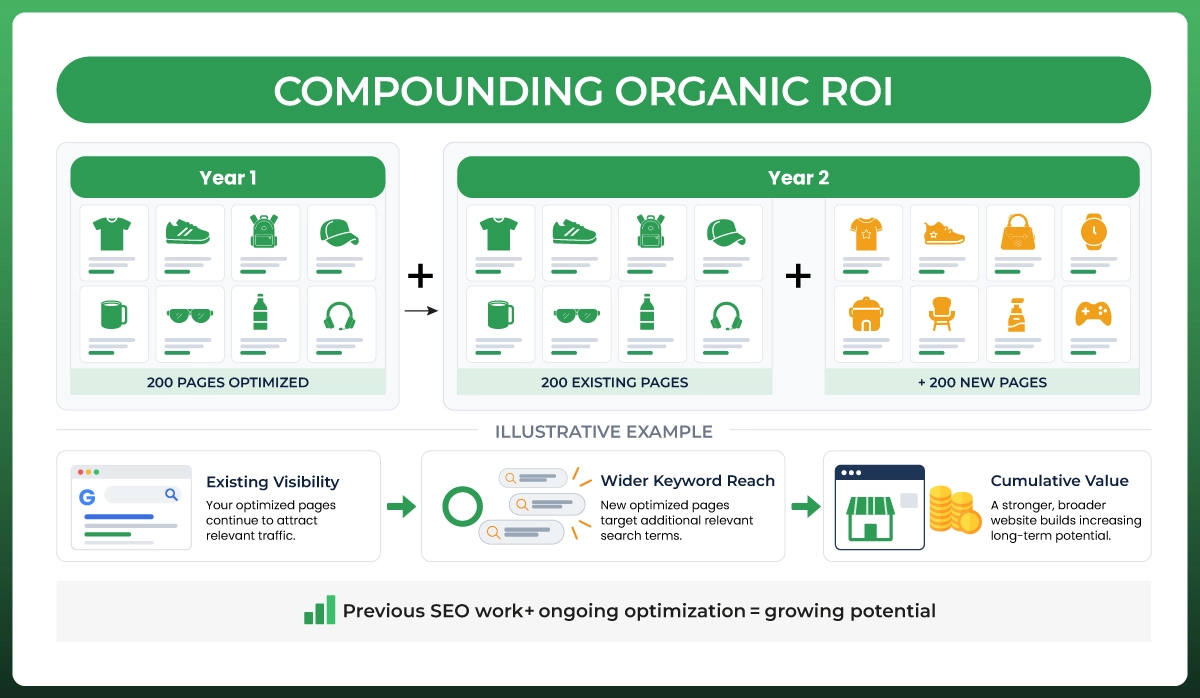
Unlike paid advertising, organic search delivers cumulative returns. Imagine optimizing 200 product pages this year. Next year, you will optimize another 200. Instead of starting from zero, you're building on an increasingly authoritative website.
Existing rankings continue generating traffic while new pages expand your keyword footprint.
According to Ahrefs, based on data from more than 400,000 websites, whole-site organic CTR typically falls between 1% and 2%, demonstrating the consistent value of earning organic visibility across an entire website.
This creates what marketers often describe as the compounding ROI of organic search. Here, each optimization adds value to all previous efforts.
As your domain authority strengthens, ranking new products often becomes faster and easier than before.
4. Higher Brand Visibility and Trust
Consumers naturally associate high-ranking websites with credibility. Appearing consistently for product searches, category searches, and informational queries increases brand recognition across multiple stages of the buying journey.
Even if a customer doesn't purchase during their first visit, repeated exposure builds familiarity and trust. Over time, this visibility can influence branded searches, repeat visits, and customer loyalty. These benefits extend well beyond immediate conversions.
5. Better Conversion Opportunities
SEO isn't just about attracting more traffic. It's about attracting the right traffic. Users searching for specific products, comparisons, or purchase-related keywords typically have stronger buying intent than users browsing social media or display ads.
When your optimized product and collection pages match those search queries, visitors arrive with a clearer purpose, increasing the likelihood of conversions.
Combined with strong product descriptions, compelling visuals, customer reviews, and streamlined navigation, ecommerce SEO helps transform qualified visitors into paying customers.
6. Long-Term Business Scalability
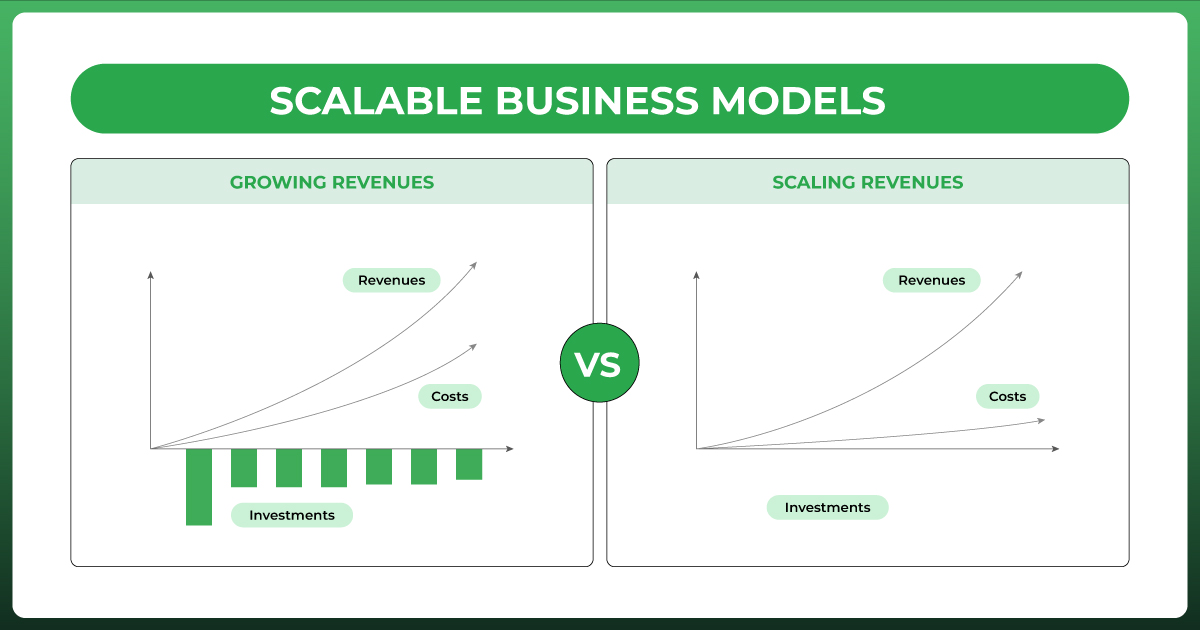
Perhaps the most overlooked benefit of ecommerce SEO is scalability. As your catalog expands from hundreds to thousands of products, a properly optimized website can continue increasing visibility without requiring proportional increases in advertising spend.
Instead of paying for each additional customer, you're investing in an asset that grows stronger over time. For businesses aiming to build predictable revenue and sustainable growth, few marketing channels offer the same long-term potential as ecommerce SEO.
7. Mitigating Pay-Per-Click (PPC) Cannibalization
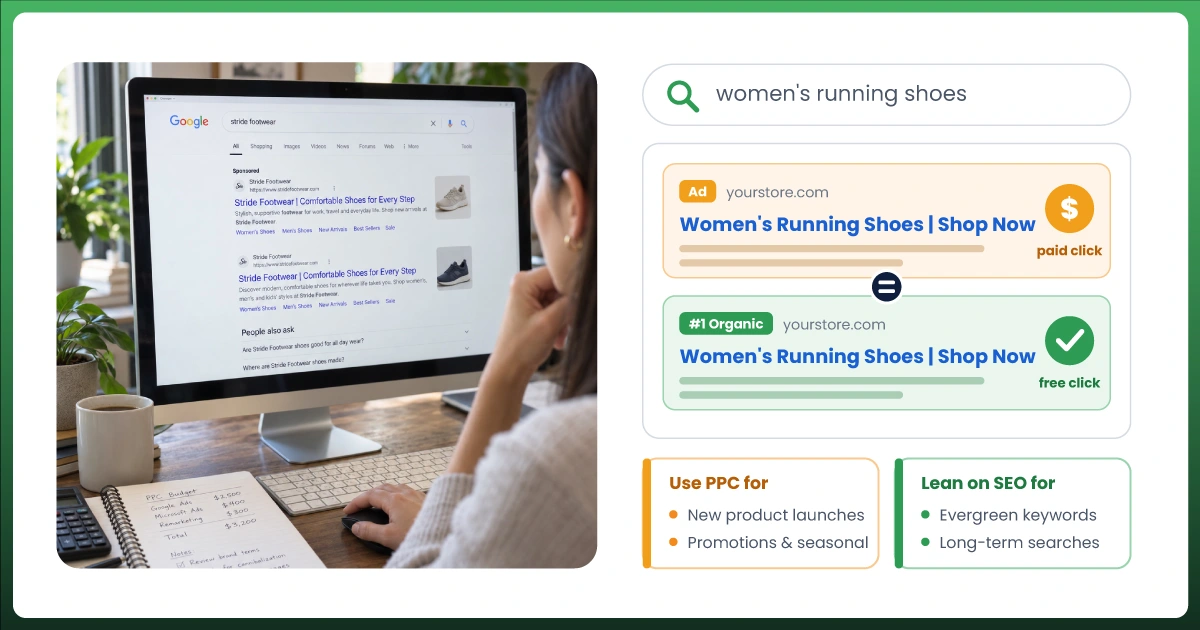
Many ecommerce businesses invest heavily in Google Ads while overlooking opportunities to capture the same traffic organically. This often creates unnecessary Pay-Per-Click (PPC) cannibalization, where businesses pay for clicks they could have earned through strong organic rankings.
Suppose your store consistently ranks in the top three organic positions for a high-intent product keyword. Continuing to aggressively bid on the same keyword may increase visibility. But it can also reduce your overall return on ad spend if users would have clicked your organic listing anyway.
For example:
PPC can target newly launched products before organic rankings develop.
SEO can dominate evergreen, high-volume commercial keywords.
Paid campaigns can focus on promotions and seasonal events.
Organic listings can capture long-term transactional searches.
8. Improved Website Performance and User Experience
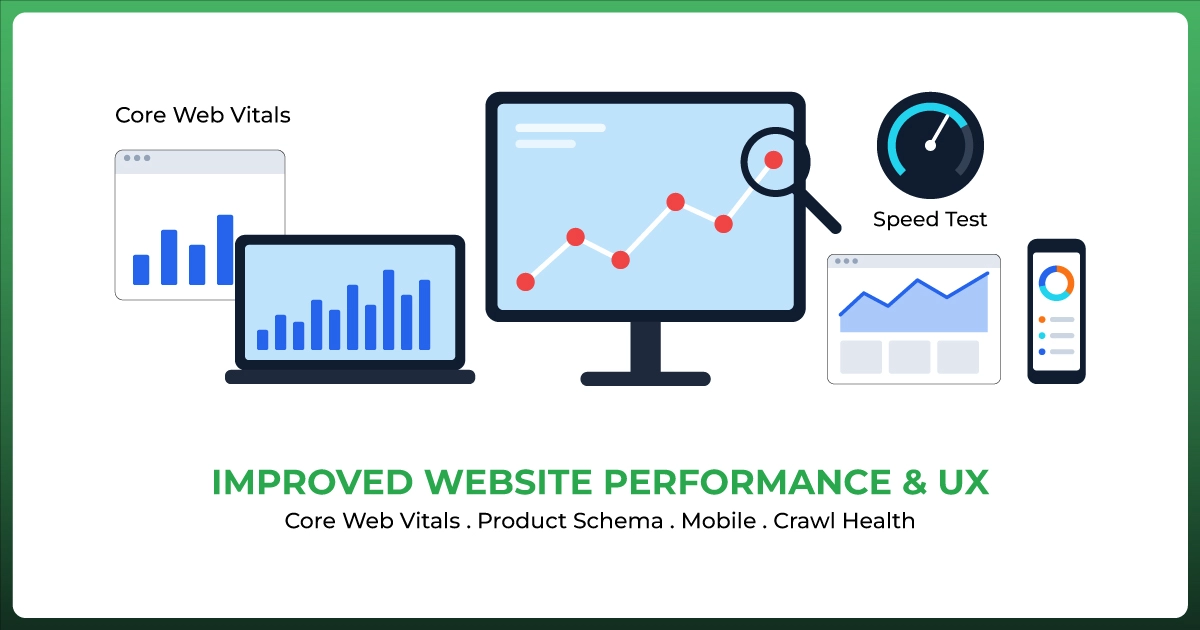
Technical SEO helps create a faster, more reliable, and user-friendly shopping experience. Optimizing elements like Core Web Vitals, Product Schema Markup, mobile responsiveness, and crawl health improves your store's visibility while making it easier for customers to browse and purchase. The result is better engagement. Stronger customer trust and more opportunities to convert organic visitors into buyers.
9. Organizing Complex Digital Catalogs
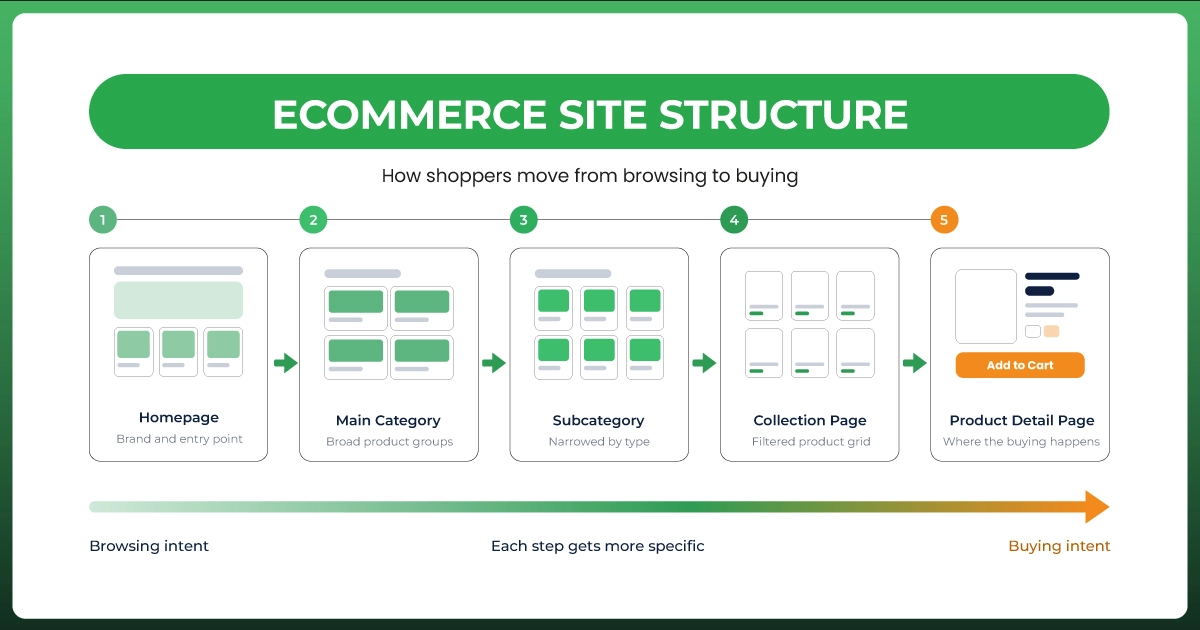
As your ecommerce store grows, managing hundreds or thousands of products becomes increasingly challenging. Ecommerce SEO helps organize your digital catalog into a logical hierarchy, making it easier for both customers and search engines to navigate.
A scalable catalog typically follows a logical structure such as:
For example:
Home
→ Men's Shoes
→ Running Shoes
→ Lightweight Running Shoes
→ Individual Products
A well-structured catalog improves product discoverability, strengthens structural search visibility, and ensures valuable pages receive the attention they deserve. This creates a smoother shopping experience while supporting long-term organic growth.
10. Enhancing Crawl Budget Efficiency
For large ecommerce stores, efficient crawling is essential for maintaining search visibility. Ecommerce SEO helps search engines prioritize your most valuable pages instead of wasting resources on duplicate or low-value URLs.
Better crawl budget efficiency leads to faster indexing of new products, improved visibility in search results, and stronger overall website performance as your catalog expands.
11. Optimizing Collection Hierarchy
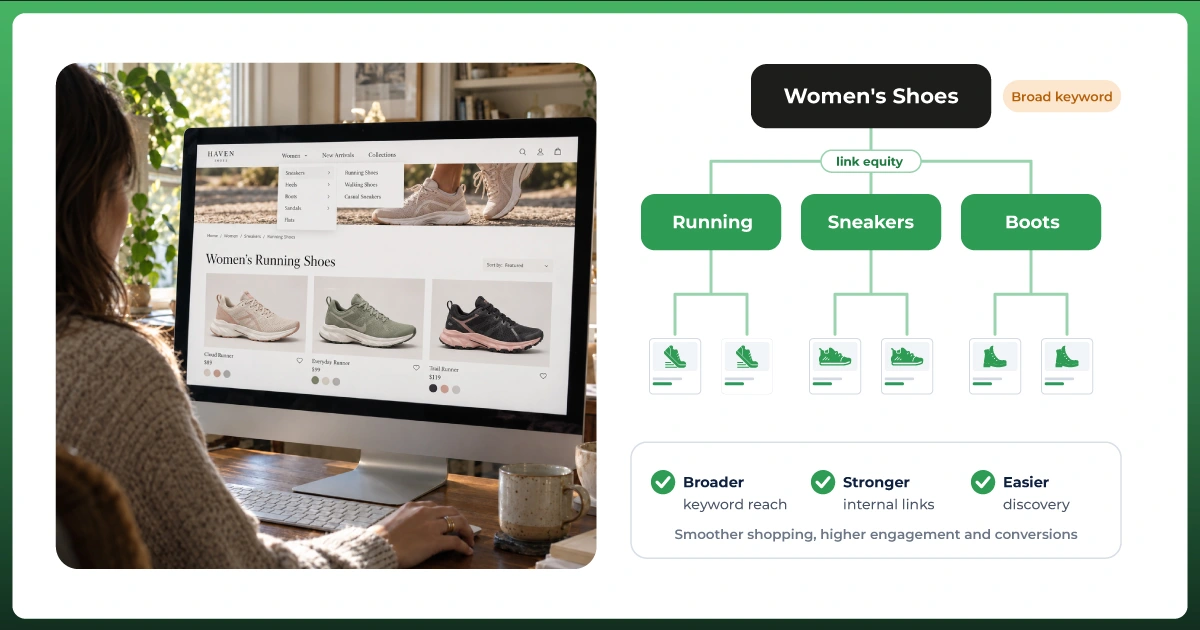
A well-organized collection hierarchy helps ecommerce stores rank for broader commercial keywords while making product discovery easier for shoppers. Unlike individual product pages, collection pages often remain relevant over time, allowing them to consistently attract high-intent organic traffic.
By grouping related products under clear categories, businesses improve navigation, strengthen internal link equity, and guide customers toward the products they're most likely to purchase. This not only enhances search visibility but also creates a smoother shopping experience that supports higher engagement and conversions.
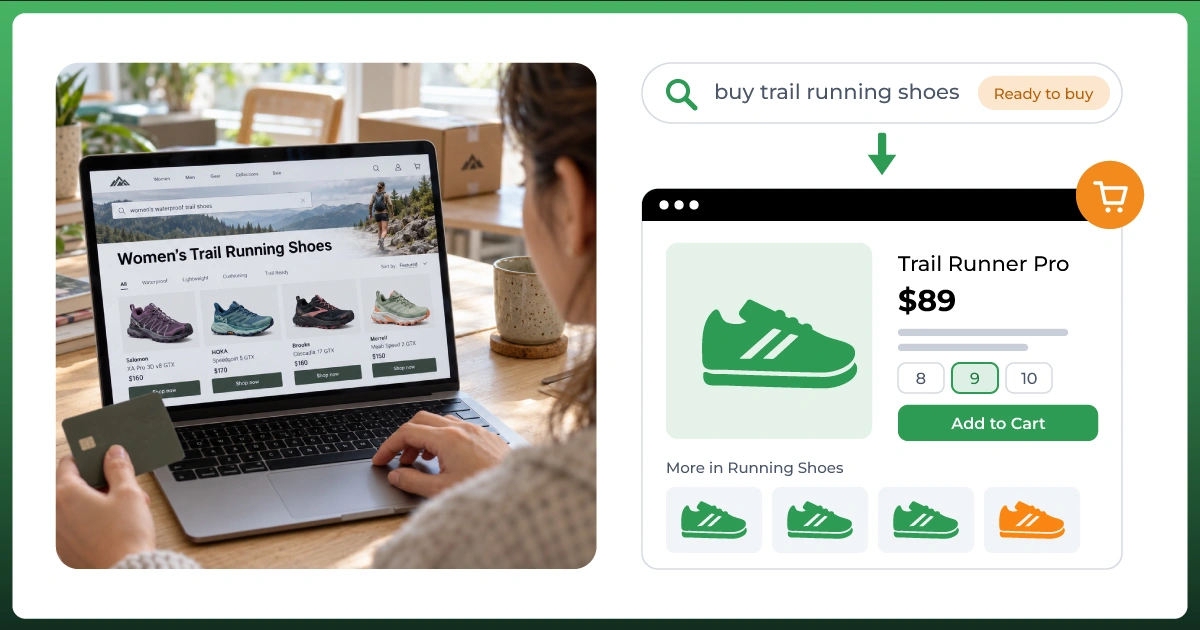
12. Driving High-Intent Traffic to Product & Collection Pages
One of the biggest benefits of ecommerce SEO is attracting visitors who are actively looking to buy. Instead of sending users to generic pages, SEO connects them with the most relevant product or collection based on their search intent. This improves user engagement, reduces bounce rates, and increases the likelihood of turning qualified visitors into paying customers.
13. Maximizing the Value of Collection Pages
Collection pages are powerful assets for attracting customers searching for broader product categories. When optimized for relevant commercial keywords, they help your store rank for high-volume searches while guiding shoppers toward related products.
This not only increases organic visibility but also encourages deeper browsing, improves internal link equity, and creates more opportunities for conversions.
How Ecommerce SEO Delivers Sustainable ROI
Many business owners compare SEO and paid advertising by looking only at short-term results. While this comparison is understandable, it often overlooks one of the greatest benefits of ecommerce SEO: its ability to generate compounding returns.
Factor
Ecommerce SEO
Paid Advertising (PPC)
Traffic Duration
Long-term
Stops when budget ends
Cost Per Visitor
Decreases over time
Paid for every click
Customer Acquisition Cost
Generally declines
Often increases
ROI
Compounding
Immediate but temporary
Brand Authority
Builds over time
Limited
Scalability
Excellent
Budget-dependent
Think of SEO as investing in commercial real estate rather than renting billboard space. Paid ads deliver visibility only while you're paying. SEO builds an asset that keeps generating returns long after the initial investment.
For ecommerce businesses with hundreds or thousands of products, this compounding effect becomes even more significant. A single optimization project today can continue driving qualified traffic for years.
Google has shared multiple case studies showing that structured data can significantly improve user engagement. For example, Rotten Tomatoes recorded a 25% higher click-through rate after implementing structured data, while Nestlé reported an 82% higher CTR on pages appearing as rich results.
How Organic Search ROI Compounds Over Time
The compounding ROI of organic search doesn't happen overnight. It builds through continuous improvements that strengthen your website's authority and search visibility.
For example, imagine your store launches with 300 product pages. Initially, only a small percentage ranked well in Google. After several months of optimizing titles, product descriptions, internal links, collection pages, and technical performance, more pages begin appearing for valuable commercial keywords.
As these pages attract traffic, users spend more time on your site, engage with your products, and naturally generate behavioral signals that reinforce your rankings. At the same time, your website earns backlinks, gains topical authority, and expands its keyword footprint.
The result is a growth cycle where today's SEO improvements make tomorrow's optimizations even more effective. Instead of chasing traffic month after month, your website gradually becomes a trusted source within your industry.
Formula of Sustainable Customer Acquisition in Ecommerce SEO
Every ecommerce business relies on acquiring new customers. The question is whether that acquisition remains profitable as competition increases.
Paid advertising generally becomes more expensive over time due to increasing competition, higher bids, and platform algorithm changes. Organic search follows a different economic model.
Once your pages earn visibility, every additional visitor arrives without an incremental advertising cost. That means your Customer Acquisition Cost (CAC) gradually decreases while your customer lifetime value continues growing.
Rather than viewing SEO as a marketing expense, successful ecommerce brands increasingly treat it as a long-term investment in business infrastructure.
Why Site Architecture Is Your Greatest Organic Asset
Many ecommerce businesses focus heavily on keywords while overlooking one of the most influential ranking factors: site architecture. Your website's structure determines how easily both users and search engines navigate your store.
As your inventory grows, a logical website architecture becomes increasingly valuable. A well-structured ecommerce website helps Google understand relationships between products, collections, categories, and supporting content. It also distributes internal link equity more efficiently while improving crawl budget efficiency.
In other words, good site architecture supports both SEO performance and conversion rates simultaneously. For stores managing hundreds or thousands of products, this becomes one of the most valuable long-term investments.
If you're managing a growing Shopify store, professional Shopify Store Management services can help organize catalog structures, optimize collections, and maintain scalable SEO performance. Build Your Shopify Presence
Turning Product Detail Pages (PDPs) Into Landing Pages
Every Product Detail Page should function as more than a product listing. It should operate as a high-converting landing page capable of attracting, informing, and converting organic visitors.
Strong PDP optimization includes:
Unique product descriptions
Original product photography
Optimized image alt text
Product Schema Markup
Customer reviews
Technical specifications
Shipping information
Frequently asked questions
Related products
Internal links to complementary collections
Avoid copying manufacturer descriptions across multiple products. Duplicate content reduces uniqueness and limits ranking potential. Instead, create original content that explains product benefits, features, applications, and purchasing considerations.
According to the HTTP Archive and Chrome UX Report, only about 42% of websites currently pass all three Core Web Vitals metrics, highlighting the competitive opportunity for businesses that invest in technical optimization.
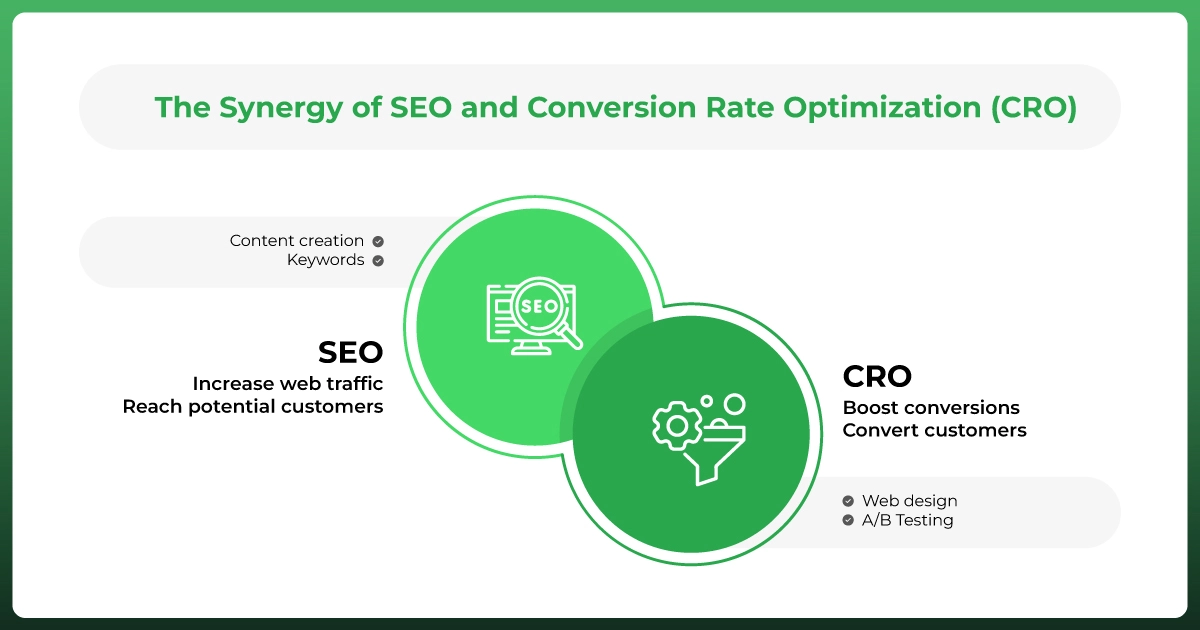
The Synergy of SEO and Conversion Rate Optimization (CRO)
Generating traffic is only half the equation. The real value of ecommerce SEO comes from converting visitors into customers. This is where Conversion Rate Optimization (CRO) complements SEO. While SEO attracts qualified users, CRO ensures those users enjoy a frictionless shopping experience that encourages purchases.
Businesses often treat SEO and CRO as separate disciplines, but the strongest ecommerce strategies combine both. SEO brings the right audience. CRO helps them complete the purchase.
Businesses looking to improve both search performance and user experience can benefit from professional Web Design and Development services. These combine SEO best practices with conversion-focused design. Get Inventory Software!
Creating Intent-Matched Landing Experiences
Every visitor arrives with a specific expectation. Someone searching for "waterproof hiking boots" expects to land on a page showcasing waterproof hiking boots.
Matching landing pages to search intent increases engagement and reduces bounce rates. An effective landing experience includes:
Relevant page titles
Clear product categorization
High-quality product imagery
Transparent pricing
Customer reviews
Helpful buying information
Frequently asked questions
Related product recommendations
Streamlining the Checkout Path for Organic Buyers
Even highly optimized SEO campaigns lose value if customers abandon their carts during checkout. A streamlined purchasing process improves both conversion rates and customer satisfaction.
Best practices include:
Guest checkout options
Multiple payment methods
Transparent shipping costs
Mobile-friendly checkout
Progress indicators
Minimal form fields
Trust badges and security signals
Organic visitors often spend time researching before purchasing. Once they're ready to buy, reducing friction becomes essential. By combining strong SEO with conversion-focused design, businesses maximize the value of every organic visitor.
How E-commerce SEO Scales as Your Store Grows
One of the greatest benefits of e-commerce SEO for growth is scalability. Many marketing channels become more expensive as businesses expand. Larger advertising budgets typically produce diminishing returns due to increased competition and rising acquisition costs.
SEO behaves differently. As your website gains authority, adding new products, collections, and supporting content becomes increasingly efficient. A well-structured e-commerce website allows you to scale without rebuilding your entire SEO strategy every year.
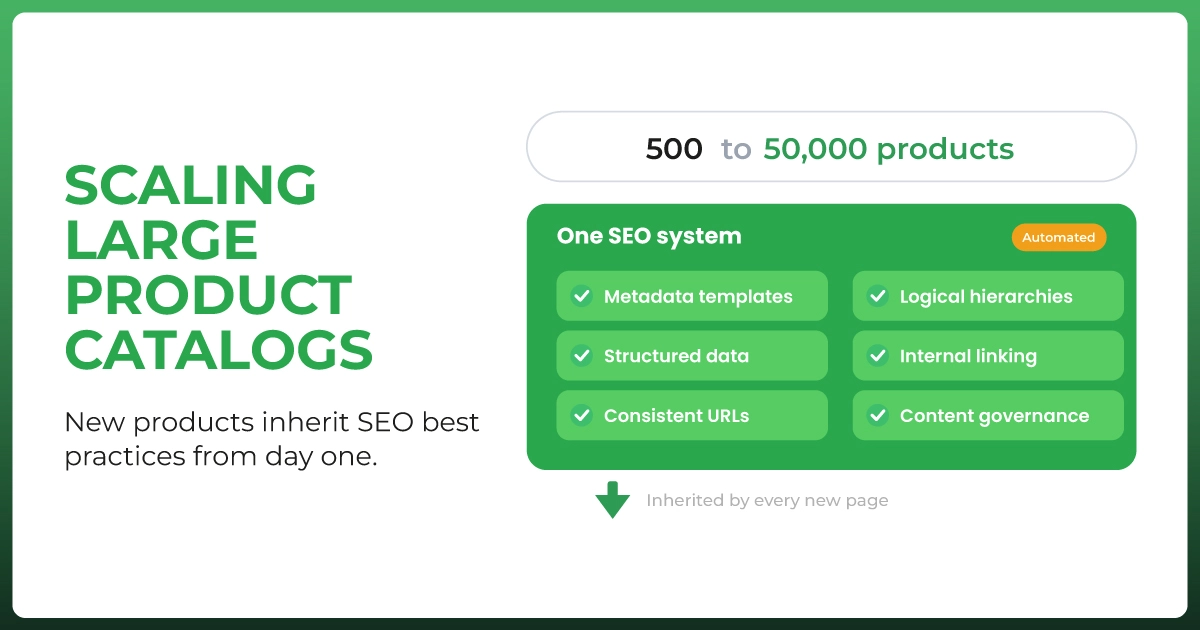
Scaling Large Product Catalogs
Whether your Shopify store contains 500 products or 50,000, maintaining consistent optimization is essential. Scalable SEO systems focus on:
Standardized metadata templates
Logical category hierarchies
Automated structured data
Strong internal linking
Consistent URL structures
Content governance
Instead of optimizing pages individually forever, scalable processes ensure new products inherit SEO best practices from the beginning. This approach reduces maintenance while supporting continuous organic growth.
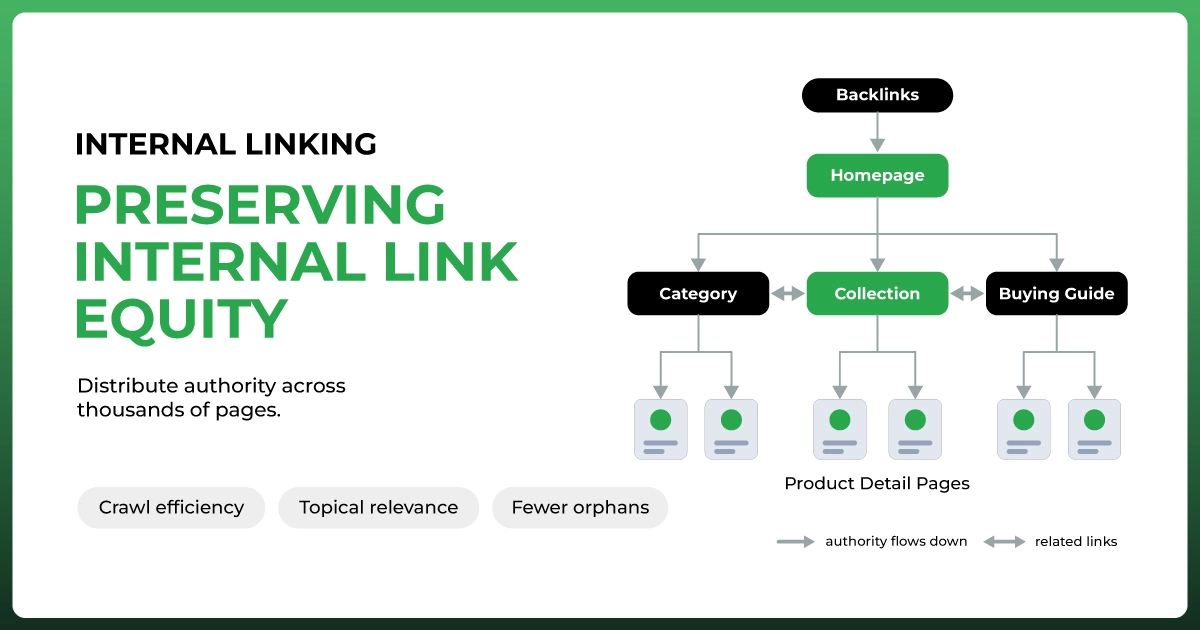
Preserving Internal Link Equity
Internal linking becomes increasingly valuable as catalogs expand. Every category page, collection page, buying guide, and Product Detail Page contributes authority throughout your website.
Strategic internal linking helps:
Pass authority to important pages
Improve crawl efficiency
Support topical relevance
Reduce orphan pages
Encourage deeper browsing
Rather than relying solely on backlinks, e-commerce businesses can strengthen their own authority by distributing internal link equity intelligently. This creates a stronger overall website that performs better across thousands of search queries.
How to Measure Ecommerce SEO ROI
Successful SEO should be measured using business outcomes, not rankings alone. While keyword positions are useful indicators, ecommerce leaders should focus on metrics directly tied to revenue and profitability. Key performance indicators include:
KPI
What It Measures
Why It Matters
Organic Revenue
Sales generated from organic search
Shows SEO's direct impact on revenue
Organic Conversion Rate
Percentage of organic visitors who make a purchase
Measures landing page effectiveness
Customer Acquisition Cost (CAC)
Cost to acquire a customer through SEO
Evaluates marketing efficiency
Lifetime Value (LTV)
Total revenue generated by a customer
Measures long-term customer profitability
Organic Click-Through Rate (CTR)
Percentage of users who click your search listing
Indicates SERP performance
Indexed Pages
Number of pages indexed by search engines
Ensures important products are discoverable
Keyword Visibility
Rankings across target keywords
Tracks overall organic growth
Frequently Asked Questions
Is SEO worth it for e-commerce?
Yes. E-commerce SEO builds long-term organic visibility, reduces customer acquisition costs, and generates sustainable traffic.
How does Product Schema Markup affect organic rankings?
Schema Markup helps search engines better understand product information and may improve search listings with rich snippets.
What is a site silo structure, and why does my store need it?
A silo structure organizes related products and categories into logical groups. This makes navigation easier for users while helping search engines understand topical relationships throughout your website.
Will optimizing product descriptions help my store rank?
Absolutely. Unique, informative product descriptions improve relevance, reduce duplicate content, and create better opportunities to rank for transactional keywords.
What is a crawl budget, and when should I worry about it?
Crawl budget refers to the number of pages search engines crawl during each visit. Large e-commerce websites with thousands of URLs should pay close attention to crawl efficiency to ensure important pages receive priority.
How does site speed affect ecommerce search rankings?
Fast websites improve user experience, reduce bounce rates, support Core Web Vitals, and contribute to stronger search performance while increasing conversions.
Why are collection pages more valuable than product pages for SEO?
Collection pages typically target broader commercial keywords and remain active longer than individual products. This makes them valuable landing pages for sustainable organic growth.
How do I measure the ROI of my organic search campaigns?
Track organic revenue, conversions, Customer Acquisition Cost (CAC), Lifetime Value (LTV), keyword visibility, click-through rates, and assisted conversions rather than relying solely on rankings.
The most successful ecommerce businesses don't rely on short-term marketing tactics alone. They build systems that generate value for years. Ecommerce SEO is one of those systems.
By combining technical excellence, high-quality content, strategic site architecture, and Conversion Rate Optimization (CRO), your online store can attract high-intent shoppers, improve customer experiences, and generate long-term organic revenue.
Ready To Grow Your Ecommerce Business?
Boost Organic Traffic And Sales With Expert Ecommerce SEO Services From Ecomgiantz.
Ecomgiantz Team consists of our in-house experts who share their hands-on experience in ecommerce businesses, websites, marketplaces, etc. We also share the latest updates, insights, and market trends that can be helpful for your online business.