Search Engine Optimization for Ecommerce: The Complete Guide to Growing Organic Sales
Discover search engine optimization for ecommerce with practical strategies for keyword research, product page optimization, technical SEO, structured data, and link building to increase organic traffic and grow online sales.
Search engine optimization for ecommerce is the work of making your online store rank in search results, and AI answers so shoppers find your products without paying for every click. It covers keyword research, product and category pages, technical health, and structured data.
The rules shifted fast. Google AI Overviews jumped from 2.1% of shopping queries in November 2025 to 14% by March 2026, according to a Search Engine Land analysis of 20.9 million shopping search engine results pages (SERPs). Visibility, not just ranking, is now the game.
I have spent years fixing stores that had great products and almost no organic traffic. This guide walks through the full system I use, from search intent to technical cleanup.
What Is Ecommerce SEO?
Ecommerce SEO is the process of optimizing an online store so its pages appear higher in organic search results and AI-generated answers. The goal is qualified organic traffic that turns into sales, not just visits that bounce.
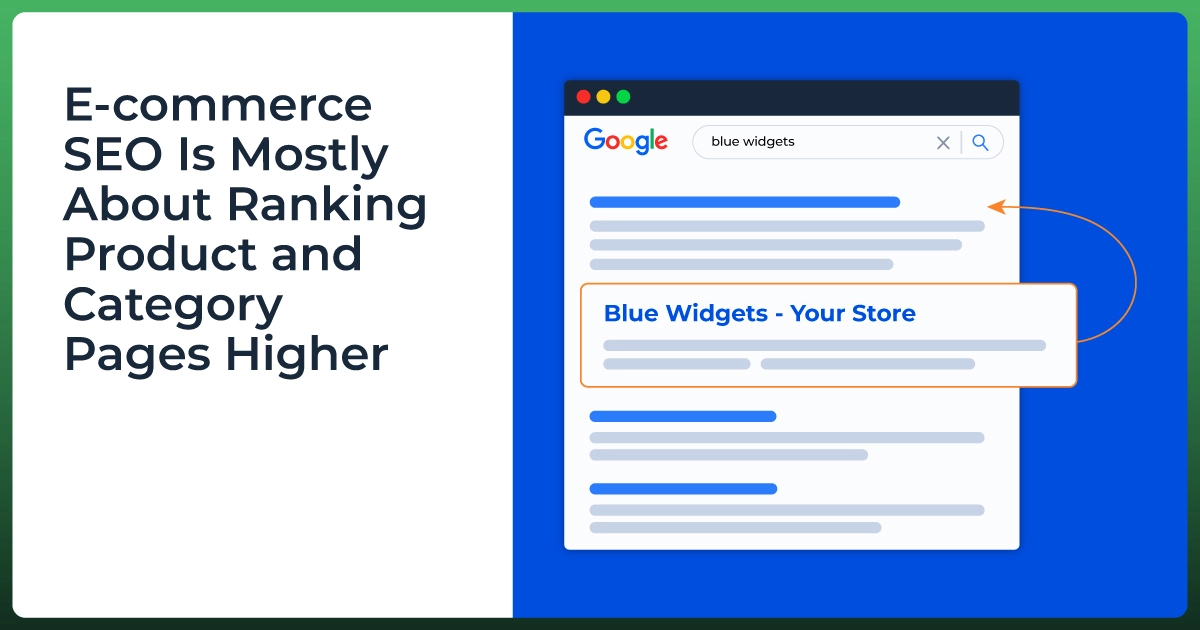
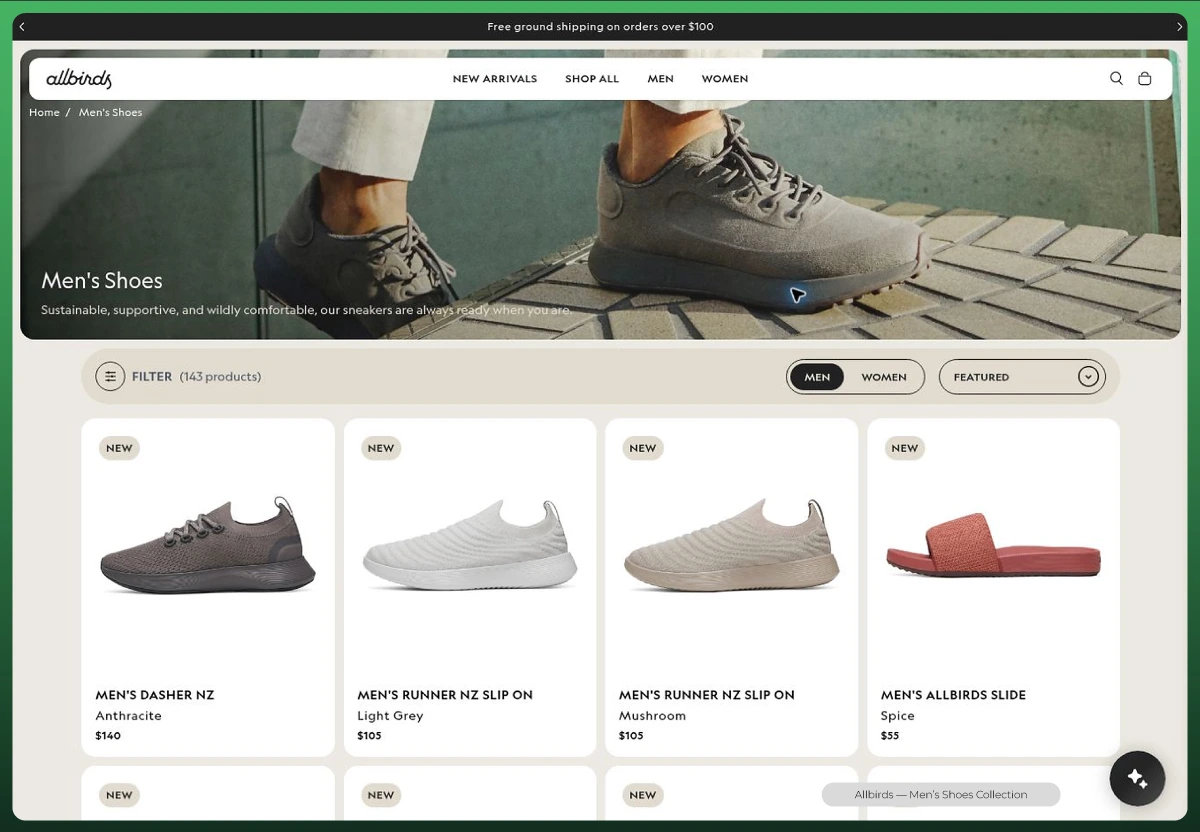
Unlike a blog or brochure site, an ecommerce website sells through category pages and product pages. Search engine optimization for ecommerce has to make thousands of these pages crawlable, unique, and mapped to what people actually type into search engines.
The moving parts include keyword research, on-page SEO, site architecture, technical SEO, schema markup, and link building. Each one feeds the others, so ecommerce website optimization works best as a connected system. Skip the technical base, and even great content struggles to rank.
How Ecommerce SEO Is Different From Regular SEO
Scale is the first difference. A store with 5,000 products can generate tens of thousands of URLs once filters and variants multiply. Managing crawl budget, duplicate content, and faceted navigation becomes a core job, not an afterthought.
Intent is the second. Most ecommerce searches are commercial or transactional, so the page type matters as much as the keyword. A category page answers a broad search, while a product page answers a specific one.
Why Ecommerce SEO Matters in 2026
Ecommerce SEO matters because organic search brings buyers at a lower long-term cost than ads, and because AI-driven results now decide who gets seen. Stores that ignore it steadily lose visibility to competitors who do not.
Paid ads stop the moment your budget does. Every Google Ads click carries a Cost Per Click, and rising Ad Rank competition pushes that number up. SEO builds an asset that keeps returning traffic long after the work is done.
Shoppers also trust organic listings. Many skip ads entirely and click the results they believe earned their spot. That user trust carries into a higher conversion rate once they land on a clean, fast page.
Good rankings compound. A category page that reaches the top for a head term keeps pulling in traffic and supports the product pages linked from it. That durability is why SEO beats paid for long-term revenue.
There is a catch. With AI Overviews and zero-click results answering more queries right on the page, being present is no longer enough. Your brand and product data have to be the thing the AI reads, trusts, and names.
How Ecommerce SEO Now Works Across Search and AI
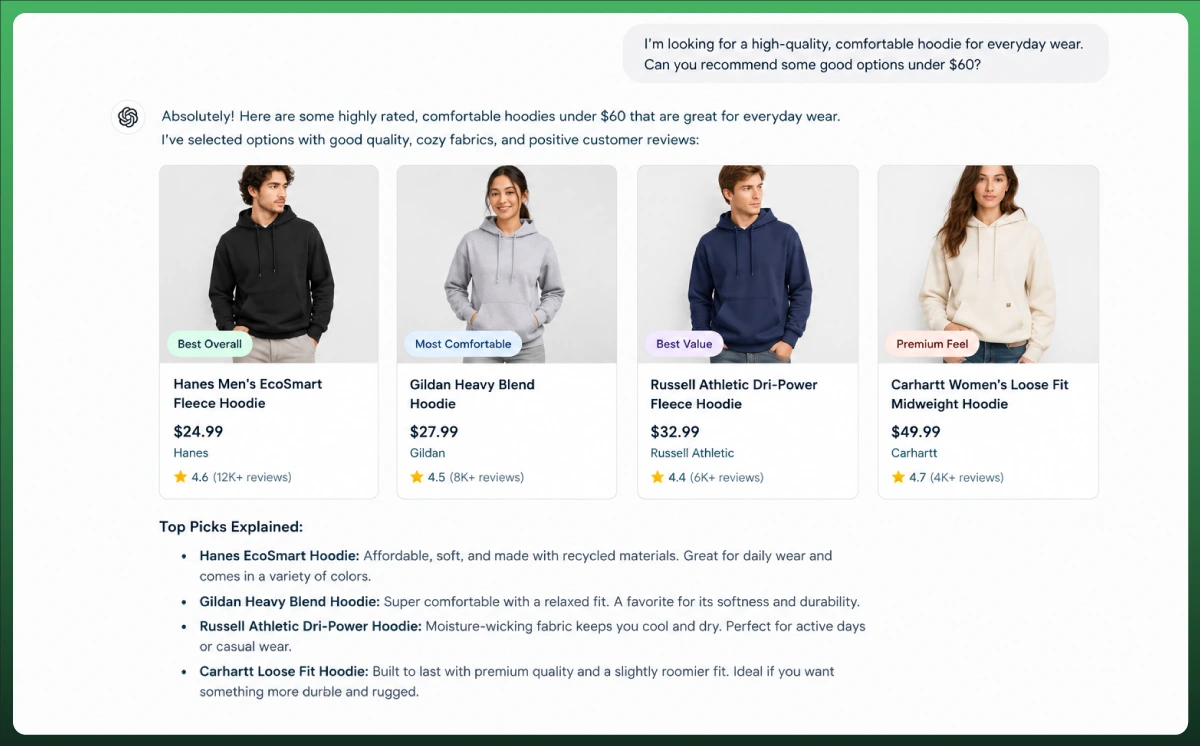
Modern ecommerce SEO spans three surfaces: traditional organic search, AI Overviews inside Google, and generative engines like ChatGPT Search and Perplexity. Each reads the same product signals but rewards clarity and structure in slightly different ways.
Two terms matter here. Answer Engine Optimization (AEO) is about earning a spot in direct answers and featured snippets. Generative Engine Optimization (GEO) is about getting cited inside AI-written responses. Both reward the same clean foundation.
AI systems pull from structured data, clear product descriptions, accurate pricing, and consistent entity signals across your site. Copied manufacturer text and sloppy feeds give them nothing to trust. Tight, factual product details are what win citations.
The practical move is simple to say and harder to do. Write product and category copy a real buyer would find useful, add correct schema markup, and keep your data identical everywhere it appears. That consistency is what surfaces you in new search experiences.
Discovery is also splitting into new formats. Voice search rewards natural, question-style phrasing, while visual search and visual discovery through tools like Google Lens reward clean product images with proper labels. Optimize for how people look, not only how they type.
How Google Ranks Ecommerce Websites
Google weighs hundreds of signals, but for stores they cluster into five buckets. Understanding them keeps your effort on what actually moves rankings instead of vanity tweaks that change nothing.
Relevance
Relevance is the match between a page and a query. Search engine algorithms read your title tags, headings, body copy, and structured data to decide what you sell and who you serve. Clear beats clever every time.
Authority
Authority is trust earned from other sites. Editorial backlinks from relevant, reputable pages tell search engines your store deserves ranking. Domain authority grows slowly through real relationships, not bulk link buys.
User Experience
User experience covers speed, stability, and mobile ease. Google reads these through Core Web Vitals and engagement patterns. A frustrating page loses rankings and sales at the same time, so customer experience is an SEO issue.
Technical Performance
Technical performance is whether crawlers can reach and index your pages efficiently. Clean crawl paths, a valid XML sitemap, and correct canonical tags decide how much of your catalog Google even sees.
Helpful Content
Helpful content is the through-line of recent updates. Google rewards pages built for people, with real answers and genuine expertise, as its own helpful content guidance explains. Thin, templated text built only for bots now works against you.
Understanding Ecommerce Search Intent
Search intent is the reason behind a query, and matching it to the right page type is the highest-leverage move in ecommerce SEO. Google now ranks by intent more than by exact-match keywords.
There are four intents to plan for. Informational searches want to learn, commercial searches compare options, transactional searches are ready to buy, and navigational searches look for a specific brand or page. Each deserves a different page.
Map every keyword to the page that satisfies it. Send a buying-guide query to a blog post, a broad category query to a category page, and an exact-product query to a product page. Mismatched pages rarely rank.
Example query
Search intent
Best page type
Best gaming laptops
Commercial investigation
Buying guide (blog)
Gaming laptops under $1000
Commercial
Category page
Dell XPS 15 review
Mid-funnel research
Blog or review
Buy Dell XPS 15
Transactional
Product page
Sony store near me
Navigational/local
Store or local page
Mine your own data for intent clues too. Internal site search, autocomplete, and zero-result pages reveal the exact language shoppers use. Feed that into your keyword research so you build pages people are genuinely searching for.
Building an Ecommerce SEO Strategy
An ecommerce SEO strategy is a plan that connects goals, keywords, page types, technical fixes, and content into a sequence. Without one, teams optimize random pages and wonder why revenue stays flat.
Set Clear Goals
Start with revenue, not rankings. Decide which categories and margins matter most, then set targets tied to organic revenue and qualified traffic. Rankings are the means; sales are the goal.
Know Your Customer
Study how buyers describe products in their own words. Reviews, support tickets, and forums reveal the phrases that belong in your copy. This grounds your content strategy in real demand instead of guesswork.
Map Keywords to the Buyer Journey
Place every target keyword against a stage, from first research to final purchase. This mapping tells you how many category pages, guides, and product pages you need, and it stops two pages from fighting over one term.
Analyze Competitors
Study who ranks now and why. Look at their page types, content depth, and links. A Backlink Gap check shows which links your competitors earned that you have not, which becomes your outreach list.
Build a Roadmap
Sequence the work. Fix technical blockers first, then optimize high-value category and product pages, then build supporting content and links. A roadmap keeps a large ecommerce site from stalling in busywork. Run a content audit to spot pages worth refreshing.
Ecommerce Keyword Research
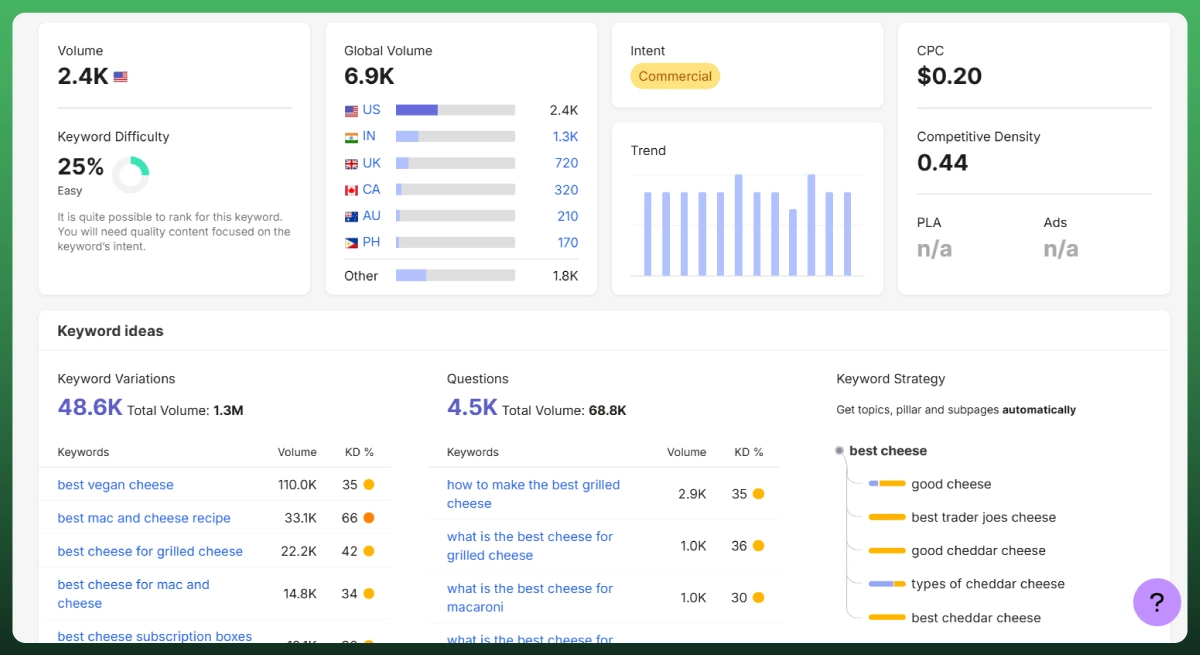
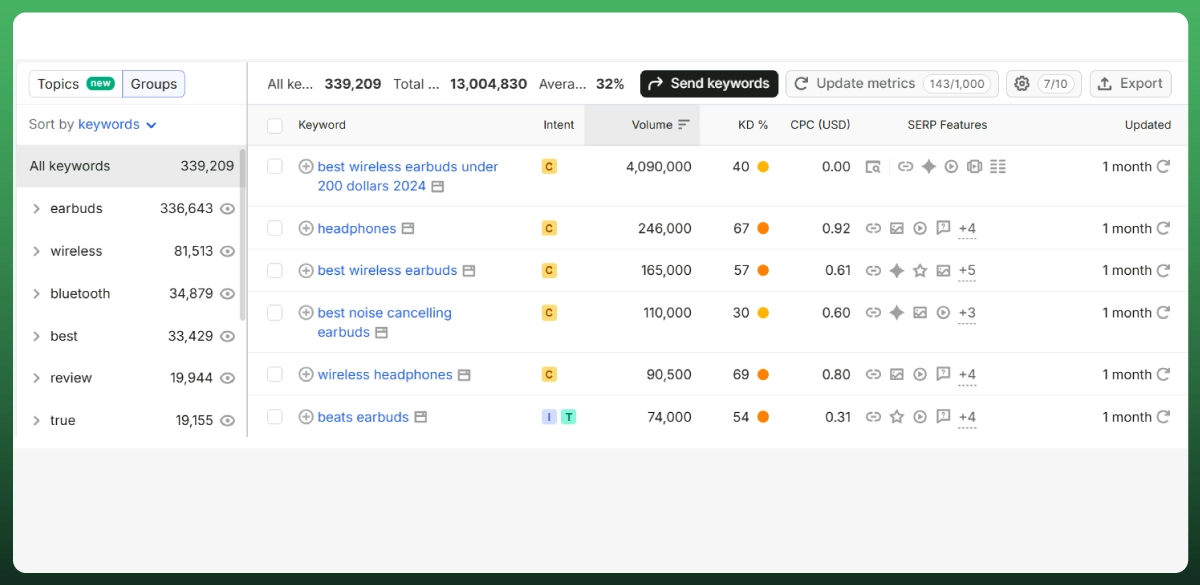
Ecommerce keyword research is the process of finding the terms buyers use and matching them to pages by intent and value. Good research targets qualified traffic, not just the highest search volume.
Prioritize high-intent, long-tail keywords. "Buy waterproof hiking boots size 10" converts far better than "boots," even at lower volume. These specific phrases carry less competition and much clearer intent.
Split keywords by page type. Broad terms like "running shoes" belong on category pages, exact model and SKU terms belong on product pages, and question phrases belong in blog content.
Use keyword research tools to size demand and difficulty. Google Search Console shows terms you already rank for, Google Keyword Planner shows volume, and platforms like Ahrefs and Semrush surface competitor terms and questions.
Do not ignore Amazon either. Its autocomplete reflects pure buying language, since people search there ready to purchase. Major marketplaces dominate broad head terms, so lean into long-tail keywords you can realistically win. If you also sell there, our Amazon marketplace management service keeps those listings optimized alongside your store.
Ecommerce Site Structure
Ecommerce site structure is how your pages connect, from homepage to category to product. A flat, logical site architecture helps shoppers and search engines reach any page within a few clicks.
Aim for a shallow hierarchy where key pages sit within three clicks of the homepage. Deep burial wastes crawl budget and starves pages of the authority your homepage passes down through internal links.
Keep URL slugs short, readable, and keyword-relevant. Clean URL slugs help crawlers and shoppers understand a page before they even open it.
Add breadcrumb navigation so users and crawlers see the path back to parent categories. Breadcrumbs also earn rich results in the SERP, which lifts click-through. Link related pages with descriptive anchor text throughout.
A clean structure is easier to build in than to retrofit. If your store foundation is messy, our ecommerce web design and development team rebuilds architecture with SEO baked in from the start.
On-Page SEO for Ecommerce
Ecommerce on-page SEO is where rankings and revenue meet. These are the elements you control directly on each page, and small fixes here compound across an entire catalog.
Product Pages
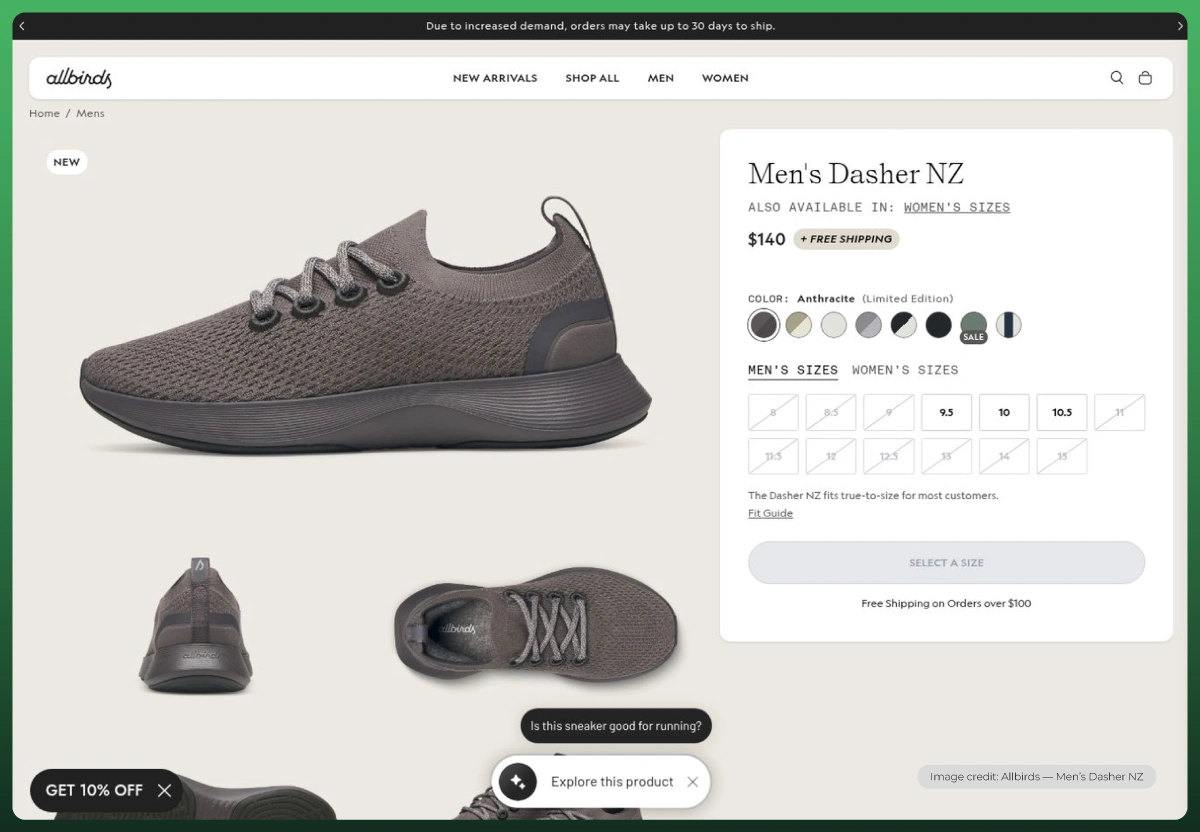
Product pages target specific, high-intent searches. Write unique product titles with the primary keyword near the front, original descriptions, and clear product details. Never paste the manufacturer text, since that creates duplicate content across the web.
Optimize the supporting elements too. Add descriptive alt text to product images, show pricing and availability, surface customer reviews, and answer common questions in an FAQ. Write compelling meta descriptions and meta tags so listings read well in SERPs.
Category pages, called collections on Shopify, drive the most durable ecommerce traffic. They rank for broad commercial terms and funnel authority to products. Add a short intro of useful copy, not a wall of keyword-stuffed text.
Support the page with buying guidance, filters that help rather than confuse, and internal links to top products. A category page that helps shoppers choose will outrank a bare product grid every time.
Homepage
Your homepage carries the most authority and usually targets brand terms. Use it to signal what you sell, feature key collections, and link to your most important category pages. Strong internal navigation spreads that authority down.
Blog and Content
A blog captures informational and commercial-investigation queries that product pages cannot. Buying guides, comparisons, and how-to articles pull in researchers early, then link them to the products that answer their need. Fresh blog content also earns links.
Internal Linking for Ecommerce
Internal linking is one of the most underused levers in search engine optimization for ecommerce. Links pass authority and guide crawlers to deep pages. Use descriptive anchor text, never "click here."
Build repeatable link patterns. Related products, recently viewed items, category hubs, blog-to-product links, and guide-to-category links all move authority to pages that sell. Large stores live or die on this internal linking.
Reviews and User-Generated Content
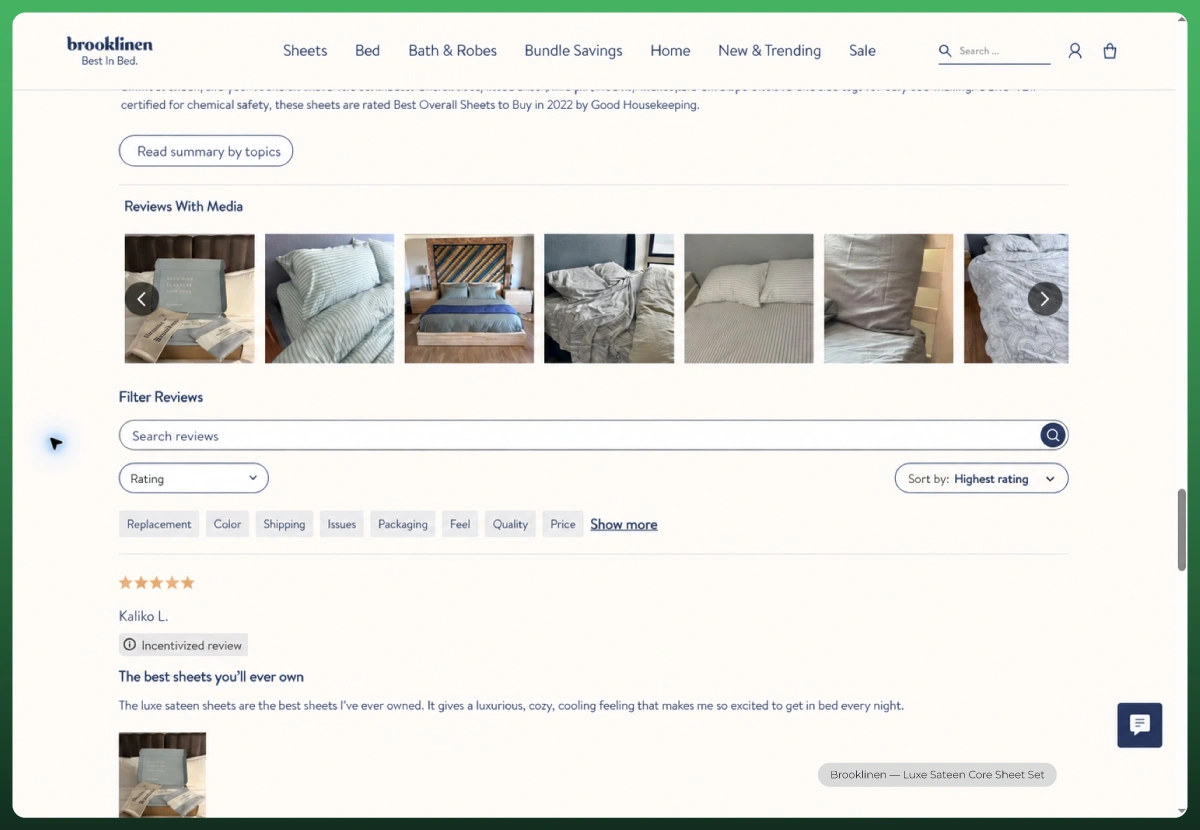
Reviews are free, keyword-rich, and constantly fresh content. They add long-tail phrases you would never write yourself and build the user trust that lifts conversion rate. Add review schema so ratings can show as rich results.
Encourage customer Q&A and photo reviews too. Real questions surface the exact phrases future buyers search, and shopper images strengthen both trust and visual search relevance. Fresh customer testimonials signal an active, credible page.
Scaling On-Page SEO Across a Large Catalog
Here is the hard truth most guides skip: not every product page has traffic potential. Many products get almost no monthly searches, so optimizing all of them one by one wastes hundreds of hours.
Prioritize instead. Hand-optimize your highest-margin and highest-demand pages, then use a programmatic approach for the rest with clean templates and structured data. This covers the catalog without burning a year on pages nobody searches for.
Store size
Where to focus SEO effort
Under 100 products
Content depth and product-page quality
Around 500 products
Category page optimization
About 10,000 products
Crawl budget and indexation control
100,000+ products
Programmatic SEO and templates
AI tools can help draft descriptions at scale, but review everything. Machine text hallucinates specs, repeats phrasing, and creates thin duplicate content if left unchecked. Use AI for speed and humans for accuracy and originality.
Image SEO for Ecommerce
Image SEO for ecommerce is optimizing product visuals so they load fast, rank in image and visual search, and support your page relevance. It is one of the most neglected of all SEO techniques for stores.
Start with the basics. Use descriptive filenames, write clear alt attributes and alt text for each image, and include your keyword where it fits naturally. Search engines cannot see pictures, so these labels tell them what is there.
Then optimize for speed. Compress images and serve modern formats like WebP or AVIF to cut file size without losing clarity. A Content Delivery Network and Gzip compression speed delivery further. Heavy images are a top cause of slow pages.
Go further for discovery. Add an image sitemap, use structured image data, and include lifestyle shots alongside plain product images. As visual discovery through Google Lens grows, well-labeled images pull in traffic that competitors ignore.
Technical SEO for Ecommerce
Technical SEO is the foundation everything else sits on. For a store with thousands of pages, small technical faults scale into large losses. These are the checks that matter most.
Core Web Vitals and Page Speed
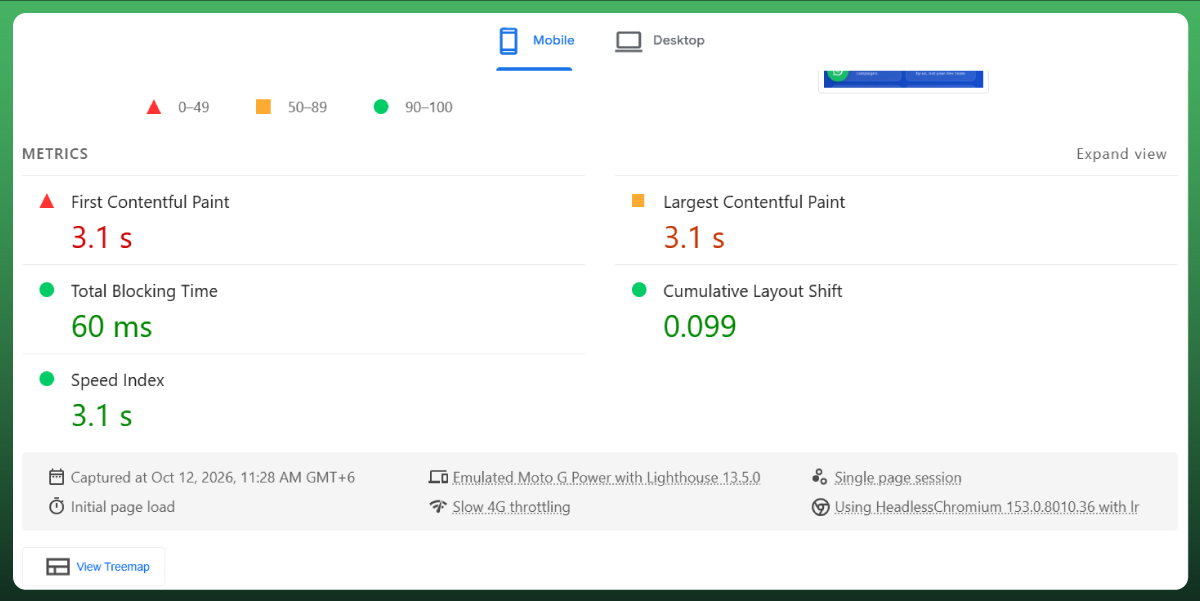
Core Web Vitals are Google measures of loading, responsiveness, and stability. Speed is not just a ranking factor: a 0.1-second improvement in mobile load time can lift retail conversions by 8.4%, per Google and Deloitte research. See the current Core Web Vitals thresholds below.
Metric
Measures
Passing threshold
Largest Contentful Paint (LCP)
Loading speed
2.5 seconds or less
Interaction to Next Paint (INP)
Responsiveness
200 milliseconds or less
Cumulative Layout Shift (CLS)
Visual stability
0.1 or less
Hit these thresholds with compressed images, cleaner code, and caching. Check any page in PageSpeed Insights for specific fixes. Google recommends a mobile page load time under three seconds, and 53% of mobile visitors leave pages that take longer.
Mobile Optimization
Google uses mobile-first indexing, meaning it ranks the mobile version of your store. With most shopping now on phones, responsive design and smooth mobile shopping, from product pages to shopping carts, are non-negotiable for rankings and sales.
Crawl Budget and Faceted Navigation
Faceted navigation, the filters for size, color, and price, can spawn millions of near-duplicate URLs. Left open, they drain crawl budget and bury your real pages. This is the defining technical problem in ecommerce.
Control it deliberately. Use canonical tags to point filter variations at the main category, noindex low-value combinations, and block crawl traps in robots.txt. For large sites, log file analysis shows where crawlers actually spend time.
Pagination
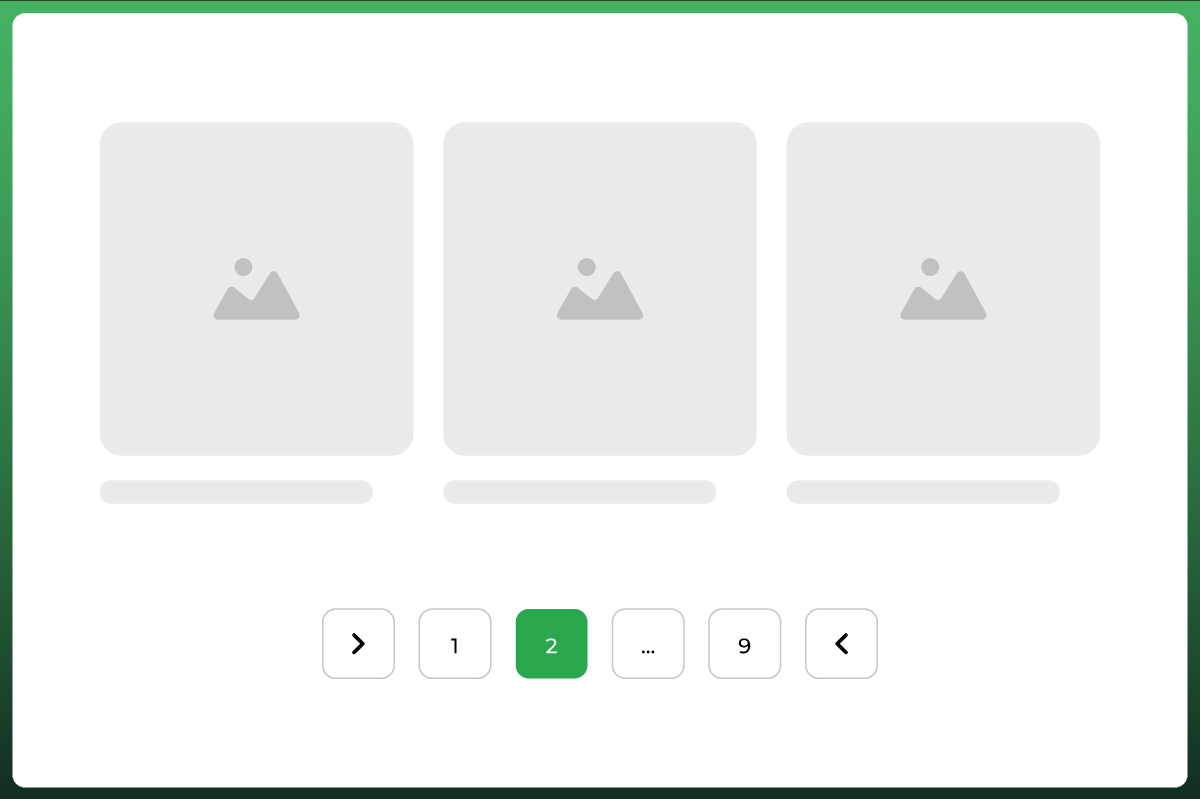
Category pages with many products need clean pagination so crawlers reach every item. Choose crawlable paginated pages or a "load more" pattern backed by real links. Infinite scroll alone can hide products from search engines entirely.
Duplicate Content and Canonicals
Duplicate content is endemic to stores, from variant URLs to shared descriptions. Use canonical tags to name the preferred version and write unique copy for pages that must rank. Duplicate title tags are a common reason pages fall out of the index.
Product Variants and Out-of-Stock Pages
Handle variants with one product page and selectors, canonicalizing variant URLs to the master. For discontinued items, never 404 a page that has backlinks or traffic. Keep it live with alternatives, or use a 301 Redirect to the closest product.
Plan for the product lifecycle. Seasonal products can stay live year-round with updated content, temporary stockouts should keep the page and offer back-in-stock alerts, and permanently retired products should redirect to a successor or parent category.
Security and Site Health
Security is a ranking and trust baseline. Every store needs a valid SSL certificate and HTTPS across all pages. Run a Mixed Content Check so no insecure files load on secure pages, and a Content Security Policy adds another safety layer.
Keep the plumbing clean. Submit an XML sitemap, maintain a correct robots.txt, fix broken links, and watch your Domain Name System and hosting for uptime. Small health issues compound into crawl and ranking problems over time.
International SEO
If you sell across the USA, UK, Canada, Australia, or the UAE, hreflang tags tell search engines which regional version to show. Correct hreflang prevents your country pages from competing with each other as duplicates.
Ecommerce Schema Markup
Schema markup is structured data that tells search engines exactly what a page contains, making it eligible for rich results like star ratings and prices. For stores, it is a direct path to better visibility.
Focus on the schema types that earn rich results, add them in JSON-LD, and validate with Google Rich Results Test before you rely on them. Correct structured data markup also feeds AI systems clean facts about your products. Follow Google product structured data guidance for the exact fields.
Schema type
What it does
Product
Shows price, availability, and condition in results
Review / AggregateRating
Shows star ratings and review counts
Breadcrumb
Shows the site path in the SERP listing
Organization
Defines your brand as a recognized entity
FAQ
Can surface questions under your listing
A product page with no markup gives Google plain text to guess from. The same page with valid Product and AggregateRating schema can show price, stock, and stars as rich snippets, which lifts click-through before a shopper even visits. Structured data implementation is low effort for high return.
Product Feeds and Google Merchant Center
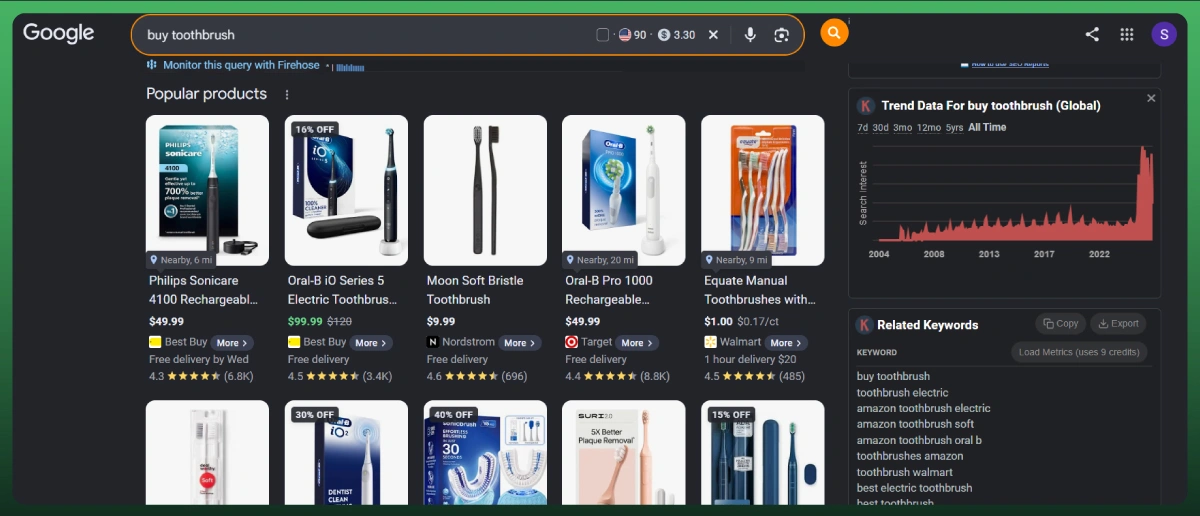
Product feeds send your catalog data to Google Merchant Center, which powers Shopping listings, free product listings, and increasingly AI shopping answers. Clean feed data is now a core part of ecommerce visibility.
Get the identifiers right. Accurate GTIN, MPN, and brand fields help Google match your products to searches and the Shopping Graph. Missing or wrong identifiers quietly suppress your listings.
Maintain feed health over time. Watch for disapprovals, add supplemental feeds for missing attributes, and use a promotions feed for sales. The same accurate data that wins free listings also makes your products citable in AI results.
Trust signals are the cues, from clear policies to real reviews, that prove your store is credible to shoppers and search engines. They matter more than ever after Google's helpful-content and AI Overview shifts.
Cover the basics that build brand authority. A real About page, easy contact details, visible shipping and return policies, and honest customer testimonials all signal a legitimate business. Certifications and secure checkout reinforce it.
Off-site trust counts too. Brand mentions, consistent business details, and genuine reviews across the web strengthen your brand awareness and the entity Google associates with your store. Trusted stores get cited more often in AI answers.
Ecommerce Content Marketing
Content marketing for ecommerce uses guides, comparisons, and tutorials to capture shoppers before they are ready to buy, then routes them to products. It earns rankings and links that product pages rarely can on their own.
Build content around buyer questions. Buying guides target commercial terms, comparison articles win "X vs Y" searches, and how-to posts answer informational queries. Each piece links to relevant categories and products to move readers toward purchase.
Plan seasonal and evergreen content together. Seasonal pieces capture spikes around holidays, while evergreen guides earn links for years. Quality content is what naturally attracts the backlinks that lift your whole domain.
Off-Page SEO for Ecommerce
Off-page SEO is everything you do beyond your site to build authority, mainly earning quality ecommerce backlinks. For stores, link building and backlink building focus on content assets and relationships, not bulk purchases.
Chase quality over volume. A few editorial backlinks from relevant, reputable sites outweigh hundreds of low-value links. Aim for dofollow backlinks from real publishers, and remember that nofollow backlinks still add natural diversity and referral traffic.
Earn links with tactics that work: data-driven guides, digital PR, broken-link building, and genuine guest posting. Skip spammy directories and comment backlinks, which add risk without reward.
Social SEO and brand visibility support the effort. Active, shareable content spreads your brand and earns natural mentions. Our social media marketing team helps amplify the content that attracts links.
Platform-Specific Ecommerce SEO
Your platform shapes what SEO is easy and what is hard. Here is how the major ones compare, and where each helps or limits your store. Whether you run a retail or B2B e-commerce site, the platform sets your ceiling.
Shopify SEO
Shopify is fast and beginner-friendly, with clean defaults and strong app support. Its trade-off is limited control over URL structure and some technical elements. Most stores can rank well on it with disciplined on-page work.
WooCommerce gives full control through WordPress and plugins like Yoast, ideal if you want to shape every technical detail. The cost is more maintenance and technical know-how, especially as your catalog grows.
Magento SEO
Magento, now Adobe Commerce, is built for large, complex catalogs with deep SEO controls and scalability. It demands real development resources, so it suits enterprise stores over small teams.
Wix and BigCommerce
Wix has improved its SEO tools and suits smaller stores that value ease of use. BigCommerce offers strong built-in SEO and fast architecture for growing catalogs. Both trade some flexibility for convenience.
Common Ecommerce SEO Mistakes
Most stores lose rankings to the same handful of avoidable mistakes. Fixing these often moves the needle faster than chasing the newest tactic.
Copying manufacturer product descriptions, which creates duplicate content across the web.
Keyword stuffing titles and copy instead of writing naturally for people.
Ignoring category pages, which drive the most durable organic traffic.
Skipping image optimization, compression, and alt text.
Publishing thin content with no real depth or answers.
Poor site architecture that buries pages and wastes crawl budget.
Weak internal linking that strands deep product pages.
Treating SEO as a one-time project instead of ongoing work.
How Long Does Ecommerce SEO Take, and What ROI to Expect
Most ecommerce SEO shows early movement in three to six months, with meaningful results between six and twelve months. Google guidance from Maile Ohye puts the window at four months to a year.
The timeline depends on your starting point. Fixing indexing and technical issues can show quick wins, while ranking competitive category terms and building authority takes longer. Newer domains move slower than established ones.
Timeframe
What to expect
0 to 3 months
Technical fixes, indexing, and foundation work
3 to 6 months
First ranking gains and early traffic growth
6 to 12 months
Compounding traffic and real revenue impact
12 months and beyond
Durable authority and lower cost per sale
Set ROI expectations honestly. SEO front-loads the work and pays back over time, unlike ads that charge for every click. Once pages rank, the traffic keeps arriving at a fraction of paid acquisition cost.
Measuring Ecommerce SEO Success
Track the metrics that connect SEO to revenue, not vanity numbers. These KPIs show whether the work is actually paying off.
Metric
Why it matters
Organic traffic
Volume of unpaid visitors from search
Keyword rankings
Your position for target terms
Organic revenue
Sales driven by organic search
Conversion rate
How well that traffic converts
Indexed pages
How much of your catalog Google sees
AI citation and visibility
Presence inside AI answers
Use the right tools to read them. Google Search Console shows queries, clicks, and indexing, while Google Analytics 4 shows behavior and conversions. Watch the privacy shift too, as third-party cookies fade and first-party data grows in value.
Tools Needed to Optimize Your Store
You do not need every tool, but a core stack covers research, audits, and monitoring. Google Search Console and Google Analytics are free and essential for tracking performance and indexing.
For research and competitor analysis, Ahrefs or Semrush lead the field. For large-site audits, Screaming Frog is unmatched. PageSpeed Insights checks performance, and Google Rich Results Test validates your schema before launch.
Ecommerce SEO Checklist
Use this ecommerce SEO checklist as a quick audit. It condenses the guide into an order of operations you can act on this quarter.
Keyword research mapped to search intent and page type.
Clean site architecture with key pages within three clicks.
Optimized product pages with unique copy and Product schema.
Optimized category pages with helpful intro content.
Product feed clean and approved in Google Merchant Center.
Internal links spread evenly to deep pages.
Quality backlinks earned from relevant sites.
Ongoing content updates and performance monitoring.
When to Hire an Ecommerce SEO Agency
Hire an ecommerce SEO agency when your catalog outgrows your time, technical issues stall growth, or you need results faster than in-house learning allows. The right partner pays for itself in organic revenue.
Watch for the signs. Flat organic traffic despite effort, recurring technical errors, a large catalog you cannot optimize alone, or a replatform on the horizon all point to expert help. An agency brings process and tools you would otherwise build slowly.
Ask any agency for proof, not promises. Real results on real stores separate operators from talkers. You can see how we have grown ecommerce stores on our case studies page.
Need Help Optimizing Your Ecommerce Store?
Search engine optimization for ecommerce rewards stores that treat it as an ongoing system, not a one-off task. If you would rather focus on your products while experts handle rankings, we can help. We handle technical audits, product and category optimization, schema, content, and link building across Shopify, WooCommerce, Magento, and more. Request a free ecommerce SEO consultation.
Frequently Asked Questions
How long does ecommerce SEO take?
Most stores see early movement in three to six months and meaningful results in six to twelve. Google puts the window at four months to a year, depending on your site age and competition.
Is Shopify good for SEO?
Yes. Shopify handles speed, security, and clean defaults well. Its limits are URL control and some technical settings, but most stores rank strongly on it with solid on-page and content work.
What is the best ecommerce platform for SEO?
There is no single best. Shopify suits most stores, WooCommerce offers full control, and Magento fits large catalogs. The best platform is the one your team can optimize and maintain consistently.
How do I handle product variants and out-of-stock pages?
Use one product page with variant selectors and canonical tags. For out-of-stock items, keep the page live with alternatives or use a 301 redirect for permanent removals. Never 404 a page with backlinks.
What is faceted navigation and why does it hurt SEO?
Faceted navigation is filtering by attributes like size and color. Uncontrolled, it creates millions of duplicate URLs that waste crawl budget. Manage it with canonical tags, noindex rules, and robots.txt.
Does local SEO matter for ecommerce?
If you have a showroom or local pickup, yes. Claim your Google My Business Profile, add local inventory, and local SEO can bring nearby buyers who prefer to collect in person.
Does ecommerce SEO require backlinks?
Quality backlinks help, especially for competitive terms. Focus on editorial links from relevant sites over volume. Strong content and internal linking can carry long-tail rankings even with a modest link profile.
Can SEO increase ecommerce sales?
Yes. By ranking pages for high-intent searches and improving speed and trust, SEO brings buyers ready to purchase and removes friction, which lifts both traffic and conversion rate over time.
Conclusion
Ecommerce SEO is no longer about chasing blue links. It spans organic search, AI answers, technical health, and trust, and it rewards stores that treat it as a continuous investment rather than a one-time fix.
The path forward is clear. Fix technical foundations first, optimize your category and product pages for intent, add structured data, and build content and links that earn authority. Start where the gaps are widest.
Ready To Grow Your Ecommerce Sales?
Get Expert Ecommerce SEO Services From Ecomgiantz To Boost Organic Traffic.
Ecomgiantz Team consists of our in-house experts who share their hands-on experience in ecommerce businesses, websites, marketplaces, etc. We also share the latest updates, insights, and market trends that can be helpful for your online business.