Amazon Marketplace is the part of Amazon where independent third-party sellers list and sell their own products directly to shoppers, alongside Amazon’s own inventory. Sellers keep ownership of their products,…
Amazon Marketplace is the part of Amazon where independent third-party sellers list and sell their own products directly to shoppers, alongside Amazon's own inventory. Sellers keep ownership of their products, set their own prices, and pay Amazon a fee on each sale. On the other hand, Amazon provides the platform, traffic, and checkout. Today it drives the majority of everything sold on Amazon.
If you have ever bought something on Amazon, there is a good chance it did not come from Amazon at all. It came from an independent seller. That quiet split between Amazon the retailer and Amazon the platform is the whole story behind the ecommerce marketplace that now drives most of what gets sold on the site. We’ve spent years helping brands launch and scale on it. And the first thing we tell every beginner is this: understanding what Amazon Marketplace is changes how you sell on it.
So let's break it down plainly. What it is, what it is used for, how it works behind the scenes, and what it really costs. Understand the things that matter when real money is on the line.
What Is Amazon Marketplace?
Let's go a level deeper than the definition above. Amazon Marketplace turns Amazon from a single store into an open platform. Instead of only buying from Amazon, shoppers buy from millions of independent sellers who range from solo entrepreneurs to small businesses to major brands, all using Amazon's traffic, tools, and checkout.
When you shop, a Marketplace listing looks almost identical to an item sold by Amazon. The difference shows up in the small "Sold by" line on the product page. That seamless blend is intentional, and it is why many buyers never realize they are buying from an independent seller.
The scale here is hard to overstate. Third-party sellers now account for roughly 61% of all paid units sold on Amazon, a share that has held in the 60-62% range across recent quarters. In other words, the marketplace is no longer a side feature. It is the main event, and Amazon's own retail catalog is the smaller half.
What Is the Difference Between Amazon Marketplace and Amazon Retail?
This is the question that trips up most beginners, so let's settle it. Amazon operates two models at once, and they work very differently.
Amazon Retail (the 1P model) is Amazon acting as a vendor. Amazon buys inventory wholesale from brands, owns it, sets the price, and sells it under the "Ships from and sold by Amazon" label. The brand sells to Amazon, then steps back.
Amazon Marketplace (the 3P model) is Amazon acting as a platform. Independent sellers list their own products, keep ownership of inventory, set their own prices, and pay Amazon a fee per sale. The seller sells through Amazon and stays in control.
Feature
Amazon Retail (1P / Vendor)
Amazon Marketplace (3P / Seller)
Who owns inventory
Amazon
The independent seller
Who sets the price
Amazon
The seller
How to join
Invite-only (Vendor Central)
Open sign-up (Seller Central)
Fulfillment
Amazon handles all of it
FBA or FBM, the seller chooses
Profit model
Wholesale margin
Retail price minus fees
For most people starting out, the Marketplace (3P) route is the realistic path. Vendor Central is invitation-only and built for established brands selling in bulk. Anyone meeting Amazon's requirements can open a Seller Central account and start listing.
What Is Amazon Marketplace Used For?
At its core, Amazon Marketplace is used to connect product sellers with a massive, ready-to-buy audience without building a store from scratch. But that broad purpose splits into a few practical uses depending on who you are.
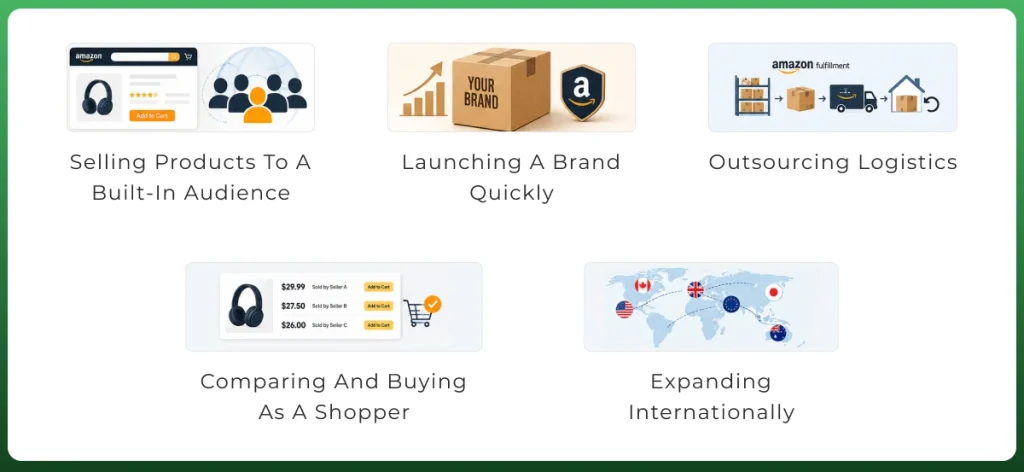
Selling products to a built-in audience
Sellers reach hundreds of millions of shoppers and skip the slow grind of driving their own traffic.
Launching a brand quickly
New brands borrow Amazon's trust and infrastructure to get sales from day one, instead of spending months on awareness.
Outsourcing logistics
Through Fulfillment by Amazon, sellers hand off storage, packing, shipping, and returns, turning a warehouse headache into a predictable cost.
Comparing and buying as a shopper
For buyers, the Marketplace widens product choice and creates price competition, so the same item often appears from several sellers at different prices.
Expanding internationally
Sellers use Amazon's 20-plus global marketplaces to reach customers in the US, UK, Canada, Australia, Europe, Japan, and beyond.
So whether the goal is a first side income or a seven-figure brand, the Marketplace is the engine that makes selling at scale possible without owning the underlying infrastructure.
How Does Amazon Marketplace Work?
From the outside, it feels simple: list a product, make a sale, get paid. Behind that simplicity sits a clear sequence. Here is how the process actually runs, step by step.
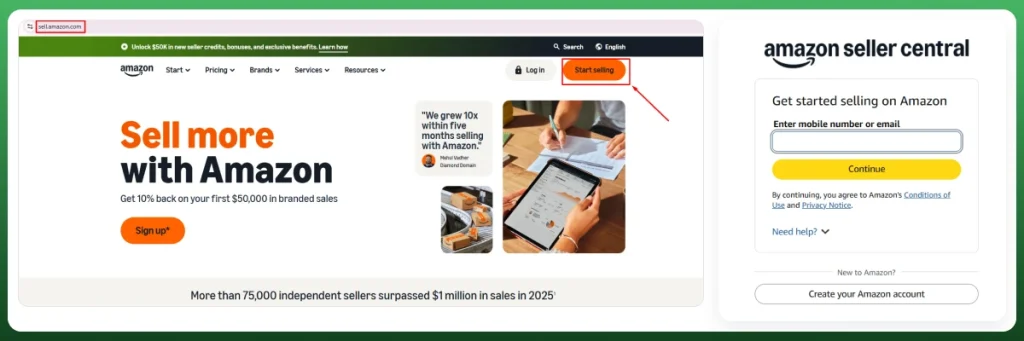
Create a Seller Account
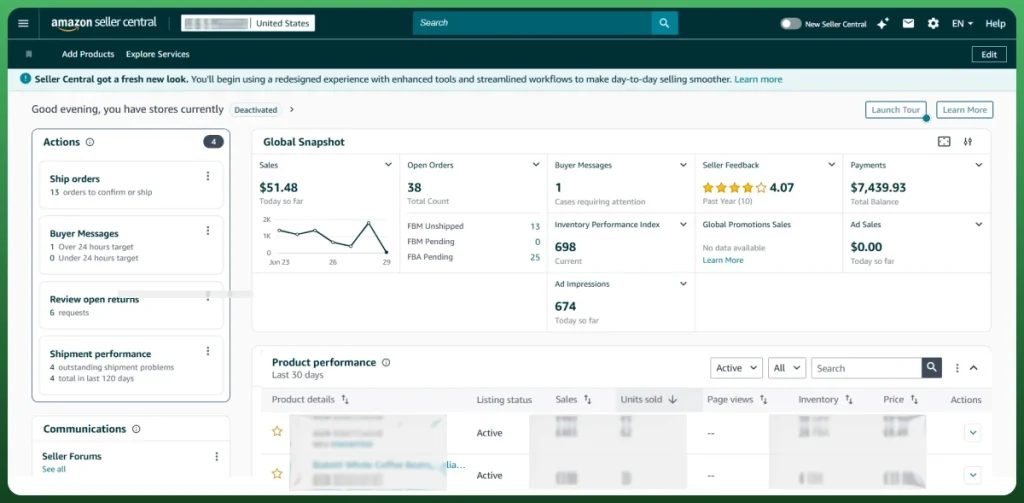
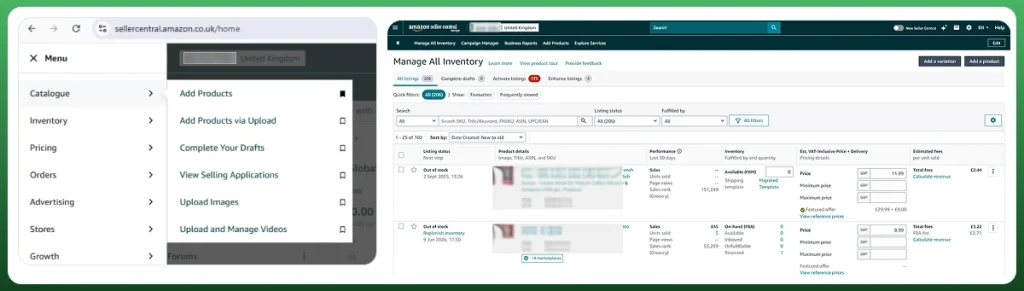
Everything starts in Seller Central, Amazon's dashboard for sellers. You register an Amazon seller account with your business details, tax information, and a bank account. Then you pick a selling plan, which we cover in the fees section below. The sign-up itself takes minutes; getting your account fully verified can take longer.
List Products
Next you create product listings. Each listing needs a clear title, high-quality images, bullet points that focus on benefits, and a description. This is also where SEO begins. Strong keywords in your title and backend search terms decide whether shoppers ever find you. A well-built product catalog is the foundation everything else rests on.
Choose a Fulfillment Method
Now you decide who handles storage and shipping: Amazon or you. This is the FBA versus FBM choice, and it shapes your costs, your margins, and whether your products qualify for Prime. It matters enough that it gets its own section next.
Customers Place Orders
Once your listing is live, shoppers find it through search, ads, or category browsing. When someone clicks Buy, Amazon processes the order on your behalf. If you use FBA, Amazon pulls the item from its warehouse and ships it. If you use FBM, the order routes to you to pack and send.
Amazon Processes Payments
Amazon collects the customer's payment, deducts its fees, and credits the rest to your seller account. Payouts run on a regular cycle, typically every 14 days, with funds held briefly after delivery. The amount that lands in your bank is the sale price minus referral fees, fulfillment fees, and any other charges. That gap is exactly why understanding fees is non-negotiable.
Amazon FBA vs FBM: Which Fulfillment Method Should You Choose?
This decision quietly controls your profit margin, so let's give it the attention it deserves. Both methods sell on the same Marketplace. The difference is who does the heavy lifting after a sale.
What Is Fulfillment by Amazon (FBA)?
With Amazon FBA, you ship inventory to Amazon's fulfillment centers and Amazon takes over. It stores your products, picks and packs each order, ships it, and handles customer service and returns. The headline benefit is the Prime badge. FBA products qualify for fast, free Prime delivery, which lifts conversion and helps you win the Buy Box. The trade-off is cost and less hands-on control.
What Is Fulfillment by Merchant (FBM)?
With Amazon FBM, you keep control of the whole process. You store inventory, pack orders, ship them, and manage customer service yourself. You avoid Amazon's fulfillment and storage fees, which can protect margins on bulky or low-turnover items. The downside is no automatic Prime badge and a lot more operational work on your plate.
Factor
FBA (Fulfillment by Amazon)
FBM (Fulfillment by Merchant)
Who ships orders
Amazon
You, the seller
Prime badge
Automatic
Only via Seller-Fulfilled Prime
Fees
Storage + fulfillment fees
No FBA fees, but your own costs
Control
Lower
Higher
Best for
Small, fast-moving, high-margin items
Bulky, heavy, or low-margin items
My rule of thumb after years of doing this: small, light, fast-selling products usually win with FBA because the Prime badge pays for itself. Heavy, oversized, or slow movers often do better on FBM, where high fulfillment fees would otherwise eat the profit. Many established sellers run both, matching the method to each product.
Types of Amazon Marketplace Sellers
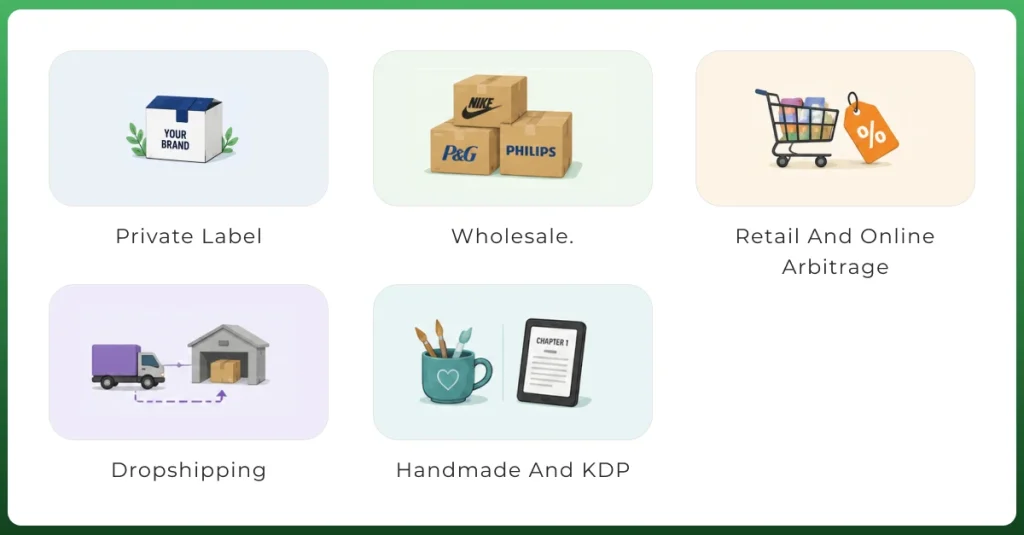
Not every seller plays the same game. Most fall into one of a few business models, and the model you pick shapes your sourcing, margins, and risk.
Private label
You sell products under your own brand, usually made by a third-party manufacturer. Higher upfront effort, but you control the brand and protect your margins. This is where most serious sellers end up.
Wholesale.
You buy established brand-name products in bulk and resell them on Amazon. Lower branding work, but you compete on the same listing with other sellers for the Buy Box.
Retail and online arbitrage
You buy discounted products from stores or other sites and resell them for a markup. Low startup cost, but it does not scale cleanly and sourcing is constant work.
Dropshipping
A supplier ships directly to the customer on your behalf. Low inventory risk, but tight margins and strict Amazon policy rules apply.
Handmade and KDP
Amazon Handmade serves crafters, while Kindle Direct Publishing lets authors sell books and ebooks. Niche, but real businesses run on both.
There is no single best model. The right fit depends on your budget, time, and goals. A first-timer testing the waters and a funded brand building a catalog will reasonably choose differently.
Amazon Marketplace Fees and Costs
This is the section that protects your profit, so read it twice. Selling on Amazon is not free, and the fees stack in ways that surprise new sellers. Here is the honest breakdown, with current numbers.
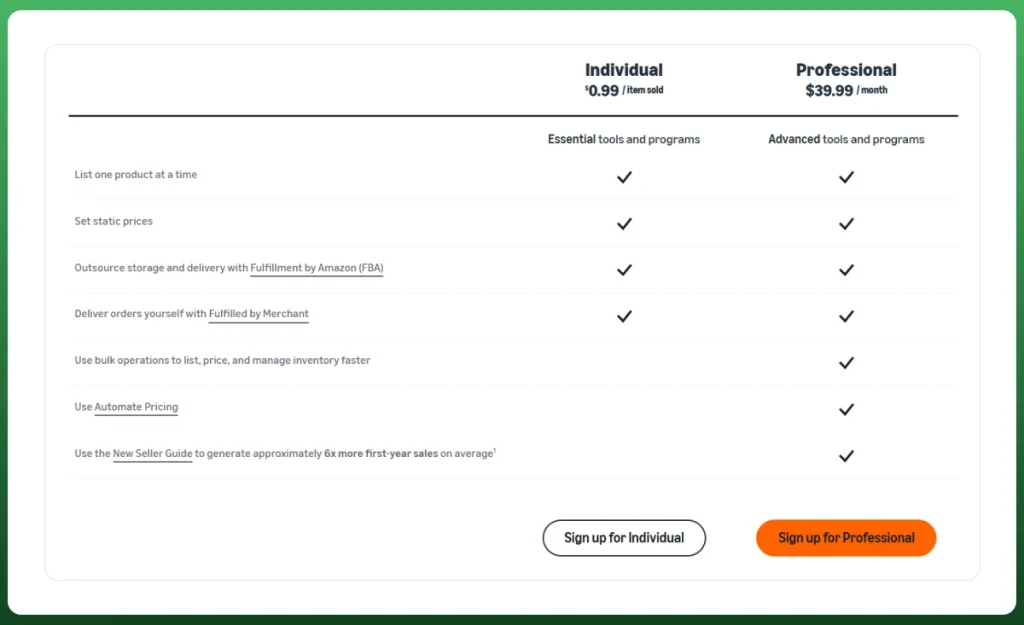
Selling Plan Fees
Amazon offers two plans. The Individual plan has no monthly fee but charges $0.99 per item sold, which suits sellers moving fewer than 40 units a month. The Professional plan costs $39.99 per month with no per-item fee, and it unlocks advertising, the Buy Box, bulk listing, and reporting tools. The math is simple: once you sell more than about 40 items a month, Professional pays for itself.
Referral Fees
This is Amazon's commission on every sale. The referral fee is a percentage of the total sale price, including shipping. Most categories sit at 15%, though it ranges from as low as 8% to as high as 45% depending on the category. A $0.30 minimum applies per item. Amazon froze these rates for 2025 and 2026, so you can plan around them.
FBA Fulfillment and Storage Fees
If you use FBA, you pay a fulfillment fee per unit based on size and weight, plus monthly storage fees based on the space your inventory occupies. As a rough example, a small standard item around 8 to 10 ounces priced at $19.99 carries an FBA fulfillment fee near $3.81 once the fuel surcharge is added. Storage fees climb during the peak fourth-quarter holiday months, which rewards tight inventory planning.
Other Costs to Watch
Closing fees. A flat $1.80 per unit on media items like books, DVDs, and video games.
Refund administration. When you refund a customer, Amazon keeps the lesser of $5 or 20% of the referral fee.
Advertising. Optional, but increasingly necessary. Around 70% of sellers now run paid ads to stay visible.
The takeaway: before you set a single price, run the numbers through Amazon's Revenue Calculator. On a $19.99 sale, total Amazon fees can reach roughly a third of the price before you even count advertising. Sellers who skip this math are the ones who quietly lose money on every order.
Not sure your numbers add up? Our team has helped brands tighten margins and fix leaky fee structures across thousands of listings. See our latest case studies.
Benefits of Selling on Amazon Marketplace
Despite the fees and competition, the Marketplace remains one of the fastest ways to build a product business. Here is why sellers keep choosing it.
A massive, ready-to-buy audience. Amazon attracts billions of visits a month. Listing there means instant access to high-intent shoppers, especially loyal Prime members who buy more often.
Instant trust. New brands borrow Amazon's credibility. The A-to-Z Guarantee and trusted return policy reassure buyers, which lifts conversion even for unknown sellers.
Logistics on tap. FBA turns warehousing and shipping into a variable cost. A single seller can fulfill thousands of orders a month without hiring a team.
Powerful advertising tools. Sponsored Products and Sponsored Brands let you buy visibility and accelerate sales velocity. Done right, Amazon PPC management feeds the flywheel that lifts your organic rank.
Real data. Amazon gives sellers analytics on sales, traffic, and customer behavior, so decisions rest on numbers, not guesses.
Common Challenges of Selling on Amazon Marketplace
We would be doing you a disservice to paint only the upside. The Marketplace is rewarding, but it is not easy money anymore. Go in clear-eyed about these challenges.
Shrinking margins. Stacked fees plus ad spend squeeze profit. Sellers now average 10-20% margins after fees, down from previous years.
Account suspension risk. Amazon enforces strict policies. A health metric slip or a policy violation can suspend your account and your income overnight.
Buy Box pressure. On shared listings, the Buy Box drives the vast majority of sales. Losing it on price or metrics quietly kills your sales.
Platform dependence. Building your whole business on Amazon means living by Amazon's rules and fee changes. Diversifying channels reduces that risk.
None of these are reasons to avoid the Marketplace. There are reasons to treat it as a real business with real operational discipline.
Who Should Use Amazon Marketplace?
Amazon Marketplace fits a wide range of sellers, but it suits some better than others. It is a strong choice if you are:
A new entrepreneur who wants to test a product without building a website and a traffic engine first.
A small or growing business ready to reach a national or global audience and offload fulfillment through FBA.
An established brand that wants a high-volume channel and is prepared to invest in listings and advertising to win.
A multichannel seller who already runs a Shopify store and wants Amazon as another sales stream rather than the only one.
It is a weaker fit if you sell highly customized, restricted, or razor-thin-margin products where Amazon's fees and rules leave little room to breathe. In those cases, your own store or a niche platform may serve you better.
Managing Your Amazon Marketplace Store
Launching is the easy part. Sustaining a profitable store is where most sellers struggle, because the work never really stops. Here is what ongoing management actually involves.
Listing optimization. Keep refining titles, images, bullets, and backend keywords. Amazon's average conversion rate of 10-15% is far above a typical website, but only well-optimized listings capture it.
A+ Content. If you own a registered brand, use A+ Content to upgrade your descriptions with rich images, comparison charts, and brand storytelling. Available through Brand Registry, Amazon's own data shows it can boost sales by up to 8% on average. Treat it as a core part of your listing, not a nice-to-have.
Inventory control. Run out of stock, and you lose rank and the Buy Box. Overstock, and you pay storage penalties. The balance is constant.
Review and reputation management. Aim for a 4.5-star rating or higher. Reviews are social proof that directly drives conversion and search rank.
Advertising and pricing. Adjust bids, campaigns, and prices as competition shifts. This is ongoing, not a one-time setup.
Multichannel coordination. If you sell across Amazon, eBay, and your own site, multichannel software management keeps inventory and orders in sync and saves hours of manual work.
This is exactly where many sellers bring in help. Managing listings, ads, inventory, and account health at once is a full-time job, and getting it wrong is expensive.
Want your Amazon store handled by people who do this daily? From account setup to listing optimization and ads, our ecommerce and digital marketing team can take the operational load off your plate.
Amazon Marketplace vs Other Marketplaces
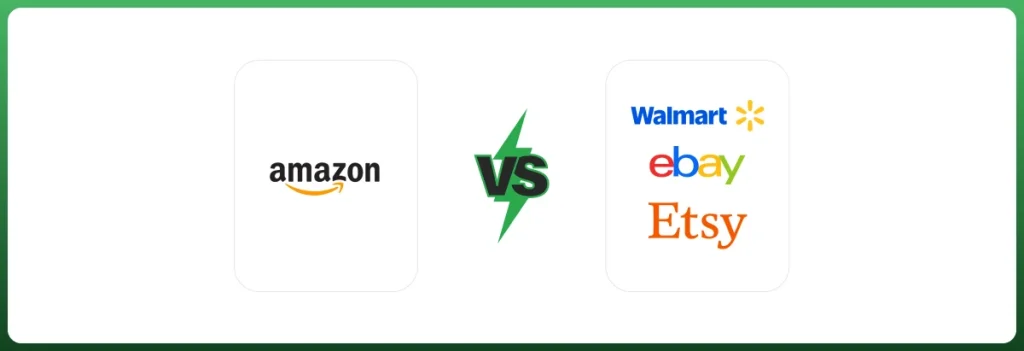
Amazon is the giant, but it is not the only marketplace, and smart sellers rarely rely on one channel. Here is how it compares to the main alternatives.
Walmart Marketplace. Fast-growing, lower competition than Amazon, and strong for US sellers. Many brands run both. If you are exploring it, Walmart seller account management follows similar logistics logic to Amazon.
eBay. Strong for used, vintage, and auction-style items. Lower fees in some categories, but smaller buyer intent for new branded goods. eBay seller account management suits sellers diversifying beyond Amazon.
Etsy. Built for handmade, craft, and custom goods. A niche audience rather than a mass one.
Amazon usually wins on raw reach and Prime-driven conversion. The others win on lower competition or niche fit. The strongest sellers we work with treat these as a portfolio, not a single bet.
Frequently Asked Questions
What exactly is Amazon Marketplace?
Amazon Marketplace is the section of Amazon where third-party sellers list and sell their own products directly to shoppers, alongside Amazon's own inventory. Sellers keep ownership of their products, set their own prices, and pay Amazon a fee on each sale.
What is the difference between Amazon Marketplace and regular Amazon?
Regular Amazon (the 1P model) is Amazon selling its own inventory that it bought and owns. Amazon Marketplace (the 3P model) is where independent sellers sell their products through Amazon's platform. As a shopper, you can tell them apart by the "Sold by" line on the product page.
What are the disadvantages of Marketplace?
The main downsides are stacked fees that compress margins, intense competition among nearly 1.9 million active sellers, strict policies that can lead to account suspension, and heavy dependence on Amazon's rules. Success requires treating it as a disciplined business, not passive income.
How do I cancel Amazon Marketplace?
Sellers can close or downgrade a selling account inside Seller Central under Account Info and Selling Plan. You can switch from Professional to Individual, or close the account entirely, at any time. Make sure to remove inventory from FBA first to avoid lingering storage fees.
Is it safe to buy from Amazon Marketplace?
Generally, yes. Amazon verifies sellers and covers eligible purchases through its A-to-z Guarantee, which protects buyers against fraud, misrepresentation, and items that never arrive. To stay safe, check seller ratings and reviews before buying from an unfamiliar third-party seller.
Why am I paying for Amazon Marketplace?
If you see a Marketplace charge as a buyer, it simply means your order came from a third-party seller rather than Amazon directly. The payment still goes through Amazon's secure checkout. As a seller, the fees you pay are referral, subscription, and fulfillment charges for using the platform.
Is Amazon Marketplace free to sell?
No. The Individual plan has no monthly fee but charges $0.99 per item sold, plus referral fees. The Professional plan costs $39.99 a month. Every sale also carries a category-based referral fee, and FBA sellers pay fulfillment and storage fees on top.
How do you know if you are buying from Amazon or Amazon Marketplace?
Look at the product page. If it reads "Ships from and sold by Amazon.com," you are buying from Amazon directly. If it shows "Sold by [seller name]," you are buying from a third-party Marketplace seller, even if Amazon still handles the shipping through FBA.
How do I use Amazon Marketplace?
To sell, create a Seller Central account, choose a selling plan, list your products with optimized titles and images, pick FBA or FBM for fulfillment, and manage orders and ads as they come in. To buy, just shop normally; Marketplace listings appear right alongside Amazon's own.
Final Word
Amazon Marketplace is no longer a feature bolted onto a retailer. It is the core of how Amazon sells, with third-party sellers driving the majority of units sold. For sellers, that means a real opportunity paired with real demand. The platform rewards those who understand its fees, choose the right fulfillment method, optimize relentlessly, and treat it like the serious business it is.
Whether you are listing your first product or scaling a brand, the fundamentals in this guide are the same ones we lean on with every client. Get them right, and the Marketplace becomes one of the most powerful sales channels available to any seller today.
Contact us for complete Amazon Marketplace support
Need Professional Amazon Store Management?
Get Expert Amazon Store Management Services From Ecomgiantz To Grow Your Brand And Increase Sales.
Ecomgiantz Team consists of our in-house experts who share their hands-on experience in ecommerce businesses, websites, marketplaces, etc. We also share the latest updates, insights, and market trends that can be helpful for your online business.