Why eBay Is Still the Best Place to Sell Used Goods Online in 2026
Discover why eBay remains a popular marketplace for selling used goods online. Learn about auctions, eBay Motors, collectibles, seller benefits, and practical tips for successful selling.
eBay is still the best place to sell used goods online because no other marketplace pairs its buyer reach with this much flexibility for secondhand sellers. eBay reported 136 million active buyers worldwide in its Q2 2026 earnings report.
The platform lets you list a single used item, run an auction, or build a full store around reselling. That combination is why it keeps beating newer, narrower apps built for just clothing or just local pickup.
Why eBay Is Still the Best Place to Sell Used Goods Online
More people are decluttering and reselling than ever, with used goods ranging from old phones and vintage clothing to furniture and collectibles. eBay still offers the widest reach and the most flexible way to sell used goods online, whether you're clearing a closet or running a side hustle.
eBay treats secondhand sellers as a core audience, not an afterthought. Sold listings data, price history, and shipping calculators help you price realistically even in your first week. If managing all of that solo feels like too much, dedicated eBay seller account management can take listings and daily operations off your plate entirely.
You also keep control. Choose auction or fixed price, set your own shipping terms, and decide whether to accept returns. That mix of low startup cost, real buyer trust, and full control over the sale is what keeps eBay ahead for anyone trying to sell used items on eBay profitably rather than just occasionally.
It also scales with you. A seller moving two items a week and a seller moving two hundred use the same core tools, seller rating system, and payment setup. Nothing about the platform forces you to choose a ceiling on day one.
eBay vs. Other Resale Platforms
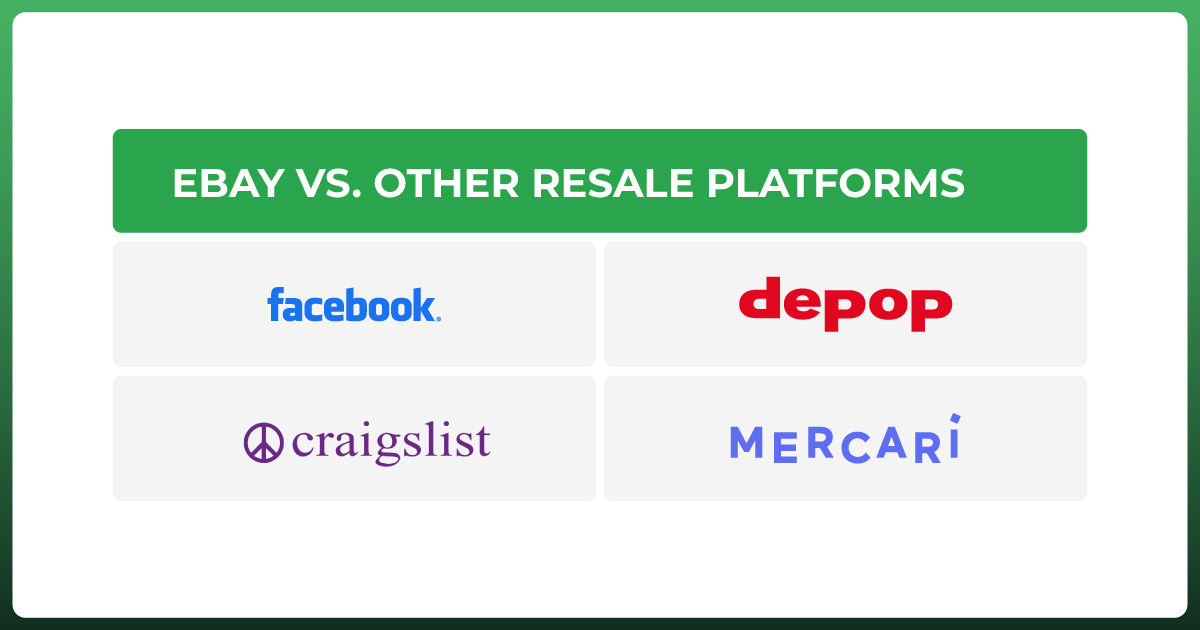
Facebook Marketplace, Craigslist, Poshmark, Depop, and Mercari all compete for the same secondhand sellers, but each one trades away something eBay keeps. Here's how they compare if you're deciding where your used inventory actually belongs.
Platform
Reach
Format
Best For
Trade-off
eBay
Global
Auction + fixed price
Almost any used category
Seller fees apply
Facebook Marketplace
Local
Fixed price
Furniture, local pickup
No shipping, no buyer protection
Poshmark / Depop
Niche, national
Fixed price
Fashion, streetwear
Higher fees, narrow categories
Craigslist
Local
Fixed price
Free to list
No payment protection
Mercari
National
Fixed price
Small, easy-ship items
Less buyer traffic than eBay
None of these beat eBay on combined reach and category range. If the goal is turning used goods into steady income rather than a one-off sale, eBay's global buyer pool still does more of the heavy lifting for you.
How Much Does It Cost to Sell Used Items on eBay?
Before you list anything, it helps to know exactly what eBay keeps from each sale. The math is simpler than it looks once you separate the two main charges: what you pay to list, and what you pay when an item actually sells.
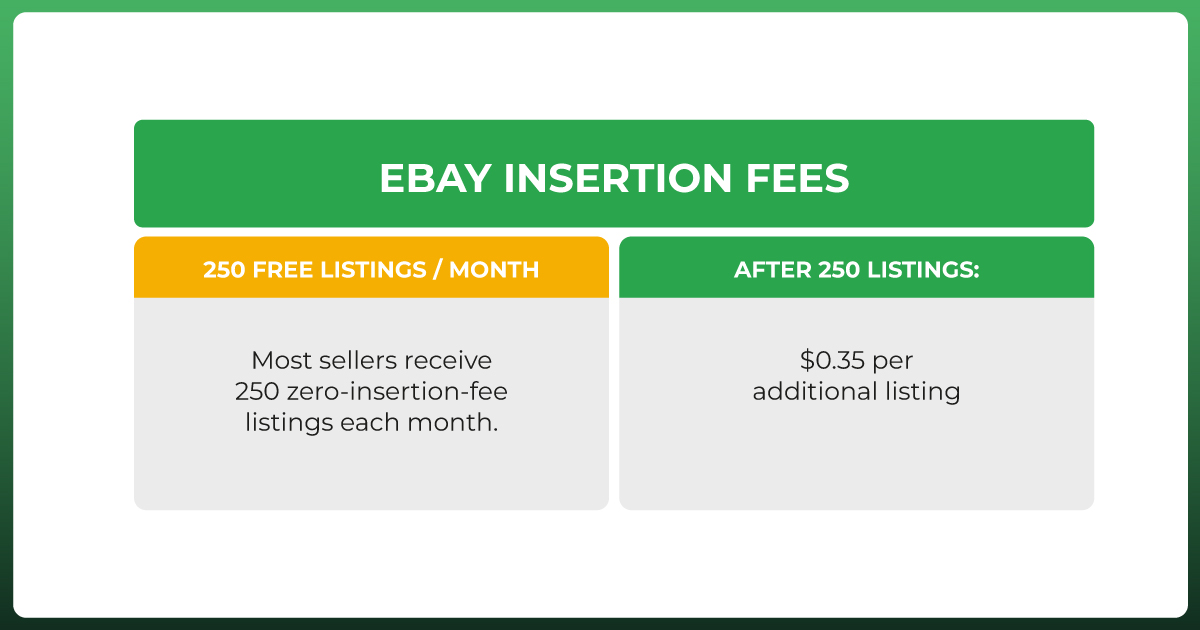
Most sellers get 250 zero-insertion-fee listings every month. After that allowance, eBay charges a $0.35 insertion fee per listing, whether or not the item sells, according to eBay's official fee schedule. Opening an eBay Store raises that free-listing allowance and can lower your final value fee too.
The final value fee is the bigger number to plan around. For most categories, it runs 13.6% of the total sale amount (item price plus shipping plus tax) up to $7,500, plus a per-order fee of $0.30 on sales of $10 or less and $0.40 above that.
Here's what that looks like on an actual used item. Sell a used smartphone for $200 with free shipping, and you'd pay roughly $27.60 in final value fees plus the $0.40 per-order fee, leaving you close to $172 before your own shipping and packaging costs.
Fees vary by category, so check yours before you price an item. Books and media run higher at 15.3%, while authenticated sneakers over $150 drop to a flat 8% with no per-order fee attached.
None of this is a reason to avoid eBay. Even at 13.6%, a seller who prices realistically and skips unnecessary listing upgrades usually keeps more of a used-item sale on eBay than on platforms that charge similar fees with a fraction of the buyer traffic.
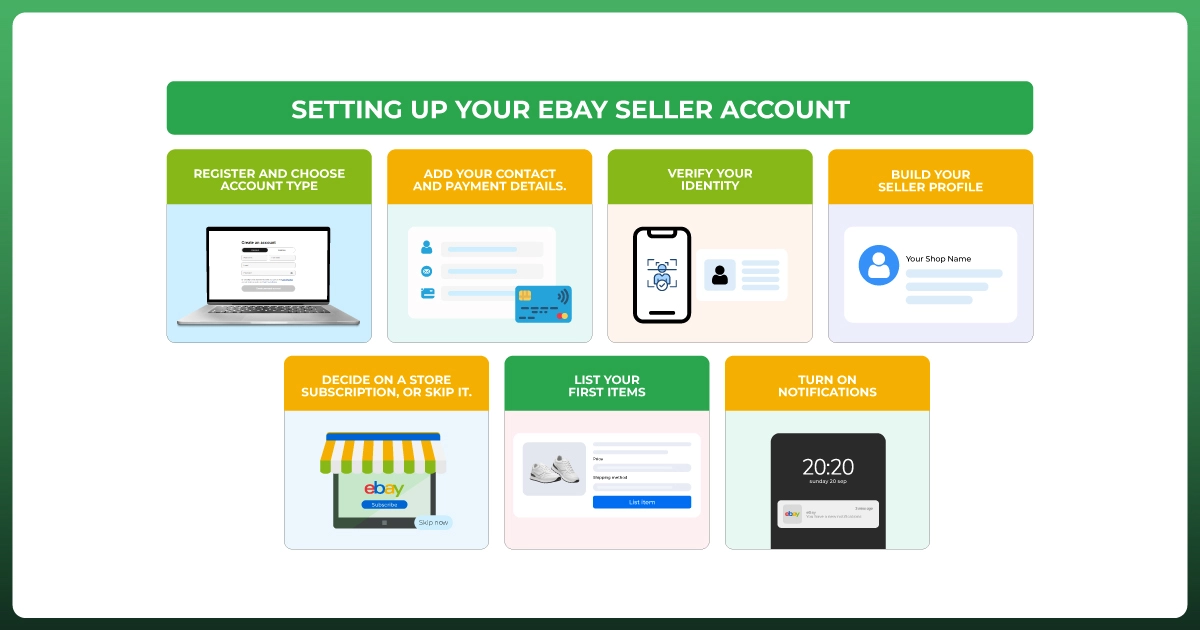
Setting Up Your eBay Seller Account
Getting a seller account live takes less time than people expect. Here's the actual sequence, trimmed to what matters for someone selling used goods rather than running a full retail catalog.
Register and choose account type. A personal account fits casual selling; pick a business account if you're listing regularly or selling under a company name.
Add your contact and payment details. eBay pays out directly to a linked bank account, so this step is required before you can sell anything.
Verify your identity. A quick ID check eBay requires to keep both buyers and sellers protected on the platform.
Build your seller profile. A short bio and a username buyers will see on every single listing you post.
Decide on a Store subscription, or skip it. Casual sellers can hold off early on and add a Store once volume actually picks up.
List your first item. Photos, condition, price, and shipping method are the only things you truly need to get started.
Turn on notifications. So a buyer question or a sale doesn't sit unanswered in the first, most important hours.
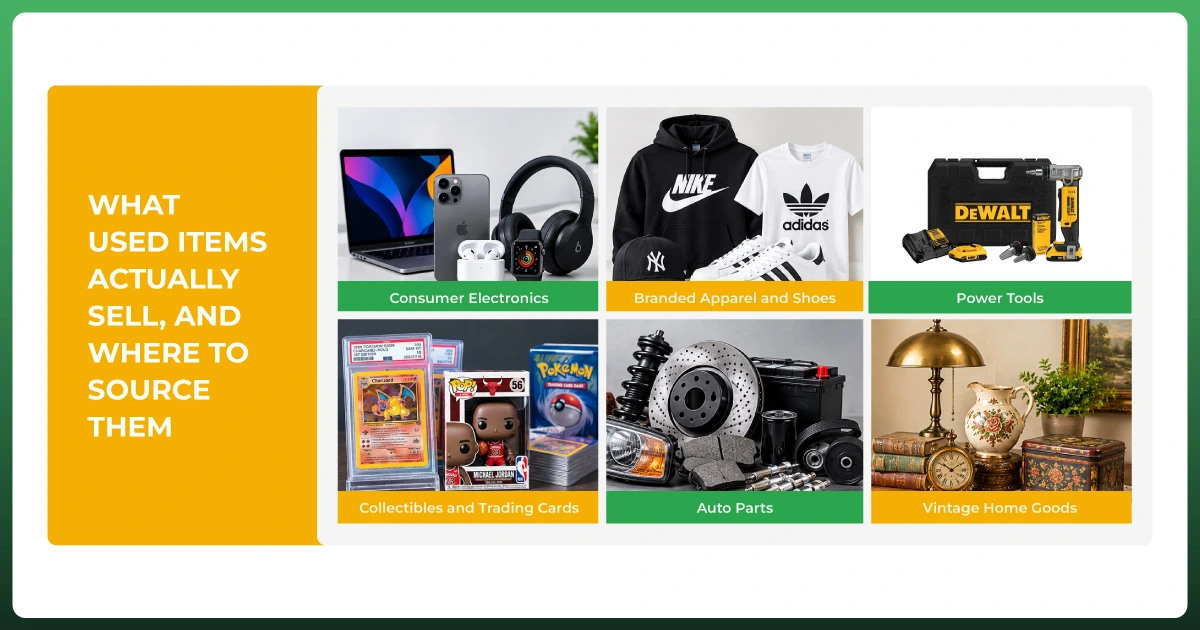
What Used Items Actually Sell, and Where to Source Them
Not every used item is worth listing. Sellers who do well research demand before they source anything, using eBay's "Sold Listings" filter to see what similar items actually closed for, not just what's currently sitting unsold.
Certain used categories consistently perform well: consumer electronics, branded apparel and shoes, power tools, collectibles and trading cards, auto parts, and vintage home goods. These hold resale value because demand stays steady and buyers already know what a fair price looks like.
The best sourcing channels are usually close to home and low-cost: your own closets and garages, estate and garage sales, thrift stores, and community giveaways. Liquidation pallets are worth exploring once you're ready to source in bulk.
If you eventually outgrow a single channel, Walmart seller account management is a common next step for resellers who want a second marketplace without duplicating all their sourcing work.
Start smaller than you think you need to. Sell a handful of items from around your own home first, before spending money sourcing in bulk. That first batch shows you what your photos, pricing, and packing routine actually look like before real money is on the line.
Sometimes value hides in plain sight. A scuffed but rare collectible, shoes with worn soles but intact uppers, or a dusty stereo that still powers on can all sell for more than they look worth at first glance, so don't judge an item purely by its condition.
eBay's Condition Categories, Explained
Accurately describing an item's condition protects your seller rating as much as it protects the buyer. Misjudging this, even by accident, is one of the fastest ways to pick up a return or a negative review on an otherwise good sale.
Used: shows normal wear but works as expected. Best fit for electronics, tools, and everyday secondhand goods.
Like New/Very Good/Good: common on books, games, and media, ranked by exactly how much wear actually shows.
For Parts or Not Working: the item doesn't function, but buyers looking to repair or salvage still want it, as long as you're upfront about what's wrong.
Pre-Owned: the standard tag for clothing and shoes. Photograph any stains, fading, or sole wear directly rather than describing it vaguely.
Open Box/Seller Refurbished: new but opened, or repaired by you rather than the manufacturer. Say clearly which one applies.
Whichever condition fits, the rule stays the same: photograph any flaws directly and describe them in plain language. Buyers forgive an honest flaw far more often than they forgive a surprise one after the sale.
Writing eBay Listings That Actually Convert
A good used item can still sit unsold if the listing doesn't do its job. Buyers can't hold the product before buying, so your title, photos, and description have to carry all of the trust-building work on their own.
Titles That Get Found and Clicked
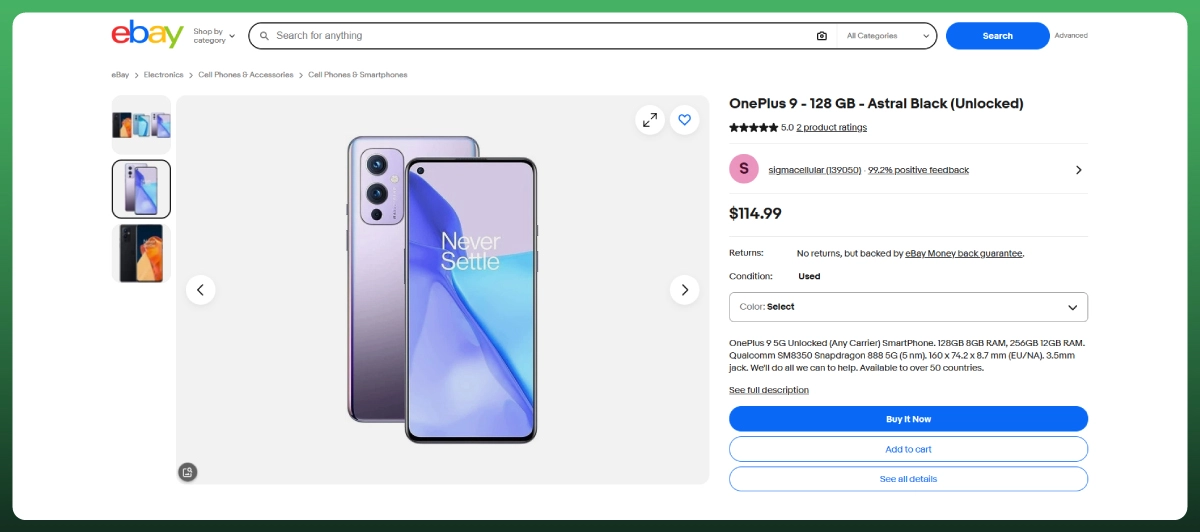
Lead with the details a buyer would actually search: brand, model, size or specs, and condition. "Sony WH-1000XM4 Headphones, Used, Excellent Condition" will outperform something vague every time, and with 80 characters to work with, there's no reason to waste them.
Photos and Descriptions Buyers Trust
Natural light, every angle, and close-ups of any wear are non-negotiable for used items. In the description, lead with condition and functionality before anything else, then list exactly what's included. Once a listing is solid, eBay Promotion can put it in front of more buyers, and you only pay when the item sells.
Pricing and Shipping That Don't Scare Buyers Off
Check "Sold Listings" for realistic pricing rather than going off asking prices, which are often wishful. Free shipping, even when it's built into the item price, tends to convert better than a separate shipping line. Be upfront about handling time so buyers know what to expect before they commit to buying.
If you eventually sell used goods across more than one platform, keeping inventory and orders in sync becomes the real challenge, which is exactly where multichannel software management earns its keep. It's a natural next step once reselling stops being occasional and starts looking like an actual business.
Mistakes That Quietly Kill a Used-Item Listing
Most listings that stall out share the same handful of problems, and all of them are fixable before you hit publish rather than after.
Pricing off the asking price, not the sold price. Plenty of similar items sit unsold at high prices for months. Only "Sold Listings" tell you what buyers actually paid.
Using one dim, cluttered photo. Buyers scroll past listings that make them work to see what they're getting. A clean background and several angles fix this in minutes.
Burying the flaw instead of naming it. A scratch or missing part disclosed upfront rarely costs a sale. Found by the buyer after delivery, it almost always costs a return.
Ignoring shipping cost until after the sale. Weigh and measure the item before you list it, not after someone's already bought it at a price that doesn't cover shipping.
Frequently Asked Questions
How much does eBay actually take from a sale?
For most categories, eBay charges 13.6% of the total sale price plus a small per-order fee. That's before any insertion fees, which only apply once you go past 250 free listings in a month.
Is selling used goods on eBay still worth it in 2026?
Yes, especially compared to local-only options. The buyer pool is bigger, the pricing and shipping tools are stronger, and most sellers still keep 80 to 90 percent of a typical sale after fees.
Do I need a business account to sell used items on eBay?
No. A personal account works fine for casual reselling. A business account makes more sense once you're listing regularly, sourcing in bulk, or selling under a company name.
What sells best when you're reselling used goods online?
Consumer electronics, branded clothing and shoes, tools, and collectibles tend to move fastest, since demand stays steady and buyers already have a sense of fair pricing for them.
Can I sell used items on eBay and Amazon at the same time?
Yes, and plenty of resellers do once volume grows. eBay tends to suit used and collectible inventory better, while Amazon leans toward new products, so the two often complement each other. Our Amazon FBA guide covers what that side looks like if you want to explore it.
How do I actually get paid after something sells on eBay?
eBay pays out directly to the bank account linked to your seller profile, usually within a few business days of the buyer's payment clearing.
Should I accept returns on used items?
It's not required, but a simple return policy tends to build enough buyer confidence to offset the occasional return, especially on higher-priced used electronics or collectibles.
Getting Started
Selling used goods online rewards sellers who treat it like a real, if small, business: honest listings, fair prices, and fast shipping. Get those right, and eBay's reach does most of the remaining work for you.
If reselling turns into something bigger and you want help with marketing beyond the listings themselves, our digital marketing services can support that growth. And if you'd rather have your eBay store run for you day to day, get in touch, and we'll walk you through what that looks like
Need Professional eBay Store Management?
From Product Listings To Daily Store Operations, Ecomgiantz Helps You Grow Your eBay Business.
Ecomgiantz Team consists of our in-house experts who share their hands-on experience in ecommerce businesses, websites, marketplaces, etc. We also share the latest updates, insights, and market trends that can be helpful for your online business.