
What Is an Advanced Segment?
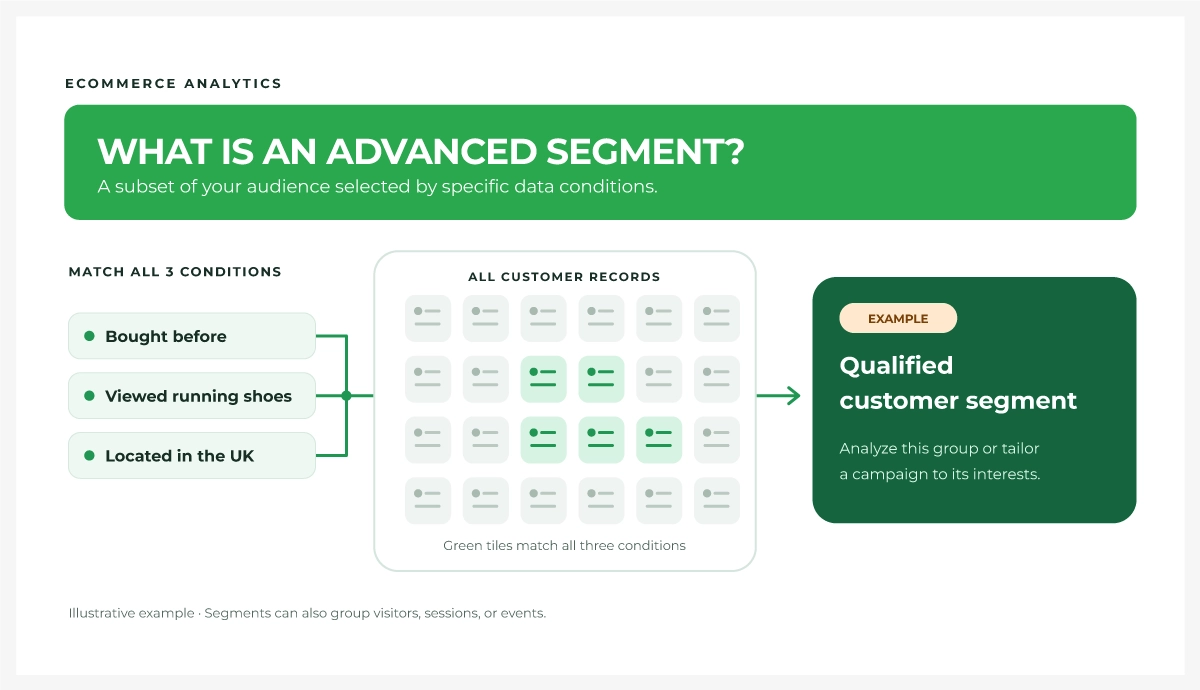
An advanced segment is a subset of customers, visitors, sessions, or events selected using detailed data conditions. It isolates a meaningful group from a larger audience for closer analysis or more relevant marketing.
In ecommerce, these conditions can combine purchase history, browsing activity, location, and response to previous campaigns. Rather than treating everyone who visits an online store alike, a business can identify shoppers with shared interests or buying patterns.
The term also appears in analytics. Google Analytics 4 (GA4) uses segments for users, sessions, and events in Explorations. Shopify and Klaviyo offer rule-based customer segments for organizing audiences and targeting communications. The purpose depends on the platform.
Common Types of Advanced Segments
- Behavioral: People who revisit products, add items to carts, or leave without buying.
- Purchase-value: Customers grouped by spending, order frequency, or purchase amount.
- Engagement: Subscribers who regularly interact with messages or have become inactive.
- Lifecycle: First-time buyers, loyal customers, and shoppers at risk of not returning.
- Combined: Groups defined by several factors, such as location and recent product interest.
How Does an Advanced Segment Work?
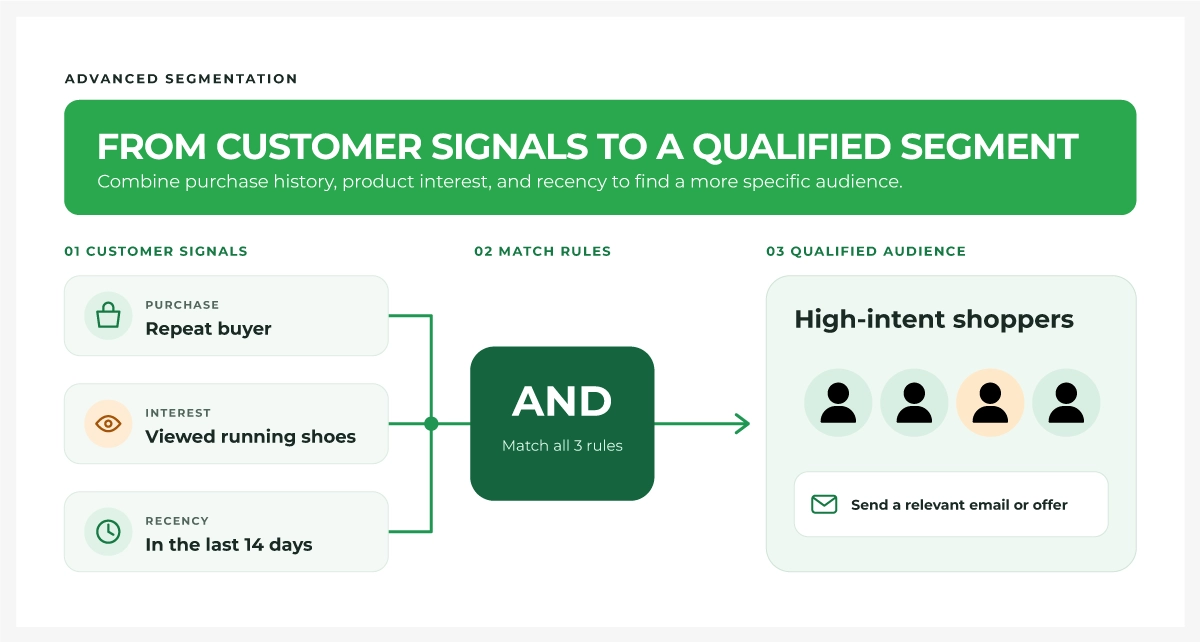
First, a business collects accurate customer and event data from its store, analytics, or marketing tools. It then sets inclusion and exclusion rules. AND requires every condition to match; OR includes people who meet any listed condition.
For example, a sportswear store could identify shoppers who viewed running shoes at least twice in 14 days AND previously placed an order. The result is more focused than a list of all past buyers.
In platforms with dynamic segmentation, customers enter or leave the group as their behavior changes. Confirm tracking accuracy, date ranges, and marketing consent before using a segment in a campaign.
Why Do Advanced Segments Matter?
Advanced segments reveal differences that overall store averages can hide. Owners can compare conversion rates among new and returning visitors, identify high-value buyers, and locate groups with recurring cart abandonment.
They also improve relevance. In ecommerce email marketing, segments can separate welcome messages from cross-sell, replenishment, and re-engagement campaigns. These insights can guide channel selection, content, and offer planning.
However, narrow audiences, incomplete tracking, and outdated information can distort decisions. Measure results against the objective using metrics such as conversion rate, repeat-purchase rate, or revenue per recipient.
How to Use an Advanced Segment in Ecommerce
- Start with one business question, then select two or three meaningful conditions.
- Check the audience size and compare it with the wider customer base.
- Apply one relevant action, such as a tailored product recommendation or a retention email.
- Review the outcome and refine the rules only when the data supports a change.
Frequently Asked Questions
What is an example of an advanced segment?
Repeat buyers who viewed a particular product category twice this month but did not purchase are one example.
Do advanced segments update automatically?
Many ecommerce and marketing platforms refresh rule-based segments as customer data changes. Refresh behavior depends on the tool.
Can small ecommerce stores use advanced segments?
Yes. A smaller store can start with a few reliable conditions, provided its customer data is sufficient for useful analysis.
Are GA4 segments the same as email audiences?
No. GA4 segments are primarily used to analyze users, sessions, or events in Explorations. Email audiences are managed through marketing tools.