
What Is an Abandoned Cart?
An abandoned cart refers to products selected for purchase that remain unordered after a shopper exits an ecommerce store. It occurs when a customer adds one or more items to their shopping cart but leaves without completing the transaction. This can happen before checkout begins or during the payment process. Each abandoned cart represents an incomplete purchase.
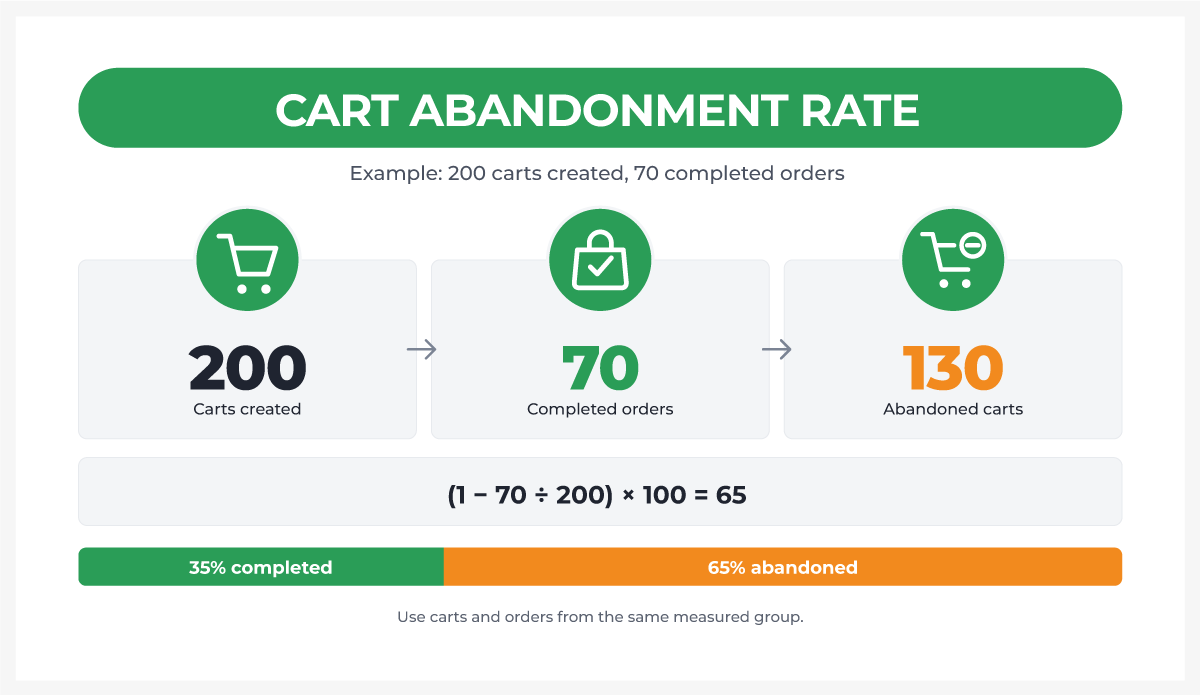
Cart abandonment rate = (1 − completed orders ÷ carts created) × 100.
For example, if 200 carts result in 70 completed orders in the same measured group, the abandonment rate is 65%. Consistent tracking definitions are essential for comparisons.
Baymard Institute reports an average cart abandonment rate of 70.22% across 50 studies. This figure is a broad industry benchmark, not a target for individual stores. Rates differ by industry, device, and customer behavior.
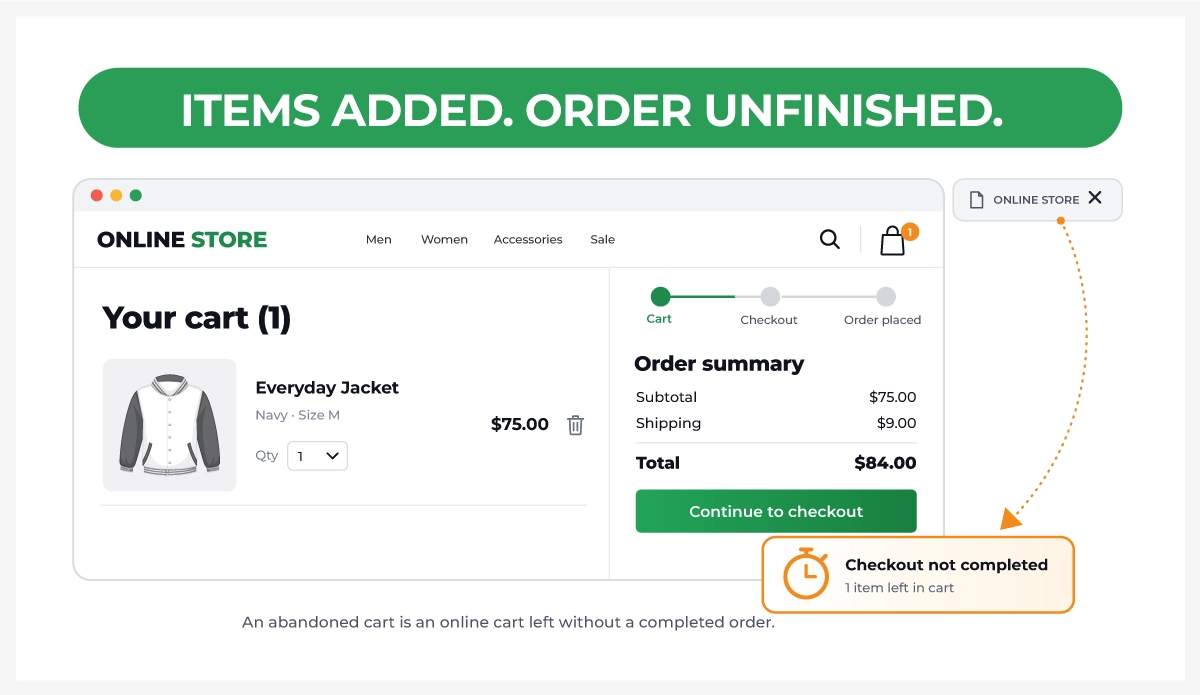
Types of Cart Abandonment
Cart abandonment is commonly classified by the stage at which the purchase process ends:
- Pre-checkout abandonment: A shopper adds one or more items but leaves before starting checkout. It happens often while comparing products or estimating costs.
- Checkout abandonment: A shopper begins entering delivery or payment details but exits before placing an order. Unexpected charges, account requirements, or payment errors may contribute.
Browse abandonment is a separate event in which a visitor views a product without adding it to a cart. Distinguishing these behaviors supports more accurate reporting and recovery efforts.
How Does Cart Abandonment Work?
Ecommerce platforms identify abandoned carts by tracking cart activity, checkout progress, and completed orders. A cart is usually classified as abandoned after a platform-defined period of inactivity. The process typically follows four stages:
- The shopper adds one or more products to a cart.
- The shopping session ends without a completed purchase.
- The platform flags the incomplete cart according to its inactivity settings.
- When contact details and permissions allow, the store may send a reminder and measure subsequent orders using its attribution rules.
Automated email marketing can feature saved products and a direct return-to-cart link. These reminders are most effective when supported by a reliable checkout process and appropriate marketing permissions.
Why Does Cart Abandonment Matter?
Abandoned carts indicate potential purchase interest and help identify barriers in the buying process. Monitoring cart abandonment supports checkout analysis, usability improvements, and measurement of recovery campaigns.
Effective improvements include upfront shipping costs, guest checkout, shorter mobile forms, familiar payment methods, and transparent returns policies. Where marketing permissions allow, relevant reminders within an ecommerce marketing strategy may recover some incomplete purchases.
Frequently Asked Questions
What is abandoned cart recovery?
Abandoned cart recovery encourages shoppers to complete unfinished purchases through checkout improvements, automated reminders, and relevant follow-up communication.
Is an abandoned cart the same as an abandoned checkout?
No. Cart abandonment can occur before checkout begins. Checkout abandonment specifically occurs after a shopper starts checkout but leaves without placing an order.
How do you calculate cart abandonment rate?
Subtract completed orders divided by created carts from one, then multiply by 100. Compare data collected using consistent event definitions.
When should you send an abandoned cart email?
Many retailers test an initial reminder within several hours. Appropriate timing depends on customer behavior, channel permissions, and completed-order checks.
Can cart abandonment be reduced without discounts?
Yes. Transparent costs, streamlined checkout, flexible payment options, and clear delivery information can reduce purchase barriers without changing prices.